The vast and intricate tapestry of Chinese cuisine is arguably the world’s most diverse culinary landscape, a reality that makes the attempt to codify a single definitive list of the “best” dishes an exercise in futility. With eight distinct regional culinary traditions—including the fiery profiles of Sichuan, the refined seafood of Chaozhou, and the dim sum culture of Guangdong—the country offers a flavor profile for every palate. For the traveler or the enthusiast, navigating this complexity requires an introductory framework, a curated guide to the essential eats that represent the heart and history of Chinese gastronomy. To appreciate these dishes is to understand the regional migrations, imperial histories, and agricultural legacies that have shaped Chinese life for over 1,500 years.

The Imperial Legacy of Peking Duck
Perhaps no dish carries the weight of history as effectively as Peking Duck. While modern iterations are synonymous with Beijing, the roots of this roasted delicacy can be traced back to the imperial kitchens of Nanjing during the Southern Song Dynasty (1127–1279). When the capital was moved to Beijing in the 15th century during the Ming Dynasty, the imperial court transferred not only its political power but its culinary masters as well.
The preparation is a rigorous, multi-day process involving air-drying, glazing with maltose, and roasting in a closed or hung oven. The result is a textural contrast: glass-like, crispy skin paired with succulent, rendered meat. Served with paper-thin pancakes, sweet bean sauce, scallions, and cucumber, the dish remains a pinnacle of Chinese culinary engineering. Culinary historians note that the institutionalization of this recipe within the Forbidden City ensured that techniques were standardized, creating a cultural export that has become a global benchmark for fine dining.

Sichuan’s Spicy Evolution: Dan Dan Noodles and Mapo Tofu
Moving toward the southwest, the province of Sichuan offers a stark contrast to the mild, aromatically driven northern palate. Sichuan cuisine is defined by ma la—a signature numbing and spicy sensation derived from the combination of Sichuan peppercorns and dried chili peppers.
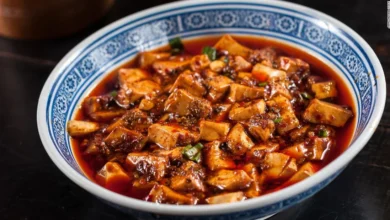
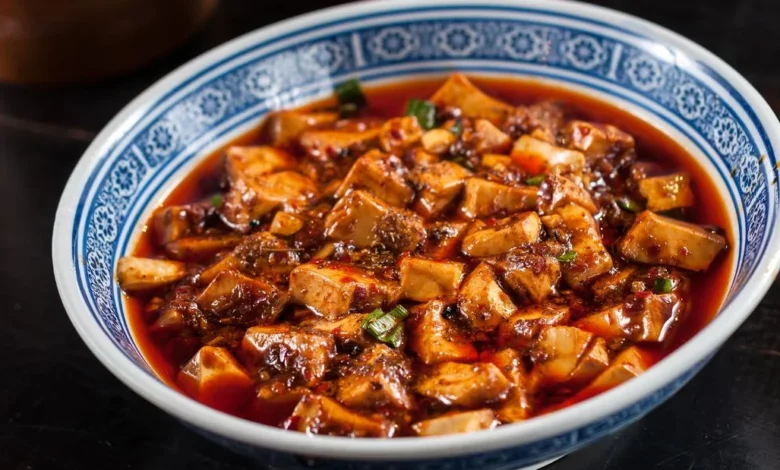
Dan Dan Noodles, a street food staple named after the carrying poles (dan dan) used by 19th-century hawkers, exemplify this flavor profile. The dish typically features a base of noodles topped with rou saozi—pork fried in lard until golden and crispy—alongside preserved vegetables and crushed peanuts. Parallel to this is Mapo Tofu, a dish that has seen a global rise in popularity. Local purists in the Pidu district argue that a truly authentic Mapo Tofu must utilize broad bean chili paste and Hanyuan peppercorns. Data from regional food surveys suggest that these dishes are not merely sources of sustenance but are culturally significant as vehicles for local agricultural pride, specifically the preservation techniques used for chili and soybean pastes.

The Art of Steaming: Cantonese and Hunanese Techniques
While the north is famous for its wheat-based breads and roasts, southern regions have mastered the delicate art of steaming. Cantonese cuisine prioritizes the "original flavor" of ingredients, a philosophy most evident in their treatment of fresh fish. Steaming is a high-stakes culinary method; a variance of even thirty seconds can be the difference between tender, flaky meat and a fibrous, overcooked failure.
In contrast, Hunanese cuisine, known as Xiang, takes the heat of the south to a new level. The provincial folk songs famously declare that a dish without chili is incomplete. The iconic Duo Jiao Yu Tou (steamed fish head with salted chili) represents this ethos. The salted chili, or duo jiao, is fermented with ginger, garlic, and baijiu for at least a week, creating a potent, umami-rich topping that penetrates the fish during the steaming process. This dish serves as a prime example of how regional preservation methods—originally developed to survive mountainous, humid climates—have become the defining characteristics of modern Chinese gourmet dining.

Dim Sum and the Cultural Fabric of Guangdong
Dim sum is less a dish and more an institutionalized social event. Originating in the teahouses of the Silk Road and perfected in the bustling metropolises of Guangdong and Hong Kong, dim sum serves as a medium for communal interaction. It encompasses a vast array of small plates, from xiaolongbao (the soup-filled dumplings of the Jiangnan region) to siu mai and pan-fried radish cakes.
The structural integrity of a xiaolongbao is often cited by food scientists as a feat of culinary physics; the wrapper must be thin enough to be delicate but strong enough to hold a gelatinized broth that melts into a liquid upon steaming. Analysts of the food industry note that the rise of dim sum as a global phenomenon has driven significant tourism to Southern China, as travelers seek the "authentic" experience of carts circulating through crowded, noisy dining halls.

Cross-Cultural Influences: Hainanese Chicken Rice and Fusion
The global footprint of Chinese food is perhaps best illustrated by Hainanese Chicken Rice. Although it is now a national dish of Singapore and Malaysia, its DNA is entirely Chinese, rooted in the Wenchang chicken of Hainan Province. The dish’s migration reflects the diaspora of the 19th and 20th centuries, where Chinese laborers adapted traditional methods—blanching the bird and using the resulting fat to flavor the rice—to the ingredients available in Southeast Asia. This adaptation underscores a broader theme in Chinese culinary history: the ability of regional recipes to evolve and thrive in new environments while maintaining a core connection to ancestral techniques.
Street Food and the Daily Pulse of China
For the average citizen in cities like Tianjin or Xi’an, the most important meals are often the simplest. Jian bing, a breakfast crepe made from mung bean batter, eggs, and crispy fried crackers, is a testament to the efficiency of Chinese street food. In Xi’an, the rou jia mo—often referred to as a Chinese hamburger—provides a link to the historical trade routes. The bread, or mo, is baked to specific standards involving precise patterns, while the pork belly is braised for hours in a spice profile that includes star anise and cinnamon, echoing the ancient spice trade that flowed through the city’s gates.

Implications for Future Culinary Trends
The contemporary Chinese food scene is currently experiencing a "return to roots" movement. Younger chefs are increasingly looking at historical texts to revive lost techniques, such as the specific fermentation processes for mei cai (pickled mustard greens) or the traditional hand-beating methods for Chaozhou beef balls.
Furthermore, as the Chinese middle class expands, there is an increased focus on the health benefits of traditional dietary practices. The consumption of congee—often prescribed in traditional Chinese medicine to balance the digestive system—has moved from a simple survival food to a sophisticated dish served in high-end hotels, incorporating abalone, truffles, and other luxury ingredients.

This evolution suggests that while Chinese cuisine remains deeply rooted in regional geography and historical necessity, it is also highly adaptive. Whether it is the humble steamed bread roll or the complex, multi-day preparation of a roast goose, these dishes function as a living record of a nation’s history. For the culinary enthusiast, each bite offers not just a flavor profile, but a connection to the social, political, and environmental conditions that have defined China for millennia. As the global palate continues to embrace these diverse traditions, the essential dishes listed here remain the primary pillars of a culture that views food not merely as fuel, but as the fundamental expression of its identity.
Related posts: