The Impact of Data Center Proliferation on Infrastructure Environment and Local Communities in Northern Virginia

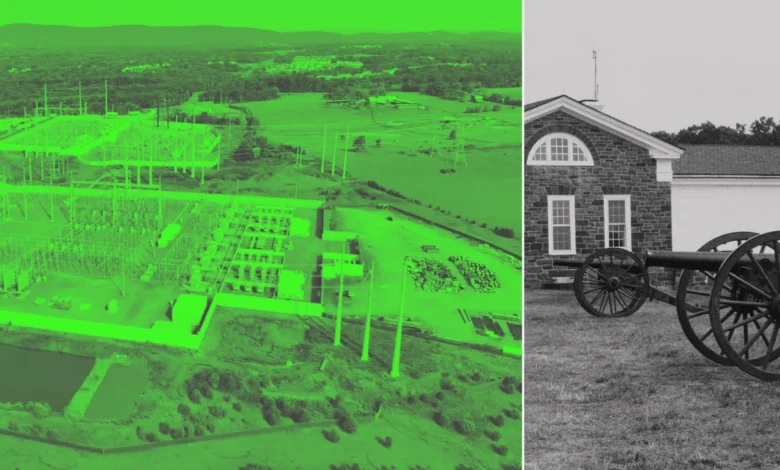
The rapid expansion of global digital infrastructure has found its epicenter in Northern Virginia, a region now grappling with the profound socio-economic and environmental consequences of hosting the world’s largest concentration of data centers. At the heart of this transformation is the Prince William Digital Gateway, a massive development project that serves as a case study for the tensions between technological advancement and local preservation. As artificial intelligence (AI) and cloud computing demand unprecedented levels of processing power, the physical manifestations of the internet—colossal, windowless structures packed with servers—are reshaping the landscape, straining power grids, and sparking intense legislative and community debates.
The Scale of the Digital Gateway Project
The Prince William Digital Gateway represents a significant shift in the geography of data processing. For decades, Loudoun County, Virginia, held the title of "Data Center Alley," carrying an estimated 70 percent of the world’s internet traffic. However, as land in Loudoun became scarce and electricity prices climbed, developers turned their sights southward to Prince William County.
The Digital Gateway project is unprecedented in its scale. Spanning approximately 2,100 acres, the development is designed to provide millions of square feet of data center space. To put this in perspective, the footprint is roughly equivalent to 61 Pentagon buildings. This massive industrial corridor is situated along Pageland Lane, a previously rural stretch that borders the Manassas National Battlefield Park. The project’s approval marked a turning point in local land-use policy, shifting thousands of acres from agricultural and residential designations to industrial use.
A Chronology of the Conflict
The path to the Digital Gateway’s approval was marked by years of heated public discourse and legal maneuvering. The timeline reflects a deepening divide within the Northern Virginia community:
- 2021: Landowners along Pageland Lane began petitioning the county to change the Comprehensive Plan to allow for industrial data center development, citing the massive payouts offered by tech firms.
- January 2022: Renowned documentary filmmaker Ken Burns sent a formal letter to the Prince William County Board of Supervisors. Burns, whose work has chronicled the American Civil War, argued that the development would "irreparably alter" the historic character of the Manassas National Battlefield, where two major battles were fought.
- 2022-2023: Environmental groups, including the Piedmont Environmental Council (PECVA), and local residents formed coalitions to protest the rezoning. They cited concerns over noise pollution, water quality in the Occoquan Watershed, and the visual impact of massive transmission lines.
- December 2023: Following a marathon public hearing that lasted over 24 hours, the Prince William County Board of Supervisors voted to approve the rezoning applications for the Digital Gateway. The vote was split along party lines, reflecting the contentious nature of the project.
- 2024: Legal challenges were filed by local residents and conservation groups, seeking to overturn the board’s decision on the grounds of procedural errors and environmental impact concerns.
Resource Consumption: The Burden on Power and Water
One of the most significant challenges posed by data center proliferation is the staggering demand for resources. Data centers are not merely passive warehouses; they are active industrial plants that require constant electricity to run servers and massive amounts of water to cool them.
Electricity and the Power Grid
Northern Virginia’s power grid is under immense pressure. Data centers operate 24/7, creating a "flat" load profile that leaves little room for flexibility during peak demand. PJM Interconnection, the regional grid operator, has expressed concerns about the ability of existing infrastructure to keep pace. To support the Digital Gateway and surrounding projects, utility providers must construct new high-voltage transmission lines and substations. These infrastructure projects often require the use of eminent domain and further disrupt residential neighborhoods, leading to increased utility rates for the average consumer to subsidize the expansion of the industrial grid.
Water Usage and Environmental Integrity
The cooling requirements for high-density AI servers are immense. Many data centers utilize evaporative cooling systems that can consume hundreds of thousands of gallons of water per day. In Prince William County, critics point out that the Digital Gateway sits near the Occoquan Reservoir, a primary source of drinking water for over 800,000 people. The removal of forest cover to make way for data centers increases runoff and reduces the natural filtration of groundwater, potentially compromising the long-term health of the watershed.
The Economic Debate: Revenue vs. Long-Term Value
Developers and proponents of the Digital Gateway emphasize the economic benefits, promising billions of dollars in tax revenue that could fund schools, parks, and public safety. In Virginia, data centers are subject to a specialized computer equipment tax, which has become a primary revenue driver for local governments.
However, economists and organizations like the Brookings Institution have cautioned against over-reliance on this model. While the initial construction phase creates thousands of temporary jobs, the long-term employment provided by data centers is minimal. A facility spanning hundreds of thousands of square feet may only require a few dozen permanent staff members, mostly security personnel and specialized technicians.
Furthermore, the "monster tax breaks" often used to lure these developers can offset the perceived gains. Virginia offers significant sales and use tax exemptions for data center equipment. Critics argue that these incentives create a race to the bottom, where municipalities compete to offer the most generous subsidies to multi-billion-dollar corporations, ultimately diminishing the net public benefit.
Historical and Cultural Preservation Concerns
The proximity of the Digital Gateway to the Manassas National Battlefield Park has turned the project into a national issue of cultural preservation. The park commemorates the First and Second Battles of Bull Run, pivotal moments in American history.
Ken Burns’ intervention highlighted the concept of "viewshed" preservation. Preservationists argue that the experience of a historic site is not limited to the land within its legal boundaries; the surrounding landscape provides the necessary context for understanding the tactical movements and the sheer scale of the conflict. The introduction of 100-foot-tall industrial buildings and humming cooling fans less than a mile from the battlefield’s edge is seen by many as a desecration of hallowed ground.
During the final public hearings, the emotional weight of the issue was evident. Residents presented testimonies ranging from technical environmental reports to cultural appeals. A descendant of a family that had farmed the land for generations spoke of the loss of heritage, while Civil War reenactors warned that the "industrialization of history" would deter tourism, a vital part of the local economy.
Broader Implications and the Future of the AI Era
The struggle in Prince William County is a microcosm of a global challenge: how to build the physical infrastructure of the 21st century without destroying the natural and historical foundations of the past. As AI continues to evolve, the demand for "compute" will only grow. This necessitates a more strategic approach to siting data centers, perhaps moving them away from sensitive watersheds and historic sites toward areas with existing industrial infrastructure and robust renewable energy access.
The implications of the Northern Virginia data center boom extend far beyond county lines. It raises fundamental questions about the "hidden costs" of our digital lives. Every cloud-based application, AI-generated image, and streaming service relies on a physical facility that consumes land, water, and power.
Key Implications for Policy Makers:
- Zoning Reform: There is an urgent need for updated zoning laws that distinguish data centers from traditional light industrial uses, accounting for their unique noise and energy profiles.
- Grid Modernization: State and federal regulators must coordinate to ensure that the expansion of data centers does not compromise grid reliability or lead to unfair rate hikes for residential taxpayers.
- Sustainability Standards: Implementing mandatory water-recycling systems and requiring data centers to provide their own renewable energy sources could mitigate environmental impacts.
The fate of the Prince William Digital Gateway will likely serve as a legal and political precedent for years to come. As the "David vs. Goliath" battle between local communities and big tech continues, the resolution will define the balance between technological progress and the preservation of the American landscape. For now, the "monoliths" of the digital age continue to rise, serving as a silent reminder of the physical cost of a virtual world.
Related posts: