The Economics of Weight Reduction in Commercial Aviation and the Financial Impact of Passenger Physiology

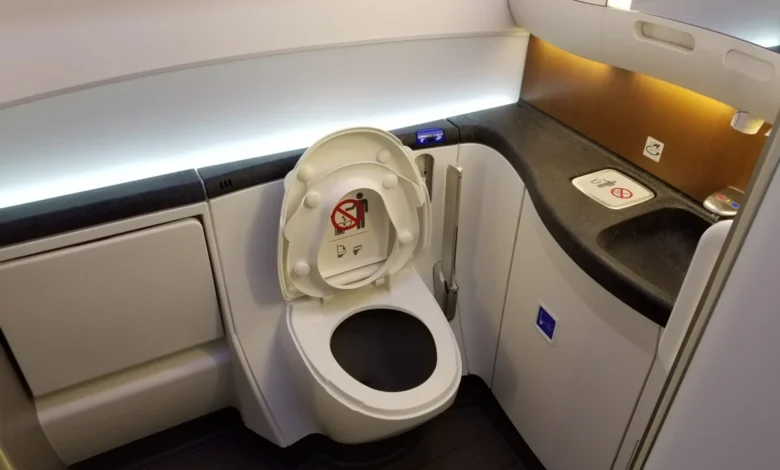
Commercial aviation is an industry defined by razor-thin profit margins and a relentless pursuit of operational efficiency, where the management of weight is inextricably linked to the consumption of fuel. In recent years, the strategy of "weight shedding" has evolved from large-scale structural engineering to the minute details of passenger behavior and cabin equipment. The financial implications of these incremental changes are profound, as evidenced by a recent analysis suggesting that even the physiological state of a passenger before boarding can impact an airline’s bottom line. According to calculations by researchers Luke Jensen and Brian Yutko, if every passenger utilized terminal restrooms to shed an average of 0.2 liters of urine before boarding, a single flight could save approximately $2.66 in fuel. When scaled across the roughly 40 million commercial flights operated globally each year, this seemingly negligible act represents a $100 million variable for the global aviation industry.
The Evolution of Weight Management in the Cockpit and Cabin
The drive for fuel efficiency is not a new phenomenon, but the methods have become increasingly sophisticated. Historically, airlines focused on engine efficiency and aerodynamic profiles. However, as fuel costs fluctuated and environmental regulations tightened, the focus shifted toward "dead weight" within the aircraft. One of the most significant early successes in this area was the transition from paper-based flight manuals to Electronic Flight Bags (EFBs).
For decades, pilots were required to carry heavy flight bags containing navigation charts, weather reports, and aircraft manuals, often weighing between 40 and 80 pounds per cockpit. By replacing these physical documents with tablets, such as iPads, major carriers reported saving more than $1 million per year in fuel costs alone. Beyond fuel, the move to digital platforms reduced printing costs and the risk of pilot injury associated with carrying heavy luggage. This transition marked a turning point, proving that digital solutions could provide both operational agility and financial dividends.
Following the success in the cockpit, airlines turned their attention to the passenger cabin. The traditional In-Flight Entertainment (IFE) system, characterized by wired seat-back screens and extensive cabling, is a significant source of weight. A standard wired IFE system for a wide-body aircraft can add upwards of 1,000 pounds to the plane’s total weight. Consequently, many airlines, led by carriers like American Airlines, have begun removing seat-back screens in favor of "Bring Your Own Device" (BYOD) models. By providing streaming content over a wireless network to passengers’ personal tablets and smartphones, airlines eliminate the weight of the hardware, the complex wiring, and the maintenance costs associated with broken screens. For premium cabin customers, some airlines provide temporary tablets, which are still significantly lighter and more cost-effective than permanently installed hardware.
The Mathematical Reality of Passenger Weight
The calculation provided by Jensen and Yutko highlights a controversial but mathematically sound reality: every gram on an aircraft requires energy to transport. The "0.2-liter" theory serves as a proxy for the broader challenges of payload management. The physics of flight dictate that the amount of fuel required is directly proportional to the weight of the aircraft (the Lift-to-Drag ratio). As fuel prices rise, the cost of carrying excess weight increases exponentially.
To understand the $100 million figure, one must look at the aggregate data of global aviation. With 40 million flights per year, the cumulative weight of unexpelled fluids becomes a massive logistical burden. While no airline currently mandates a "pre-boarding restroom visit," the data suggests that incentives are already aligned to encourage lighter loads. This logic has historically extended to other areas, such as the weight of magazines, the thickness of napkins, and the transition to ultra-lightweight slimline seats.
Chronology of Fuel-Saving Innovations
The timeline of weight reduction in aviation shows a clear trajectory toward minimalism:
- 1980s-1990s: Airlines began removing unnecessary items from the cabin. A famous anecdote from American Airlines involves the removal of a single olive from every salad served in first class, which reportedly saved the company $40,000 annually due to reduced weight and catering costs.
- 2000s: The rise of Low-Cost Carriers (LCCs) like Ryanair and EasyJet accelerated the push for lighter cabins. These airlines pioneered the use of non-reclining seats to eliminate the weight of mechanical reclining hardware.
- 2011: United Airlines became one of the first major carriers to replace paper manuals with iPads, a move that was quickly followed by Delta and American Airlines.
- 2015-Present: The "IFE Revolution" saw many domestic fleets stripped of seat-back monitors. During this period, Boeing and Airbus also began offering "Space-Bins" and lighter carbon-fiber lavatory modules to reduce the structural weight of the airframe.
- 2020-Present: The focus has shifted toward sustainable aviation fuel (SAF) and advanced software that calculates the most weight-efficient fuel load for every specific flight path, taking real-time weather and passenger loads into account.
Supporting Data: The High Cost of Heavy Hardware
Data from airline analysts suggests that the weight of a traditional IFE screen is approximately 5 to 7 pounds per seat. In a narrow-body aircraft with 180 seats, this adds nearly 1,200 pounds of static weight. Over the 20-year lifespan of an aircraft, the fuel cost to carry that 1,200 pounds can exceed several million dollars per plane.
Furthermore, the weight of the wiring required to power and provide data to these screens is often underestimated. Copper wiring is heavy; in a Boeing 777, the total length of wiring can exceed 300 miles. By shifting to wireless streaming, airlines not only save on the weight of the screens but also eliminate several hundred pounds of cabling.
In terms of pilot EFBs, the savings are equally stark. A study by United Airlines found that switching to iPads saved 326,000 gallons of fuel annually. At an average fuel price of $3.00 per gallon, that represents nearly $1 million in savings for a single major carrier.
Official Responses and Industry Reactions
While airlines have been quick to adopt digital manuals and lighter seats, the suggestion of managing passenger physiology—such as encouraging bathroom use before boarding—remains a sensitive topic. Publicly, airline executives focus on "customer choice" and "sustainability." Privately, however, the industry has flirted with more aggressive measures.
Michael O’Leary, the CEO of Ryanair, famously proposed a "toilet tax" in 2009. While the proposal was widely criticized and eventually scrapped as a publicity stunt, O’Leary’s rationale was rooted in the same economics cited by Jensen and Yutko. O’Leary argued that by charging for the use of on-board lavatories, the airline could encourage passengers to use airport facilities, thereby allowing the airline to remove two of the three toilets on a Boeing 737. This would not only reduce the weight of the water and waste but also provide space for six additional seats, significantly increasing the revenue per flight.
Major carriers like American and Delta have generally avoided such controversial rhetoric, focusing instead on "hidden" weight reductions. A spokesperson for a major U.S. carrier recently noted that "every pound counts," confirming that the airline continuously reviews everything from the weight of the carts used for beverage service to the thickness of the glass used in premium cabin stemware.
Analysis of Implications: The Future of Efficiency
The analysis of fuel savings through weight reduction points toward a future where the passenger experience is increasingly "unbundled." As airlines seek to maximize efficiency, the trend of moving weight off the aircraft and onto the passenger will likely continue. This includes:
- Digital Dominance: The extinction of seat-back screens in domestic and short-haul markets is nearly inevitable. Passengers will be expected to provide their own hardware, effectively offloading the weight and maintenance of IFE systems onto the consumer.
- Ancillary Incentives: While a "toilet tax" is unlikely due to health and safety regulations, airlines may offer "green points" or loyalty rewards for passengers who travel with less luggage or participate in programs that reduce the aircraft’s carbon footprint.
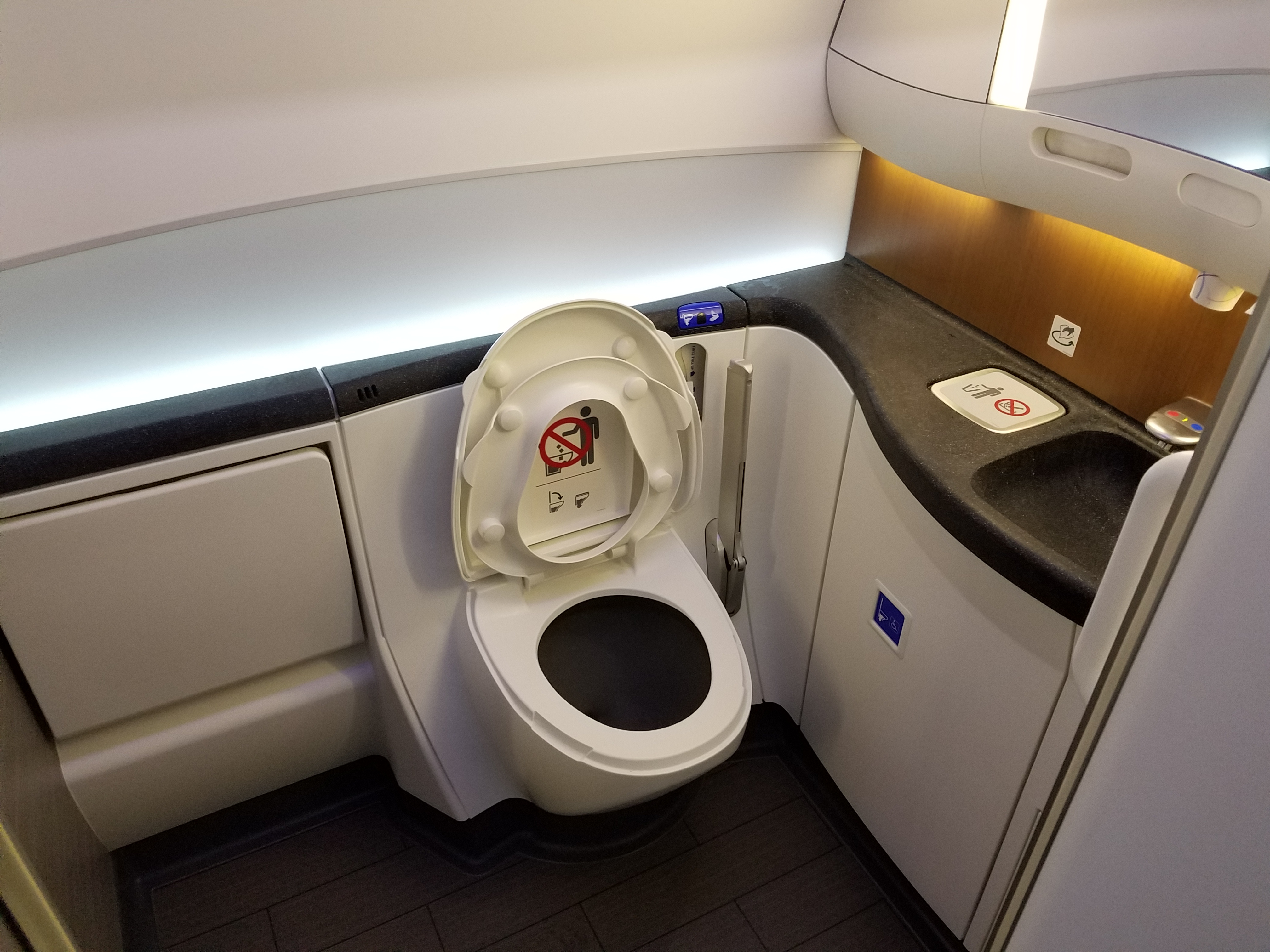
- Bio-Efficiency and Design: Aircraft manufacturers are already designing "ultra-light" lavatories that use less water and weigh less. Future cabin designs may prioritize "standing seats" or ultra-slim configurations for short flights, further reducing the weight-per-passenger ratio.
The broader implication is a shift in how we perceive the cost of flight. If the industry-wide savings of $100 million from a 0.2-liter weight reduction is accurate, it underscores the fragility of aviation economics. In an era where the industry is under intense pressure to reach "Net Zero" carbon emissions by 2050, every gram of weight becomes a liability. The "war on weight" is no longer just about the airplane; it is about every component of the journey, including the passengers themselves.
Ultimately, the transition toward lighter aircraft through digital innovation and physiological awareness represents a logical, albeit clinical, evolution of the industry. While passengers may lament the loss of seat-back screens or the "shrinking" of the cabin, the mathematical reality suggests that these changes are necessary to keep ticket prices competitive in a world of volatile energy costs. The $2.66 saved per flight may seem small, but in the high-stakes environment of global aviation, it is a significant piece of a much larger puzzle.