German cuisine is a profound reflection of the nation’s multifaceted history, geographical diversity, and evolving social landscape. While international perceptions often reduce the country’s gastronomy to a monochromatic triad of beer, sauerkraut, and sausage, a closer examination reveals a sophisticated, hearty, and deeply regional culinary culture. Modern German food is a tapestry woven from long-standing agricultural traditions, influenced heavily by centuries of migration and the integration of international flavors into the local palate. Today, Germany’s culinary scene is a vibrant ecosystem comprising high-end fine dining, historic beer gardens, thriving urban food markets, and an extensive network of regional specialty museums that celebrate everything from bread to the humble bratwurst.
The Historical Evolution of the German Table
The development of German gastronomy is intrinsically linked to the country’s changing borders and the resilience of its rural traditions. For centuries, the German diet was dictated by the seasons and the limitations of preservation. This gave rise to the "hearty" nature of traditional dishes, which favored root vegetables, pork, and various preservation methods such as pickling, fermenting, and curing.
However, the 20th century, particularly the post-war era, catalyzed significant shifts. The reconstruction period saw the introduction of new culinary influences from guest workers—most notably from Turkey—which fundamentally transformed the street food landscape. Simultaneously, the division of Germany between 1949 and 1990 created distinct culinary trajectories in the East and West. In the German Democratic Republic (GDR), rationing and the scarcity of certain ingredients forced a re-imagination of traditional recipes. For example, the dish Königsberger Klopse, a prized recipe of meatballs in a creamy caper sauce, was rebranded as Kochklopse (boiled meatballs) by state officials to scrub any reference to the former East Prussian capital of Königsberg, which had been annexed by the Soviet Union.
The Staple Dishes: A Cultural Heritage
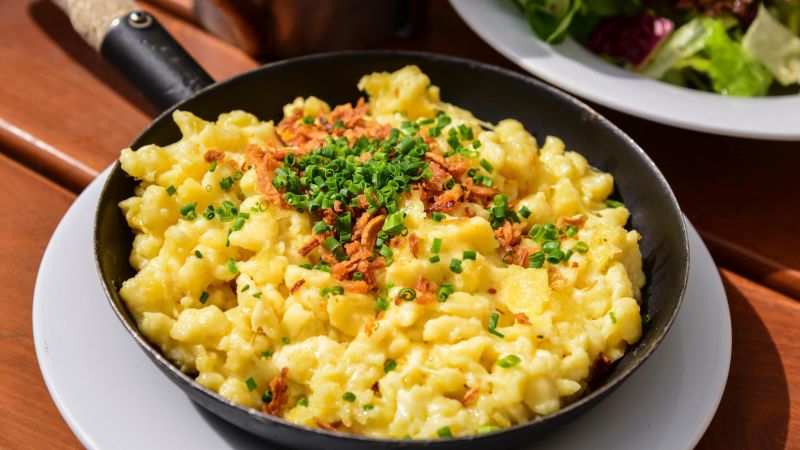
Understanding German food requires looking at the regional identities that define the country. In the south, specifically Swabia and Bavaria, the influence of dough-based comfort food is paramount. Maultaschen, large, square pockets of dough filled with meat, breadcrumbs, onions, and spinach, have become so culturally significant that the European Union granted them protected regional specialty status in 2009. This designation underscores the role of Maultaschen as a cornerstone of Baden-Württemberg’s heritage.
In contrast, the northern coastal regions lean heavily into seafaring traditions. Labskaus, a dish originating from the 18th-century maritime necessity of utilizing preserved ship provisions, remains a staple in ports like Hamburg, Kiel, and Bremen. While its appearance—a pinkish mash of salted beef, potatoes, and beetroot—may be visually challenging, its enduring popularity as a "hangover cure" speaks to its role as a practical comfort food.

The Sausage Industry and the Rise of Street Food
No discussion of German food is complete without acknowledging the Wurst. With over 40 distinct varieties of bratwurst, the sausage industry is a multi-billion euro sector. The Thüringer Rostbratwurst, known for its distinct spicy profile, is perhaps the most iconic, so much so that the region inaugurated the first German Bratwurst Museum in 2006 to preserve its historical significance.
However, the mid-20th century birthed a new street food legend: the Currywurst. Attributed to Herta Heuwer in 1949, who reportedly acquired ketchup and curry powder from British soldiers in post-war Berlin, the dish has become a national phenomenon. Statistics indicate that approximately 800 million portions are consumed annually, highlighting a national obsession with a dish born out of immediate post-war scarcity.
This street food evolution continued in the 1970s with the rise of the Döner Kebab. Introduced by Turkish immigrants, such as Kadir Nurman at West Berlin’s Zoo Station in 1972, the dish was initially a simple sandwich of meat and onions. Over the decades, it evolved into a complex assembly of fresh vegetables and diverse sauces, becoming a cornerstone of the German urban diet and a symbol of the successful integration of immigrant communities into the national culinary identity.

Seasonal Fixations and Regional Specialties
The German calendar is punctuated by intense, almost ritualistic, focus on specific seasonal ingredients. Chief among these is Spargelzeit (asparagus season). From mid-April until St. John the Baptist Day on June 24, the nation consumes over 70,000 tons of white asparagus, often referred to as "white gold." The cultural fixation is so profound that it influences restaurant menus across the country and supports a dedicated "Asparagus Route" in Baden-Württemberg.
Similarly, the autumn months bring Federweisser and Zwiebelkuchen. Federweisser, a partially fermented young white wine with a short shelf life due to its active yeast, is paired with savory onion tarts. Because of its rapid fermentation, it cannot be transported long distances in airtight containers, making the consumption of this wine a localized social event centered around regional marketplaces and vineyards, particularly along the Mosel River.
The Role of Meat and Tradition in Fine Dining
While light, seasonal dishes hold a place of honor, the "Sunday roast" remains a pillar of German family life. Sauerbraten, a pot roast marinated for several days in vinegar, herbs, and spices, is a testament to the patience of traditional cooking. Historically prepared with horse meat, the dish is now predominantly made with beef or venison. Its complexity—often requiring the use of rye bread and beetroot sugar to balance the acidity of the gravy—reflects the technical precision expected in traditional home cooking.

Rouladen occupies a similar space in the pantheon of German comfort food. The process of rolling thinly sliced beef around a core of bacon, onions, mustard, and pickles is a time-honored tradition for family gatherings. The requirement of a rich red wine gravy and accompaniments like potato dumplings and pickled red cabbage elevates the dish from a simple meal to a celebratory experience.
Bread: The Institutional Pillar
It would be remiss to overlook the German bread culture, which is officially recognized by UNESCO as intangible cultural heritage. Baking in Germany is treated with academic rigor, evidenced by the existence of the German Institute for Bread (Deutsches Brotinstitut). The country boasts over 3,000 registered types of bread, reflecting a deep-seated regional pride in the craft of sourdough and rye production. This is not merely a carbohydrate source; it is an institution that dictates the social rhythms of the German day, from the morning Frühstück to the evening Abendbrot.
Modern Innovations and International Fusion
The contemporary German culinary landscape is also characterized by a willingness to innovate within tradition. The invention of Spaghettieis in 1969 by Dario Fontanella in Mannheim serves as a prime example. By pressing vanilla ice cream through a potato ricer to mimic pasta, topped with strawberry sauce and white chocolate shavings, Fontanella created a cultural icon that is now standard in virtually every ice cream parlor in the country. This innovation, for which Fontanella was awarded the city’s Bloomaulorden medal, highlights the playful and creative side of German dessert culture.

Implications and Future Trends
The implications of these culinary traditions extend beyond the plate. As Germany moves toward more sustainable and health-conscious consumption, the focus on locally sourced, high-quality ingredients remains the bedrock of the food industry. Data from the German Federal Ministry of Food and Agriculture indicates a growing consumer shift toward organic products and regional provenance. This trend is reviving interest in forgotten heirloom vegetables and traditional preservation techniques, ensuring that the legacy of German food is not stagnant but evolving.
Whether one is sampling a delicate Schwarzwälder Kirschtorte—a cake whose popularity surged in the post-war era—or participating in a Grünkohlfahrt (a winter kale hike), the message is clear: German cuisine is not merely fuel, but a narrative. It is a story of adaptation, regional pride, and a communal appreciation for the act of eating well. For the traveler, exploring these 20 traditional dishes is more than a gastronomic checklist; it is an invitation to understand the history and the heart of the German people. As the country continues to refine its culinary identity, the emphasis remains on the balance between honoring the heritage of the past and embracing the diversity of the present.
Related posts: