The Hidden Epicenter of American Extinction and the Fragile Fight to Save Alabama’s Aquatic Biodiversity

In a seemingly unremarkable roadside ditch near Birmingham, Alabama, wedged between the asphalt of a four-lane highway and the parking lot of a faith-based recreation center, exists a biological miracle. To the casual observer, the site is merely a drain for storm runoff, occasionally cluttered with litter. To biologists from the U.S. Fish and Wildlife Service (USFWS), however, this shallow stretch of flowing water is a critical sanctuary for some of the rarest vertebrates on Earth.
During a recent survey, Jeffrey Drummond of the USFWS and Chris Haynes, a state fisheries biologist, waded into the cool water to conduct a routine check of the local population. Using a simple kick-netting technique, they captured three distinct species of darters: the watercress, the rush, and the vermilion darter. Each is no larger than a human finger, yet each is adorned with vibrant hues of crimson, orange, and blue. More importantly, each is federally listed as endangered—the highest level of legal protection afforded under the U.S. Endangered Species Act (ESA).
The presence of three federally endangered species in a single roadside ditch highlights a startling reality: Alabama is the "Amazon of North America," a global epicenter of aquatic biodiversity that is simultaneously facing an extinction crisis of staggering proportions.
A Biodiversity Powerhouse Under Pressure
Alabama’s ecological profile is defined by its water. The state boasts more than 130,000 miles of rivers and streams, forming a complex network of habitats that has fostered an explosion of life over millions of years. According to data from the Geological Survey of Alabama and various conservation groups, the state ranks first in the nation for the number of species of freshwater mussels, snails, crayfish, and turtles.
However, this richness is matched by a somber statistic. A data analysis reveals that Alabama has more federally endangered and threatened animal species than any other state in the Union, with the sole exception of California. Given that California is three times the size of Alabama by land area, Alabama’s density of imperiled species is significantly higher.
Despite this status, the state faces a chronic deficit in conservation funding. The mechanisms that provide financial support for wildlife protection in the United States were largely designed in the mid-20th century, prioritizing species that are hunted or fished. This "game-centric" funding model often leaves non-game species—the small, the obscure, and the "uncharismatic"—without the resources necessary for their survival.
The Alabama Aquatic Biodiversity Center: A DIY Mission
The frontline of the battle to prevent extinction in Alabama is the Alabama Aquatic Biodiversity Center (AABC), located about an hour from Tuscaloosa. Operated by the state, the AABC is the largest state-run non-game recovery program in the country. Its primary focus is the restoration of freshwater mussels, a group of animals that serve as the "ecosystem engineers" of American rivers.
Freshwater mussels act as natural filtration systems. A single adult mussel can filter up to 10 gallons of water per day, removing bacteria, algae, and pollutants. In a healthy stream, thousands of mussels can keep water clear and safe for both human recreation and other wildlife. However, of the 180 mussel species once native to Alabama, 24 are already extinct, and nearly 70 others are listed as threatened or endangered.

Paul Johnson, a veteran biologist who has led the AABC for decades, oversees a facility that is remarkably "low-tech" despite the high stakes of its mission. The nursery relies on repurposed household items—Tupperware containers, plastic buckets, and household refrigerators—to raise thousands of larval mussels.
"We have the most species and the fewest dollars," Johnson observed, noting the irony of Alabama’s position. The AABC operates with just four full-time employees and an average annual budget of approximately $750,000—a fraction of what is spent on managing game species like white-tailed deer or wild turkey.
The Complex Biology of Survival
The difficulty of saving mussels lies in their extraordinary and bizarre life cycle. Mussels are largely sedentary, meaning they cannot easily migrate to new habitats. To overcome this, they have evolved a parasitic relationship with fish.
Female mussels produce larvae called glochidia, which must attach to the gills of a specific "host fish" to survive their first weeks of life. To lure these fish, mussels have developed sophisticated mimicry. Some species wave fleshy appendages that look exactly like small minnows; others produce packets of larvae that resemble insects or crayfish eggs. When a predatory fish strikes at the "lure," the mussel releases its larvae, which hitch a ride on the fish’s gills until they are mature enough to drop off and settle in a new part of the riverbed.
At the AABC, biologists must manually "infect" host fish with mussel larvae in a carefully controlled environment. Once the juvenile mussels drop off the fish, they are collected and raised in buckets submerged in a nearby pond until they are large enough to be released into the wild. To date, the center has released more than 300,000 mussels across a dozen species into Alabama’s waterways.
The Funding Paradox and Political Hurdles
The primary obstacle to expanding these efforts is a systemic flaw in how conservation is funded in the United States. Under the Pittman-Robertson Act of 1937 and the Dingell-Johnson Act of 1950, the majority of state wildlife funding comes from excise taxes on firearms, ammunition, and fishing tackle. By law, much of this money must be spent on species that provide "sport," leaving non-game animals like the Alabama rainbow mussel or the bog crayfish to compete for a tiny sliver of the remaining budget.
In Alabama, only about 1 percent of the Department of Conservation and Natural Resources (ADCNR) budget is allocated to non-game species. Furthermore, federal grants for endangered species are often distributed based on a state’s land area and human population, rather than its biological needs. This puts smaller, biodiverse states like Alabama at a distinct disadvantage compared to larger states like New York or Illinois, which receive more funding despite having fewer endangered species.
Legislative efforts to bridge this gap have faced significant political headwinds. The Recovering America’s Wildlife Act (RAWA), a bipartisan bill that would have provided $1.3 billion annually to states for non-game conservation, would have funneled an estimated $25 million per year into Alabama. However, the bill stalled in the U.S. Senate in 2022 after Alabama’s Republican congressional delegation voted against it in the House. Opponents of the bill cited concerns over federal spending and the mechanism for funding the program.
Local Successes and Economic Justification
Despite the lack of federal movement, conservationists in Alabama have found success by reframing the narrative. By emphasizing the economic and recreational benefits of healthy waterways, advocates have managed to secure some state-level support.

"The key is connecting the work to the values of the local community," said Chris Oberholster, a veteran of the Nature Conservancy and current philanthropy director for conservation efforts. "When you explain that mussels keep our drinking water clean and our bass fishing lakes healthy, people listen."
The Alabama Legislature recently approved a $2 million appropriation from the state’s general fund for threatened species, a move seen as a major victory for the ADCNR’s non-game division. This funding is being used to repair the aging infrastructure at the AABC and expand survey efforts for the state’s 100 species of crayfish.
These investments are already yielding results. The pale lilliput, a small mussel once on the brink of extinction, has seen its population stabilize to the point that it may soon be eligible for delisting from the Endangered Species Act. Two other species are also showing signs of recovery thanks to the AABC’s reintroduction programs.
Analysis of Implications: A Race Against Time
The situation in Alabama serves as a microcosm for the global biodiversity crisis. The state’s struggle illustrates that extinction is rarely the result of a single event, but rather a "death by a thousand cuts"—dams that block fish migration, agricultural runoff that chokes streams with silt, and urban development that encroaches on fragile springs.
The "ditch" darters of Birmingham are currently threatened by the proposed Northern Beltline, a multi-billion-dollar highway project that critics argue could destroy the delicate hydrology of the springs they inhabit. The conflict between infrastructure development and species preservation remains a central theme in Alabama’s political landscape.
Ultimately, the survival of Alabama’s unique species depends on a shift in perspective. While wolves and whales capture the public imagination, the "hidden" wildlife of the Southeast—the snails, the darters, and the mussels—are the foundation of the continent’s most productive aquatic ecosystems.
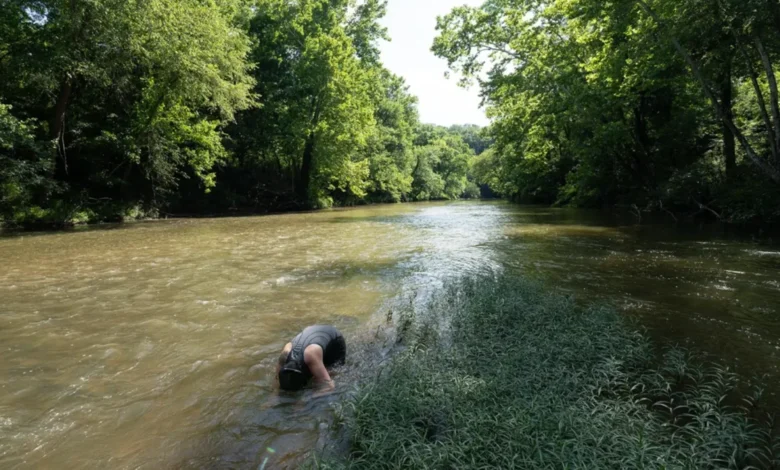
As Carla Atkinson, a researcher at the University of Alabama, noted while searching for mussels in a murky stream: "It’s gratifying to see that they’re still persisting. They do so much for us just by existing. The question is whether we are willing to do enough for them."
The ongoing work at the AABC and the efforts of dedicated state biologists provide a glimmer of hope. However, without a fundamental change in how the nation values and funds biodiversity, the "Amazon of North America" risks losing the very treasures that make it unique. For now, the fight continues—one plastic bucket and one roadside ditch at a time.
Related posts: