From the Frontlines to the Future: How Autonomous Systems are Transforming Wildfire Suppression

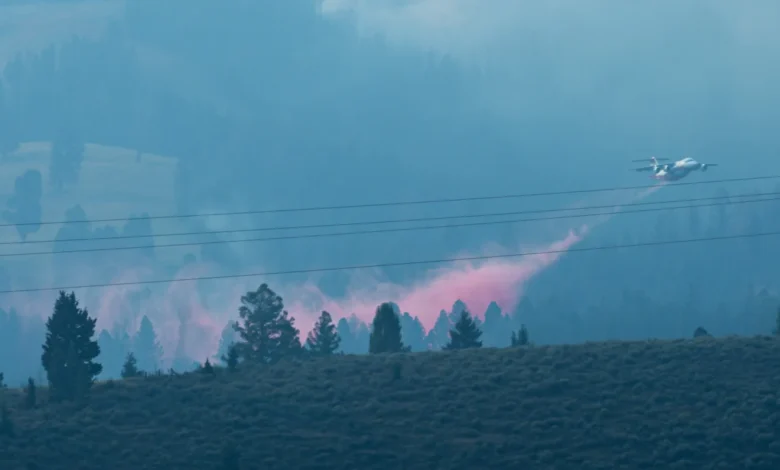
The landscape of wildfire management is undergoing a profound technological transformation as federal agencies increasingly turn to unmanned aerial systems (UAS) and artificial intelligence to mitigate the dangers faced by firefighting crews. During the Sand Creek Fire, which ignited in southwestern Montana in early August 2026, the reliance on traditional manual scouting in treacherous, steep terrain was supplemented by a fleet of drones. These aircraft provided real-time thermal mapping that allowed incident commanders to identify smoldering hotspots that were previously hidden from human view, marking a significant departure from the reliance on boots-on-the-ground reconnaissance in high-risk zones.
A Chronology of the Sand Creek Fire Response
The Sand Creek Fire began in early August 2026, quickly challenging the containment efforts of local and federal responders due to its location in rugged, mountainous terrain. By mid-August, the fire had reached a level of complexity that necessitated advanced monitoring. Because of the risk posed by fire-weakened timber—often referred to as "widow-makers"—commanders were hesitant to deploy ground crews into the steepest sections of the slope immediately following the fire’s passage.
Instead, the incident management team integrated drone units to perform systematic thermal surveys. Between August 12 and August 20, these unmanned aircraft conducted multiple sorties, identifying deep-seated heat signatures within the root systems of old-growth trees. This data allowed crews to surgically target mop-up operations, significantly reducing the amount of time personnel spent in "the black," or the burned-out zone where physical hazards are most acute. By late August, this data-driven approach had become the standard operating procedure for the incident, demonstrating that the future of wildfire suppression is as much about data acquisition as it is about physical containment.
The Technological Evolution of Firefighting
The integration of drones is only the most visible facet of a broader modernization initiative within the U.S. Forest Service. Historically, fire management relied on aerial surveillance from manned aircraft, such as helicopters and fixed-wing planes. While effective, these assets are often grounded by smoke, low visibility, or extreme turbulence—conditions that drones are increasingly capable of navigating.
The Federal Aviation Administration (FAA) has recently expanded its partnerships with land management agencies to streamline the deployment of UAS in emergency scenarios. Today, the Forest Service employs a specialized workforce of UAS pilots, data analysts, and module leaders tasked exclusively with integrating aerial robotics into fire suppression. This organizational shift acknowledges that drones are no longer mere "toys" or supplemental cameras; they are now primary tactical assets.
Beyond simple surveillance, these systems are being tested for active fire suppression. Federal agencies are currently evaluating the use of drones to drop firefighting foam and water directly onto flare-ups in areas inaccessible to heavy air tankers. Furthermore, drones have become the primary tools for "aerial ignition"—a process where fire managers intentionally drop incendiary devices to create containment lines. By using drones to ignite these lines, the Forest Service effectively removes human pilots and ground crews from the most dangerous phases of fire behavior control.
Autonomous Ground Support: Moving Beyond the Air
While drones dominate the skies, the Forest Service is simultaneously exploring the potential of autonomous ground vehicles (AGVs) to assist in logistical operations. In June 2026, the agency conducted field tests in Georgia using robotic ground platforms designed to traverse uneven, rocky, and steep terrain—environments that simulate the difficult topography of the American West.
These AGVs are designed to serve as "mules," capable of carrying payloads of up to 800 pounds. For a standard hotshot crew, this could mean the difference between manual exhaustion and effective suppression. By transporting heavy hose packs, chainsaws, medical supplies, and water containers, these vehicles aim to reduce the physical burden on firefighters. Reducing the caloric and physical expenditure of a crew allows them to maintain focus and reaction time during high-intensity incidents. While these robots are currently in the testing phase, the long-term goal is to deploy them alongside crews to ensure that supplies reach the fireline without requiring the construction of new access roads or the use of heavy, carbon-intensive equipment.
Data-Driven Fire Behavior Modeling
Perhaps the most significant long-term development is the marriage of drone-collected data with machine learning (ML). Current fire behavior models often rely on weather data and historical maps, which can be static or slow to update. Researcher Phinehas Lampman, whose work was recently published in the International Journal of Wildland Fire, has developed a proof-of-concept system that uses thermal-infrared imagery from drones to feed ML algorithms in real time.
By measuring the rate of spread, fireline intensity, and radiative power during a fire, these models can offer short-term, highly accurate predictions of where a fire will move within the next few hours. This is a critical upgrade for incident commanders who have traditionally relied on their personal experience and intuition to make life-or-death decisions. As Lampman noted, while human expertise remains the bedrock of fire management, AI serves as an objective, high-frequency data source that functions even when human observations are limited by smoke or fatigue.
Broader Implications for Smoke and Public Health
The application of this technology extends beyond the flames to the environmental and public health impacts of wildfires. Professor Leda Kobziar of the University of Idaho is leading research into how drone data can refine models of smoke plume behavior. By capturing real-time data on the chemistry of the smoke—including concentrations of particulate matter and potential smoke-borne microbes—researchers are building tools to better protect the public downwind.
Predicting the path of a smoke plume is notoriously difficult, as it is influenced by localized micro-climates and the chemical composition of the fuel being burned. By using drones to sample the air within the plume, researchers can provide health agencies with more accurate, localized data, potentially allowing for more precise public health warnings and evacuations.
Challenges and Future Outlook
Despite the promise of these technologies, significant hurdles remain. The technology is not yet ready for universal, routine deployment. Battery life, signal interference in deep canyons, and the need for standardized training across different federal jurisdictions continue to be points of friction. Furthermore, there is the persistent debate regarding the "human element." Critics of total automation argue that wildfire management is a complex, chaotic environment that requires human judgment which cannot be fully replicated by algorithms.
However, the consensus within the firefighting community is that the integration of these tools is not a replacement for human firefighters, but a force multiplier. The goal is to move the human element to a position of strategic oversight, allowing machines to perform the "dull, dirty, and dangerous" tasks.
As the 2026 wildfire season concludes, the lessons learned from the Sand Creek Fire and other incidents serve as a blueprint for the next decade of emergency response. The shift toward a digital, autonomous, and data-rich firefighting landscape appears inevitable. With the increasing frequency and intensity of wildfires driven by changing climatic conditions, the ability to rapidly process data and deploy robotic assets will likely become the primary differentiator between a contained fire and a catastrophic loss of property and life. For the men and women on the firelines, this technological infusion offers the hope of a safer, more efficient, and more informed approach to one of the most dangerous jobs in the world.
Related posts: