The Erosion of Academic Autonomy: How Corporate Interests and Political Pressure Are Reshaping American Higher Education

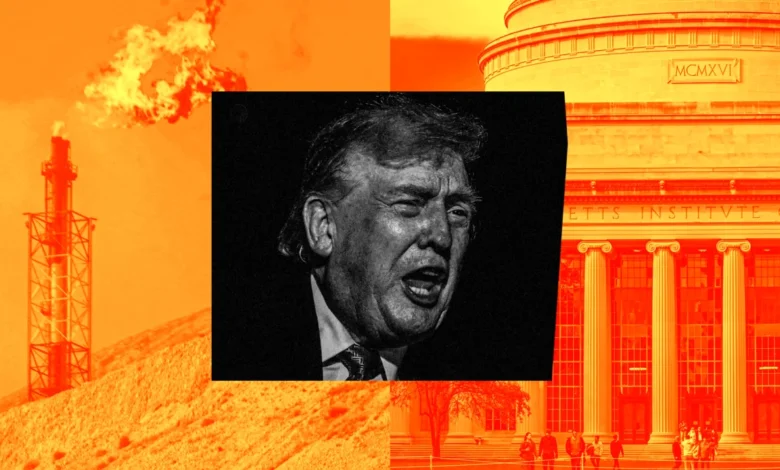
The landscape of American higher education is undergoing a profound transformation as the intersection of partisan politics, fossil fuel industry funding, and administrative compliance creates a new, restrictive reality for researchers and faculty. A recent study published in the journal Energy Research & Social Science highlights a troubling decline in institutional autonomy, suggesting that the mission of the modern university is being increasingly compromised by outside actors. As federal funding becomes contingent upon alignment with specific political agendas and corporate donations reshape curricula and hiring, scholars are sounding the alarm on a trend that threatens to undermine the credibility of climate science and the sanctity of independent inquiry.
A Chronology of Declining Independence
The current crisis did not emerge in a vacuum; it is the culmination of decades of strategic efforts to influence the intellectual output of colleges and universities. The trajectory of this influence can be traced back to the early 20th century, when electric utility companies first began collaborating with academics to defend monopoly interests against regulatory oversight. By the 1950s, the fossil fuel industry had refined this strategy, funneling significant capital into academic institutions to seed doubt regarding the public health impacts of their products.
The modern phase of this influence began to intensify significantly around 2010. Between 2010 and 2020, six major fossil fuel corporations alone contributed over $700 million to various US universities. These financial relationships often transcended simple research grants; they frequently included stipulations that granted donors a degree of influence over hiring processes and the development of academic programs.
The situation reached a critical juncture in 2025. The Trump administration initiated a series of aggressive measures, including the freezing of billions of dollars in research funding and the launch of wide-ranging investigations into 75 academic institutions. During this period, the administration began mandating that colleges sign agreements supporting federal policies as a prerequisite for receiving grant money. Notable casualties of this policy shift included $4 million in climate research grants at Princeton University, which were canceled amid administration claims that such research was inciting public "climate anxiety."
The Data Behind the Academic Freedom Crisis
The empirical evidence of this decline is stark. The Academic Freedom Index, a comprehensive metric tracking the ability of scholars to research and express ideas without fear of reprisal, provides a quantitative look at the deterioration of the campus climate. In 2019, the United States boasted an institutional autonomy score of 3.3 on a scale of 0 to 4. By 2025, that figure had plummeted to 1.7.
This drop in the index is not merely a bureaucratic statistic; it represents a fundamental change in the day-to-day operations of faculty. According to Noel Healy, a professor at Salem State University and the lead author of the recent study, the fear of losing funding has created a chilling effect that is now pervasive. Researchers are actively self-censoring, omitting terms like "climate change" from grant applications to avoid immediate rejection by federal agencies. This preemptive suppression has led some universities to dismantle entire departments or programs before any official demand for such action is even issued, as institutions attempt to avoid becoming targets of political scrutiny.
The Rise of Politically Aligned Academic Centers
Parallel to the decline in faculty-led governance is the rise of state-sponsored, ideologically driven academic centers. A pivotal moment in this shift occurred in 2016, when the Arizona state legislature pioneered the establishment of a publicly funded, libertarian-leaning academic center. This model, which bypasses traditional faculty oversight in favor of direct legislative control, has been replicated in several other states.
During the 2025-2026 academic year, these centers are projected to receive approximately $50 million in taxpayer funding. Critics argue that these institutions function less as centers of open inquiry and more as conduits for specific political agendas, further eroding the democratic function of public universities. Furthermore, between 2021 and 2023, state legislatures introduced more than 150 bills aimed at weakening tenure, curbing faculty involvement in litigation, and restricting programs related to diversity, equity, and inclusion (DEI).
Official Responses and the Corporate Defense
The institutions at the center of these funding relationships maintain that their academic integrity remains intact. Historically, entities like the MIT Energy Initiative have argued that their industry partnerships are essential for the development of practical, scalable climate solutions. These institutions frequently assert that their donor agreements contain explicit "firewalls," ensuring that funders have no influence over the findings or the content of research reports published by their scientists.
However, researchers like Healy contend that transparency—while necessary—is insufficient. The mere existence of a "deal" with an industry that has a vested interest in the outcome of the research creates an inherent conflict of interest. The study suggests that even without explicit donor interference, the pressure to maintain funding streams creates a subtle, powerful bias in the types of questions researchers are willing to ask and the methodologies they are encouraged to employ.
Broader Implications and Future Outlook
The implications of this corporate and political capture are profound. If academic research becomes a vehicle for legitimizing industry-friendly policies rather than an objective search for truth, the public’s already fragile trust in scientific institutions will likely continue to evaporate. The erosion of university legitimacy, as seen in other international contexts, has historically been the precursor to deeper political control, including faculty purges and the forced closure of independent research programs.
To mitigate these risks, the study proposes several structural reforms. First, universities must move toward greater transparency, disclosing not just the existence of major gifts but the specific contractual obligations associated with them. Second, there is a call for the implementation of robust, faculty-led gift-acceptance policies. Under such a system, faculty committees would be empowered to review and, if necessary, reject donations that threaten the institution’s commitment to independent inquiry.
The "UnKoch My Campus" campaign serves as a model for this approach, providing frameworks that ensure donor agreements are made public and that no gift can grant a donor control over curricula or faculty hiring. Additionally, the strengthening of faculty unions is suggested as a critical mechanism for protecting individual researchers from both administrative overreach and external pressure.
The path forward for American higher education requires a return to the foundational principle of university autonomy. As the authors of the study warn, universities that remain silent in the face of these pressures risk losing their role as a check on corporate and political power. The evidence is clear: when the industry being regulated is granted the power to shape the research that informs that regulation, the integrity of the democratic process itself is at stake. Addressing this imbalance is not merely an academic exercise; it is an urgent necessity for the future of public policy and scientific progress.