Beyond the Booking: Why Spotnana CEO Steve Singh Argues the Real Travel Revolution Happens After the Sale

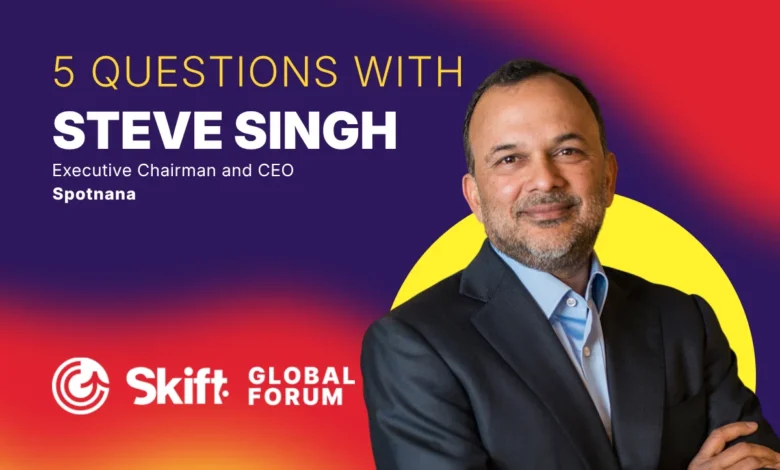
The global travel industry has long fixated on the front end of the consumer journey, pouring billions of dollars into search algorithms, digital distribution networks, and booking interfaces designed to capture initial demand. However, according to Spotnana Executive Chairman and CEO Steve Singh, the sector is looking in the wrong direction. The most significant financial opportunity—and the ultimate test of customer loyalty—lies in the unglamorous, complex work that takes place after a trip has been purchased.
Ahead of his keynote appearance at the Skift Global Forum in New York City, Singh has outlined a transformative thesis for the travel sector: artificial intelligence is quietly rewriting the economics of post-booking servicing. By automating routine administrative tasks such as flight cancellations, refunds, and ticket re-issuances, technology platforms can slash operational servicing costs by up to 50 percent while simultaneously delivering a more proactive, personalized experience to the end traveler.
This perspective challenges decades of travel technology convention, shifting the industry’s focus away from mere customer acquisition and toward long-term operational resilience and trust-building.
The Structural Shift from Manual Queues to Automated AI Agents
For decades, the post-booking phase of travel management has been characterized by heavy reliance on human labor. When flights are delayed, itineraries change, or cancellations occur, travelers traditionally flood customer service queues, requiring human agents to manually untangle complex reservation records across legacy global distribution systems (GDS). This manual approach has historically created bottlenecks, inflated labor costs for travel management companies (TMCs) and corporate travel programs, and led to high friction for frustrated consumers.
Spotnana’s operational data indicates a major behavioral and structural shift in how these routine tasks are managed. The company’s proprietary AI agents are now autonomously processing cancelled flight segments, resolving unticketed reservations, and executing complex refund requests without human intervention.
This transition does not signal the elimination of human labor in travel management, but rather a strategic reallocation of human talent. As routine, repetitive administrative workflows are absorbed by automated AI agents, human travel agents are freed up to focus on high-touch, complex advisory roles where empathy, strategic negotiation, and personalized problem-solving provide tangible value to the traveler.
Background Context: The Evolution of Travel Technology and the Skift Global Forum
The discussion surrounding post-booking automation comes at a critical juncture for the travel technology ecosystem. Held annually in New York City, the Skift Global Forum gathers the most influential executives, technologists, and innovators from across the travel sector to debate emerging trends and structural shifts. The 2026 iteration of the event features a formidable roster of industry leaders, including Sierra’s Bret Taylor, Booking Holdings CEO Glenn Fogel, and Expedia Group CEO Ariane Gorin, all grappling with the rapid integration of generative AI into travel commerce.
Over the past decade, travel technology has evolved through distinct phases. The first phase focused on digitizing inventory, moving travel agencies online through platforms like Expedia and Booking.com. The second phase centered on mobile optimization and personalization algorithms designed to enhance the initial discovery and booking phase. Today, the industry has entered a third phase defined by conversational interfaces, fragmentation of content sources, and the demand for end-to-end synchronization.
As travelers increasingly expect seamless, omni-channel interactions, the limitations of legacy backend systems have become glaringly apparent. Historically, if a traveler booked a flight through one channel and attempted to modify it through a customer support agent using a different system, data silos often prevented the change from synchronizing correctly. Singh emphasizes that modernizing this backend infrastructure is no longer optional; it is a prerequisite for survival in an AI-driven marketplace.
Curation, Conversational Front-Ends, and the Fragmentation Challenge
The customer journey has grown increasingly fragmented. Modern travelers source their travel products from a dizzying array of direct-to-consumer airline sites, hotel aggregates, alternative accommodation platforms, and emerging conversational AI booking assistants.
To navigate this fragmented ecosystem, Spotnana has prioritized direct technical connections with airlines, hotel chains, and global travel providers from its inception. By bypassing legacy middlemen and establishing native integrations, the platform ensures that diverse sources of content remain both bookable and fully serviceable within a unified architecture.
This architectural flexibility is particularly crucial as the industry transitions toward conversational AI booking front-ends. When interacting with natural language AI agents, travelers are no longer constrained by rigid drop-down menus and filter forms. A corporate traveler can request a hotel room on a high floor with an ocean view and early check-in using natural, descriptive language.
Consequently, the operational bar for travel providers has risen dramatically. AI-driven recommendation engines rely heavily on rich, accurate product data encompassing detailed rates, fare rules, ancillary services, and precise property amenities. Singh notes that direct integrations serve as the most reliable source for this granular data, ensuring that conversational recommendation engines can accurately match consumer intent with verified inventory.
Furthermore, Spotnana has adopted a stringent standard for AI curation. In a conversational environment where only a handful of top recommendations are presented to the user, the platform aims to accurately anticipate traveler preferences so effectively that the presented options align with what the consumer would have chosen independently at least 95 percent of the time if they had reviewed the entire universe of available options.
Analysis of Implications: Margins, Trust, and Market Dynamics
The financial and strategic implications of Singh’s thesis extend far beyond internal operational efficiencies for TMCs. They strike at the core of brand equity and customer retention in a highly competitive global marketplace.
-
Margin Expansion through Labor Optimization: Servicing costs traditionally represent one of the largest ongoing operational expenditures for travel management companies and corporate travel programs. A sustained reduction in servicing labor costs by 50 percent or more would fundamentally alter the unit economics of business travel management. Companies that successfully implement these automated workflows can either expand their operating margins or aggressively price their services to capture broader market share.
-
Trust as the Ultimate Competitive Differentiator: In an era where digital distribution has commoditized the initial sale, anyone with access to an API can sell a ticket or book a hotel room. True differentiation occurs when things go wrong—such as during mass flight cancellations, weather disruptions, or unexpected itinerary changes. By leveraging proactive, AI-driven servicing that resolves issues before the traveler even notices them, brands can dramatically enhance customer satisfaction and long-term loyalty.
-
The Imperative of Unified Data Architecture: The industry-wide push toward conversational AI and automated post-booking workflows places immense pressure on legacy players to modernize their technological backends. Enterprises that fail to unify their data systems across booking, ticketing, and servicing channels will find themselves unable to support automated interventions, resulting in higher operational costs and elevated customer churn.
Conclusion
As industry leaders gather in New York for the Skift Global Forum, the dialogue surrounding artificial intelligence in travel is maturing. The initial hype centered purely on conversational search and generative UI is giving way to a more pragmatic, execution-focused assessment of backend transformation.
Steve Singh’s vision for Spotnana underscores a broader truth for the travel economy: the future belongs not merely to those who capture the initial transaction, but to those who master the intricate, high-stakes ecosystem of what happens after the booking is made. By fusing direct content integrations with proactive AI servicing, the travel industry stands on the precipice of a profound structural evolution—one where lower costs and elevated trust finally go hand in hand.