Brand USA Faces Financial Headwinds as Pandemic-Era Reserves Deplete and Federal Funding Cuts Loom

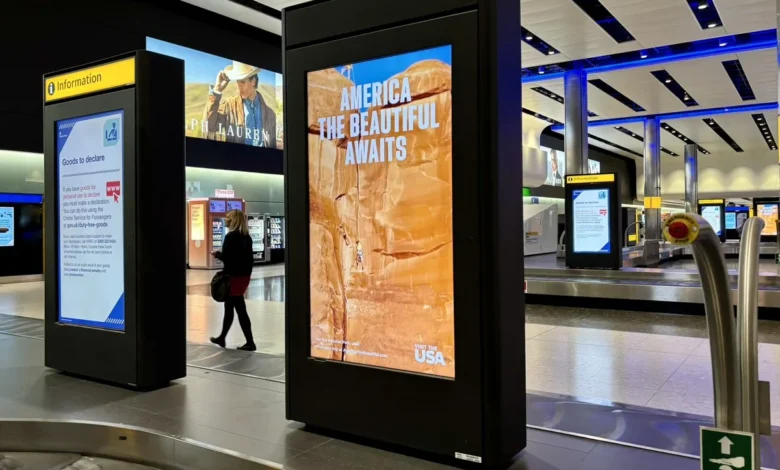
The United States destination marketing organization, Brand USA, is preparing for a challenging financial horizon as a critical $250 million injection of pandemic-era federal relief winds down. Originally designed to stabilize the nation’s tourism sector in the wake of global travel restrictions, this supplemental funding has successfully cushioned the organization against earlier budgetary reductions. However, as these reserves approach exhaustion, Brand USA is bracing to absorb the full impact of permanent federal funding cuts enacted last year, raising urgent questions about the future competitiveness of the United States in the global tourism market.
While the immediate operational budgets for the upcoming fiscal years remain relatively stable, drawing on remaining financial cushions, the longer-term outlook signals a necessary contraction. Industry stakeholders, international travel partners, and destination marketing experts are closely monitoring the situation, as the impending depletion of cash reserves threatens to reduce the United States’ marketing footprint abroad precisely when international travel competition is intensifying.
The Genesis of Brand USA and the Pandemic Shock
Established by the Travel Promotion Act of 2009 and launched in 2011, Brand USA was created to address a critical vulnerability in the American economy: the United States was one of the few major global destinations lacking a coordinated, federally supported national tourism marketing entity. Funded through a unique public-private partnership model—combining fees collected from international visitors under the Electronic System for Travel Authorization (ESTA) with matching contributions from private-sector partners—the organization quickly became a vital engine for economic growth. Prior to the COVID-19 pandemic, international inbound travel supported millions of American jobs and generated hundreds of billions of dollars in export income.
The arrival of the COVID-19 pandemic in early 2020 brought international travel to a near-total standstill, severely disrupting the revenue streams that sustain Brand USA. With ESTA fee collections plummeting due to border closures and flight suspensions, the organization faced an unprecedented existential crisis. In response to the collapse of the tourism economy, the federal government stepped in with a monumental $250 million one-time funding boost in 2022. This financial lifeline allowed Brand USA to maintain its promotional momentum, sustain essential global campaigns, and retain critical staff during a period when the travel industry required aggressive rehabilitation.
This temporary influx of capital masked underlying structural changes to the organization’s funding model. Even as the $250 million relief package flowed into agency accounts, subsequent federal funding adjustments and legislative shifts began eroding the baseline revenue streams. Over recent years, these policy changes and statutory funding reductions erased as much as $80 million from Brand USA’s annual operating budget, creating a widening gap between historical spending capabilities and incoming revenues.
Current Fiscal Outlook: Stability Before the Storm
Despite the ongoing reduction in baseline federal support, Brand USA’s leadership has managed to maintain a steady operational cadence through strategic deployment of the remaining pandemic-era reserves. Financial disclosures and organizational projections indicate that Brand USA plans to spend $158 million in fiscal year 2026, followed by $165 million in fiscal year 2027, which officially commences next month. These figures are roughly in line with the pre-pandemic annual spending levels outlined in the organization’s historical tax filings, suggesting that short-term marketing initiatives will not experience immediate, drastic curtailment.
However, this sustained spending is heavily subsidized by the rapid drawdown of accumulated cash reserves. After accounting for a projected $114.1 million drawdown, Brand USA expects to conclude September 2027 with cash reserves reduced to approximately $51 million. Furthermore, organizational governance policies dictate that the vast majority of this remaining $51 million must remain untouched as a designated emergency fund, leaving very little discretionary capital to absorb unexpected economic shocks, currency fluctuations, or sudden shifts in international travel sentiment.
Fiscal year 2028 represents the critical inflection point where the cushion of pandemic-era relief will be entirely gone. With diminished cash reserves, coupled with ongoing structural reductions in federal allocations and partner contributions, the organization will face a stark mathematical reality. Without legislative intervention or a significant surge in private-sector matching funds, Brand USA’s actual purchasing power and global advertising reach are projected to contract significantly by the end of the decade.
The Mechanics of Tourism Funding: ESTA and Private Partnerships
To understand the severity of Brand USA’s financial pivot, it is necessary to examine the structural mechanics of its funding model. The organization does not receive direct appropriations from general income tax revenues. Instead, its primary public funding source is derived from a $10 fee levied on international visitors traveling to the United States under the Visa Waiver Program via ESTA. Of that $10 fee, $4 is allocated directly to Brand USA, up to an annual statutory cap, while the remaining $6 is directed toward general government operations and travel facilitation programs.
When international visitation volumes dropped during the pandemic, ESTA fee revenues evaporated. Conversely, as global travel rebounded through 2023 and 2024, ESTA collections recovered, yet statutory formulas and changing government allocations failed to restore the organization to its peak funding capacity.
In addition to ESTA fees, Brand USA relies heavily on in-kind and financial contributions from private-sector partners, including major hotel chains, airlines, car rental companies, theme parks, and regional destination marketing organizations (DMOs). These partners match federal allocations, ensuring a collaborative approach to marketing the United States. However, when the broader travel industry faces economic headwinds, inflationary pressures, or operational challenges, private partners often scale back their cooperative marketing contributions. This creates a compounding effect: as federal funding decreases, private partners may find it difficult to bridge the widening financial chasm on their own.
Industry Reactions and Stakeholder Concerns
The impending contraction of Brand USA’s budget has generated considerable anxiety across the American hospitality, aviation, and retail sectors. Travel industry associations and trade groups have consistently argued that destination marketing is not merely an expense, but a high-yield investment that generates substantial tax revenue for federal, state, and local governments.
Industry analysts point out that international visitors typically stay longer and spend significantly more per trip than domestic travelers, making them a crucial demographic for supporting local economies, small businesses, and urban centers alike. When a national tourism marketing agency reduces its global footprint, it risks losing market share to fiercely competitive international destinations.
Competitor nations—such as Australia, Canada, the United Kingdom, and various European Union members—subsidize their national tourism boards with robust, predictable government budgets. These countries have ramped up their international marketing campaigns to capture travelers seeking long-haul vacations. Without a fully funded Brand USA, travel advocates warn that the United States could struggle to communicate new travel offerings, infrastructure improvements, and gateway entry points to prospective visitors in key source markets like Europe, Asia, and Latin America.
While formal statements from tourism executives emphasize confidence in the resilience of the American brand, behind-the-scenes lobbying efforts have intensified. Stakeholders are actively engaging with federal lawmakers to explore legislative solutions that could restore baseline funding, adjust ESTA fee allocation caps, or establish alternative revenue mechanisms to secure the organization’s long-term financial health.
Broader Economic Implications and Strategic Outlook
The financial squeeze facing Brand USA carries profound implications for the broader U.S. economy. International travel is one of the nation’s leading service exports. According to economic impact data compiled prior to the pandemic, international visitors injected hundreds of billions of dollars into the U.S. economy annually, supporting millions of American jobs in hospitality, food service, retail, and entertainment.
A reduction in Brand USA’s marketing budget could result in a slower recovery or even a plateau in inbound visitation numbers, particularly from high-value long-haul markets where consumer decisions are heavily influenced by inspiring destination marketing campaigns. Furthermore, mega-events on the horizon—such as the 2026 FIFA World Cup, the 2028 Summer Olympic Games in Los Angeles, and the celebrations surrounding the United States Semiquincentennial (America250) in 2026—represent once-in-a-generation opportunities to showcase the country to a global audience.
Marketing experts emphasize that promoting these monumental events requires substantial, sustained global advertising campaigns that must be planned years in advance. If Brand USA is forced to scale back its promotional efforts due to dwindling cash reserves just as these historic events take place, the United States may miss out on maximizing the international tourism windfall that typically accompanies such global showcases.
As fiscal year 2027 approaches and the final drawdown of pandemic-era relief accelerates, the path forward for Brand USA will depend heavily on strategic adaptation and legislative engagement. Whether policymakers will step in to recalibrate the funding structure before the 2028 fiscal cliff remains to be seen. What is clear, however, is that America’s premier tourism marketing arm is navigating its most delicate financial transition since its inception, with the global competitiveness of the U.S. travel sector hanging in the balance.