The Crisis on the Frontlines: How Federal Firefighting Shortages and Aggressive Policies are Pushing Crews to the Breaking Point

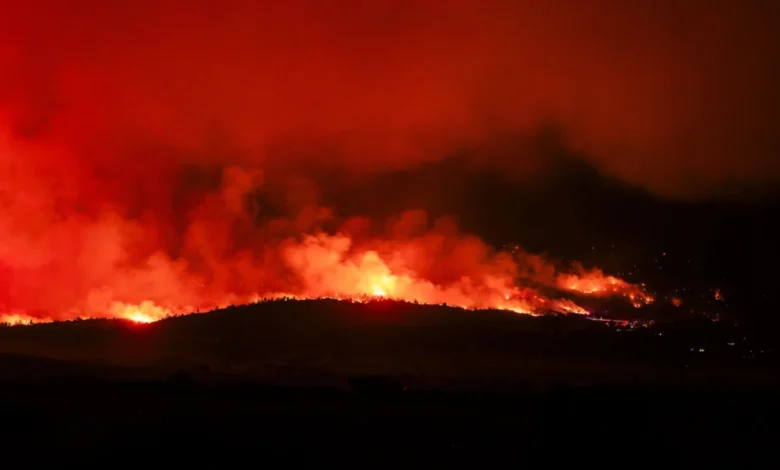
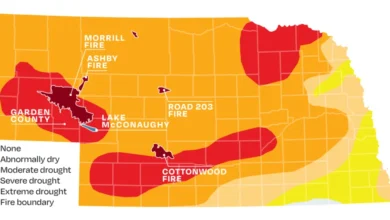
The United States is currently enduring one of the most volatile and destructive wildfire seasons in modern history, characterized by an unprecedented convergence of extreme climate conditions, a thinning labor force, and a controversial shift in federal fire management policy. As the Aspen Acres fire in Colorado marks its place as the eighth-largest blaze in state history, having consumed over 73,000 acres, the firefighters tasked with containment report a system in collapse. On-the-ground personnel describe a landscape where the fundamental "inflation" of fire intensity has far outpaced the "wages" of human capacity, leading to a dangerous spike in fatalities, injuries, and entrapments that have not been seen in two decades.
A Chronology of Escalation
The 2026 fire season began with an ominous intensity in early spring, signaling that the customary fire cycles were shifting. By April, federal firefighting crews were already deployed on near-nonstop assignments across the American West. As the summer heat intensified, the cumulative impact of fatigue began to manifest in operational errors.
By mid-August, the Wildland Fire Lessons Learned Center reported a staggering 12 instances of firefighter entrapments—a metric that signifies when flames breach established safety zones or obstruct exit routes. This figure represents the highest rate of such incidents in 20 years. The situation reached a tragic crescendo with the Knowles fire in Colorado, where three firefighters lost their lives, followed shortly by the death of a fourth crew member who succumbed to injuries sustained in the same incident. This event stands as the deadliest entrapment in 13 years, serving as a grim indicator of the risks inherent in the current operational environment.
The Widening Gap in Personnel and Leadership
The federal wildfire response is heavily dependent on experienced personnel to fill specialized roles, such as division supervisors, taskforce leaders, and heavy equipment bosses. These positions require decades of field experience to manage the complex, multi-agency responses required for "megafires." However, a systemic attrition of these high-level roles has created a vacuum.
According to labor advocates and retired fire officials, the government has failed to scale up its workforce to meet the realities of the modern fire environment. The resulting "brain drain" has forced agencies to utilize temporary, less-qualified supervisory structures to manage active blazes. Bobbie Scopa, a retired fire chief and vice president of the advocacy group Grassroots Wildland Firefighters, notes that when responsibilities are doubled up to compensate for staff shortages, the entire organizational structure becomes fragile. "It is not that we are trying to add bureaucracy," Scopa stated. "We are trying to keep people alive."
Policy Shifts: The Push for Aggressive Suppression
The current administration has mandated a policy shift toward "fast and full" suppression, reversing previous efforts to allow certain fires to burn in remote areas where they might provide ecological benefits or clear hazardous fuel loads. Directives issued by Agriculture Secretary Brooke Rollins and Interior Secretary Doug Burgum have emphasized aggressive, direct-attack strategies. While proponents argue that this approach protects communities and property, fire ecologists warn that it creates a perilous cycle.
By aggressively suppressing every ignition, agencies are allowing biomass to accumulate on parched, drought-stricken landscapes. This vegetation becomes fuel for future, larger fires. Furthermore, the push for direct engagement in high-risk zones—often in terrain that is physically inaccessible or dangerous—has been identified by experts as a primary driver of the current increase in burn injuries. Critics argue that the policy prioritizes optics over tactical efficacy, forcing exhausted crews to combat flames that would be better managed through strategic monitoring or controlled burns.
Data and Preparedness Levels
The scale of the 2026 season is quantified by the National Interagency Fire Center’s "Preparedness Level" (PL) system. The nation remained at PL5—the highest level of emergency—for a consecutive 48-day period this summer. This duration is nearly double the 10-year average for days spent at maximum alert.
By mid-September, data indicated that approximately 54,400 fires had scorched over 8.4 million acres. This total represents 149 percent of the 10-year average, a figure that illustrates how dramatically the fire season has expanded in scope and severity. Despite these figures, U.S. Forest Service (USFS) Chief Tom Schultz maintained in congressional testimony on July 22 that the agency remains "fully staffed and equipped to respond aggressively to every unplanned ignition." This assertion has been met with skepticism from the field, where crews report that they are frequently stretched beyond safety thresholds.
Congressional Concern and Institutional Response
The discrepancy between administrative messaging and the reality on the ground has prompted a bipartisan inquiry from the U.S. Senate. In a formal letter addressed to the Department of the Interior and the USDA, five senators—Michael Bennet, Alex Padilla, Ron Wyden, Adam Schiff, and John Hickenlooper—expressed grave concern regarding the depletion of the $6 billion suppression budget.
The senators highlighted that, even with weeks of high fire risk remaining in the season, federal agencies are operating with exhausted resources and compromised supervisory structures. Their letter underscored the high fatality rate as a direct consequence of these operational failures, demanding transparency regarding the number of injuries and the status of personnel deployments. Neither the Department of the Interior nor the USFS has provided a comprehensive response to these inquiries or the documented reports of increased injury rates among their staff.
Broader Implications for Forest Management
The long-term implications of the current fire management strategy extend beyond the immediate human cost. The exhaustion of the federal firefighting workforce threatens the stability of the entire National Fire Management system. When personnel are pushed to the point of malnutrition, severe sleep deprivation, and chronic smoke inhalation, their ability to make critical, life-saving decisions on the fire line is compromised.
Fire ecologist Timothy Ingalsbee describes this as a "perfect firestorm" of environmental and administrative factors. The climate crisis has fundamentally altered the behavior of wildfires, making them hotter, faster, and more unpredictable. When the human response is dictated by political mandates that ignore these new environmental realities, the result is a systemic failure.
As the 2026 season continues to grind through the autumn, the primary challenge for federal agencies will be to reconcile the political pressure for aggressive suppression with the physical limitations of their workforce. Experts suggest that without a fundamental shift toward sustainable staffing, increased investments in retention for leadership roles, and a more nuanced, science-based approach to fire management, the current trends of record-breaking destruction and firefighter casualties are likely to persist. For the crews currently on the frontlines, the season is not merely a test of endurance, but a warning that the current model of wildfire governance is no longer tenable in an era of climate-driven catastrophe.