Federal Judge Blocks New York Climate Change Superfund Act in Landmark Ruling Against State Climate Policy


In a significant judicial setback for state-led environmental regulation, Chief Judge Brenda Sannes of the U.S. District Court for the Northern District of New York issued a 63-page ruling on Monday effectively halting the enforcement of New York’s 2024 Climate Change Superfund Act. The legislation, which had been heralded by proponents as a pioneering "polluter pays" model, sought to hold major fossil fuel corporations financially accountable for the massive infrastructure costs associated with climate change, demanding $75 billion in contributions over a 25-year period.
The decision, which sided with a coalition of 22 Republican state attorneys general and powerful industry entities including the U.S. Chamber of Commerce and the American Petroleum Institute, rests on the legal doctrine of federal preemption. Judge Sannes concluded that New York’s attempt to impose liability for global greenhouse gas emissions strayed into the territory of federal jurisdiction, specifically conflicting with the Clean Air Act. The court characterized the climate crisis as a "uniquely international problem of national concern," arguing that individual states lack the constitutional authority to regulate the global impacts of emissions through such expansive, retrospective litigation-based statutes.
A Chronology of the Conflict
The legal battle over the Climate Change Superfund Act represents the culmination of years of escalating tension between state-level environmental activism and federal deregulation. The following timeline outlines the key milestones in this dispute:
- 2021: The Second Circuit Court of Appeals issued a decision regarding climate damages that, while specific to a case against five major fossil fuel groups, created a legal shadow that influenced subsequent litigation. Judge Sannes’ recent ruling drew heavily from the precedents set in this case.
- May 2024: Vermont made history as the first state to successfully pass a climate superfund law, setting a precedent that prompted immediate legal scrutiny from industry lobby groups.
- Late 2024: New York Governor Kathy Hochul signed the Climate Change Superfund Act into law, aiming to use funds to fortify state infrastructure against extreme weather, rising sea levels, and urban heat islands.
- December 2024: The U.S. Chamber of Commerce and the American Petroleum Institute initiated formal legal action against Vermont, marking the beginning of a coordinated industry pushback.
- July 2026: During a pivotal hearing, Judge Sannes expressed skepticism regarding the state’s jurisdiction, hinting at the potential for a ruling that would limit the reach of state-level climate liability.
- August 31, 2026: The final written opinion was issued, blocking the enforcement of the New York statute and providing a significant victory to the energy sector.
The Economic and Environmental Stakes
At the heart of the legislation was a fiscal strategy to shift the burden of climate adaptation from taxpayers to those deemed historically responsible for the crisis. The $75 billion figure was calculated based on projected costs for necessary upgrades to critical infrastructure, including sewage treatment plants, electric grids, and coastal transit systems. Proponents of the bill argued that as global temperatures continue to rise, the economic strain on municipal and state budgets will become untenable without external funding from the companies that profited from the fossil fuels driving the damage.
Conversely, the energy industry and its allies in the Department of Justice have framed these laws as an "expropriation" of assets. Industry representatives maintain that these regulations create an unpredictable investment climate and essentially attempt to bypass federal regulatory frameworks. The Department of Justice, particularly under the guidance of the re-branded Energy and Natural Resources Division, has prioritized the protection of "American energy dominance," viewing state-level environmental mandates as direct threats to national energy security and foreign policy consistency.
Legal Analysis and Conflicting Precedents
Legal scholars remain divided on the long-term viability of the arguments presented in Judge Sannes’ opinion. Patrick Parenteau, a prominent law professor and Climate Policy Fellow at Vermont Law School, noted that the 2021 Second Circuit decision cited by Sannes is not binding in this context. "The Second Circuit decision has been criticized by various courts," Parenteau observed, suggesting that the path for future appeals remains open and potentially promising for climate advocates.
The core of the legal debate involves the interpretation of the Clean Air Act. While the federal government has historically held authority over air quality standards, proponents of the Climate Superfund acts argue that these laws are not about air regulation, but about restitution for damages to physical infrastructure. By framing the issue as a tort-like recovery for property damage rather than a regulation of emissions, states believe they can bypass the federal preemption hurdle. However, Judge Sannes’ ruling suggests that the judiciary currently views these state laws as thinly veiled attempts to regulate global greenhouse gas emissions, a power the court maintains resides solely with the federal government.
The Broader Political Landscape
The ruling arrives during a period of profound shifts in federal energy policy. Under the current administration, the Department of Justice has been aggressive in its support of industry-backed litigation against state environmental initiatives. The rescission of the 2009 EPA endangerment finding—which previously established the government’s authority to regulate greenhouse gases—has removed a significant pillar of support for state climate action.
This federal posture has emboldened state-level opposition as well. In New Jersey, where similar legislation was under consideration, the judicial ruling in New York has served as a rallying cry for skeptics. Senator Michael Testa’s public warning that the state should view the New York ruling as a cautionary tale highlights how the legal defeat in one state is effectively chilling legislative progress in others.
Implications for Future Litigation
Despite the setback in New York, the movement for "polluter pays" laws shows little sign of dissipating. Thirteen states have explored similar legislation in 2026, and environmental organizations have emphasized that the legal failure in one jurisdiction does not constitute a total defeat for the underlying policy goals.
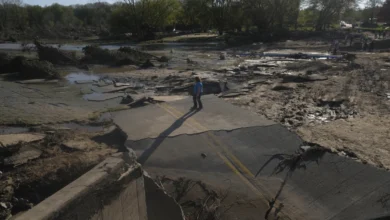
"The physical reality of climate change remains unchanged by this ruling," said Cassidy DiPaola, Communications Director for Make Polluters Pay. "Roads will continue to wash out, and the bill for those repairs will land on the desks of taxpayers unless we find a way to hold those responsible for the emissions accountable."
As of the current publication date, New York Attorney General Letitia James has yet to confirm whether the state will initiate an appeal. Such an appeal would likely escalate the case to the Second Circuit, where it could set a definitive precedent for whether states possess the constitutional leeway to pursue climate damages. Meanwhile, the legal community is watching the Vermont case closely; as the first state to pass such a law, its ultimate resolution will likely serve as the primary litmus test for the future of climate superfund statutes nationwide.
The conflict reflects a deep-seated tension in American federalism. As the impacts of climate change manifest in more frequent and severe weather events, the pressure to find funding for adaptation will only increase. Whether that funding comes from federal grants, tax increases, or corporate liability remains the central question of the decade. For now, the courts have signaled that for state legislatures, the road to climate accountability is fraught with significant constitutional barriers that require a sophisticated, likely federal-level, legislative solution if they are to be overcome.
As the political and legal fallout continues, the division between state authority and federal prerogative remains the most critical battleground in American environmental law. The outcome of these cases will likely determine the financial landscape of climate resilience for decades to come, shaping not only the budgets of state governments but also the strategic calculus of the global energy sector.