The Secret of Limone sul Garda: The Italian Village Where Biology Defies Heart Disease


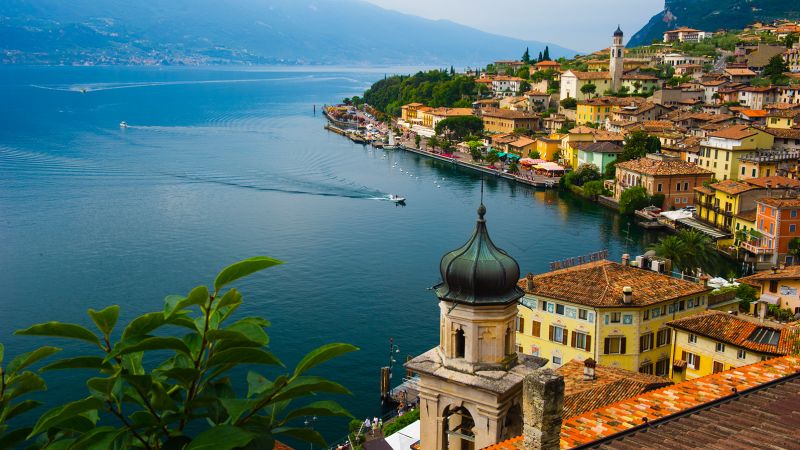
Nestled on the western shores of Lake Garda in Italy’s northern Lombardy region, the picturesque fishing village of Limone sul Garda offers more than just stunning vistas of terraced lemon groves and dramatic Alpine peaks. For decades, this settlement of barely 1,000 residents has been the focal point of a significant medical mystery that has captivated the global scientific community. While the village is geographically unique—serving as the northernmost point in the world where citrus trees grow naturally due to a micro-climate that wards off the harsh Alpine winters—its most extraordinary feature lies within the blood of its inhabitants.
A small but distinct cohort of locals carries a rare genetic mutation that appears to grant them a biological "shield" against cardiovascular disease. This mutation, which produces a unique protein known as A-1 Milano, effectively allows these individuals to process fats and lipids with an efficiency that defies conventional medical expectations. In a world where heart disease remains the leading cause of mortality, the residents of Limone sul Garda have become an invaluable, albeit reluctant, case study in the potential for genetic breakthroughs in preventative medicine.
The Discovery of the A-1 Milano Protein
The scientific interest in Limone began in the early 1980s under rather serendipitous circumstances. A local train driver from the village was involved in a serious accident while in Milan. Upon his admission to the hospital, clinicians were astonished to discover that his blood lipid profile was profoundly abnormal. Despite the patient’s age and potential dietary habits, his blood exhibited an almost total absence of the arterial plaque typically associated with atherosclerosis.
Following this discovery, researchers from the Università degli Studi di Milano, led by professor of clinical pharmacology Cesare Sirtori, initiated a comprehensive screening program in the village. The goal was to trace the lineage of this anomaly. The investigation revealed that the trait was not a product of environmental influence alone but a dominant genetic mutation passed down through generations. This protein, which the research team dubbed "A-1 Milano," was found to be a modified form of Apolipoprotein A-1, a primary component of high-density lipoprotein (HDL), often referred to as "good cholesterol."
Genetic Resilience and the "Blood Bank" Experience
For the 60 or so identified carriers of the A-1 Milano gene in Limone, the experience of being under the scientific microscope has been a lifelong reality. Gianni Segala, a local shopkeeper and a carrier of the mutation, describes the decades-long process with a mixture of pride and weary humor. The villagers have been subjected to rigorous testing, including controlled dietary challenges where they were fed high-fat, high-sugar substances like whipped cream to measure their bodies’ ability to clear lipids from the bloodstream.
"My brothers, my mother—who is now 96 and remains remarkably sharp—and my children all carry it," Segala explains. "Since the 1980s, we have been providing blood for these studies. We joke that we have been ‘bled dry’ for science." Despite the inconvenience of recurrent clinical monitoring, there is a widespread sense of communal responsibility among the carriers. They recognize that their unique genetic composition holds the potential to save lives on a global scale.
Giuliano Segala, Gianni’s son, views his genetic inheritance as a form of biological insurance. "It gives me a sense of security," he notes. "I feel shielded. I know that, barring other factors, I am at a significantly lower risk of suffering a heart attack or stroke as I age."
Scientific Implications and Cardiovascular Research
The medical implications of the Limone gene are profound. Under normal physiological conditions, HDL cholesterol acts as a scavenger, transporting cholesterol from the arteries back to the liver for excretion. However, the A-1 Milano mutation functions with significantly higher efficacy. Professor Sirtori’s research has shown that this variant protein is exceptionally efficient at removing lipids from the vascular system, preventing the accumulation of plaque that leads to atherosclerosis.
In a landmark study published in the early 2000s, Sirtori’s team successfully synthesized the A-1 Milano protein and conducted trials on animal models, specifically rabbits. The results were striking: the administration of the protein led to a rapid and significant regression of arterial plaque. This provided a proof-of-concept that the "Limone gene" could potentially be harnessed as a therapeutic intervention for patients with severe cardiovascular disease.

The research has faced challenges, however. While the protein shows immense promise, the cost of synthetic production and the complexities of human delivery mechanisms remain significant hurdles. Nevertheless, the study of the Limone population continues to provide insights into how genetic mutations, which are typically associated with pathology, can in rare instances provide an evolutionary advantage.
Environmental and Lifestyle Factors
While the genetic component is the primary focus of researchers, local residents and historians suggest that the village’s unique environment may play a supportive role in the health of its population. The micro-climate of Limone sul Garda, which remains mild year-round, allows for a diet rich in fresh, locally sourced ingredients.
"We have been weaned on extraordinary extra virgin olive oil and fresh fish from the lake for as long as anyone can remember," says Antonio Girardi, a local hotelier who has spent years documenting the genealogy of the village’s gene carriers. "The mountains act as a natural barrier, trapping the sun and protecting us from the harsh winds of the north. It is a symbiotic relationship between our biology and our geography."
This "Mediterranean" lifestyle, combined with the physical demands of living in a hilly, lakeside village, likely compounds the protective benefits of the A-1 Milano gene. Residents who are not carriers of the gene also report high levels of health and longevity, suggesting that the environment of Lake Garda contributes to a baseline of wellness that is amplified, rather than replaced, by the mutation in the Segala family and their kin.
Ethical Considerations in Genomic Research
The longitudinal study of the Limone villagers raises important questions regarding medical ethics and the relationship between researchers and isolated populations. Over forty years of observation, the villagers have effectively become a "living laboratory." While there is no evidence of coercion, the relationship between the academic community and the citizens of Limone is an example of the delicate balance required when studying unique genetic pools.

The residents generally maintain a pragmatic view of their role. They are not "super-humans," as Gianni Segala puts it; they still face the typical risks of aging and accidents. However, the knowledge that they possess a biological key to one of humanity’s most persistent killers—heart disease—has fostered a sense of identity within the village. They are, in a very literal sense, keepers of a biological secret that continues to drive pharmaceutical innovation.
Future Perspectives: The Legacy of Limone
As the scientific community moves further into the era of personalized medicine and gene therapy, the data collected from Limone sul Garda becomes increasingly valuable. Professor Sirtori remains committed to understanding the long-term effects of the gene and is particularly interested in how the mutation behaves in different family structures.
The village itself remains a popular destination, drawing tourists who are often unaware that they are walking among a population that has fundamentally altered our understanding of cholesterol metabolism. For the people of Limone, life continues much as it always has—tending to the lemon houses, fishing in the deep blue waters of Lake Garda, and contributing, one blood sample at a time, to the advancement of global cardiovascular health.
The story of Limone is a reminder of the complexity of the human genome. It serves as a testament to the idea that nature holds the answers to many of our most pressing medical challenges, hidden within the DNA of small, isolated communities. Whether the A-1 Milano protein will eventually become a standard treatment for heart disease remains to be seen, but the contribution of this small Italian village to the history of medicine is already secured. As researchers continue to analyze the data, the "elixir" of Limone remains a beacon of hope for those seeking to combat the silent progression of vascular disease, one discovery at a time.