Mechanical Engineer Constructs Custom Four-Seater Aircraft in Garden Shed During Pandemic to Achieve Family Flight Freedom

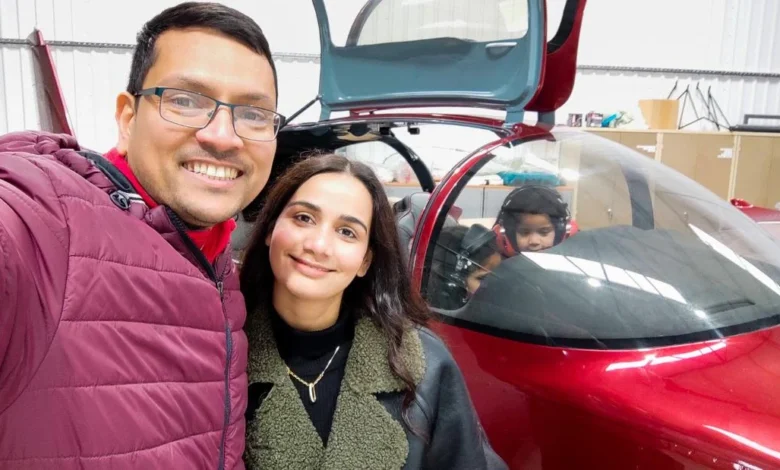
The journey of Ashok Aliseril Thamarakshan, a mechanical engineer based in Essex, England, from a terrestrial commuter to the pilot of his own hand-built aircraft, serves as a testament to technical ingenuity and the pursuit of personal liberty. What began as a curiosity sparked by living near a local airfield over a decade ago culminated in the construction of a high-performance, four-seater Sling TSi aircraft. This ambitious project, largely completed within the confines of a residential garden shed during the global COVID-19 pandemic, has not only redefined his family’s travel capabilities but also highlighted a growing trend in amateur aviation: the rise of sophisticated, kit-built aircraft that rival factory-produced models in safety and efficiency.
The Genesis of an Aviator
For Aliseril, the transition to aviation was gradual rather than instantaneous. His interest was first piqued by the proximity of his home to a UK airfield, but it was a 30-minute birthday experience flight, gifted by his wife Abhilasha, that acted as the catalyst. This introductory session involved a flight to the Isle of Wight, a journey that offered Aliseril a profound realization regarding the logistical advantages of private flight. The ability to bypass traditional infrastructure and travel directly to coastal destinations within minutes rather than hours provided a sense of freedom that proved addictive.
Following his initial exposure, Aliseril pursued and obtained his private pilot’s license (PPL) in 2019. Like many new pilots, he initially relied on the rental market, hiring two-seater aircraft for local excursions. However, as his family expanded to include two daughters, Tara and Diya, the limitations of the rental market became apparent. The majority of affordable rental aircraft are two-seaters, making family travel impossible. Furthermore, when Aliseril explored the secondary market for four-seater planes, he found himself dissatisfied with the available options. Many aircraft within a reasonable price bracket were manufactured in the 1960s or 1970s. As a mechanical engineer, Aliseril felt an inherent unease regarding the reliability and comfort of aging airframes, ultimately deciding that the only way to ensure the safety and modernity he desired was to build the aircraft himself.
Technical Selection: The Sling TSi
The decision to build required a rigorous evaluation of available "kit" aircraft. Aliseril’s criteria were specific: the plane had to be a true four-seater with modern avionics, reliable performance, and a structure that could be maintained by the owner. His research led him to the Sling TSi, a product of the South African manufacturer Sling Aircraft. The TSi (Turbo Sport Injection) is renowned in the experimental aviation community for its robust handling and use of the Rotax 915 iS engine, a modern, turbocharged powerplant that offers consistent performance at varying altitudes.
In January 2020, just weeks before the world was gripped by pandemic-related travel restrictions, Aliseril traveled to the Sling Aircraft facility in Johannesburg, South Africa. A test flight of the TSi confirmed his suspicions; the aircraft offered the speed, range, and interior comfort necessary for international family touring. He placed his order immediately. By the time the first components arrived at his home in Essex, the United Kingdom had entered a stringent national lockdown, creating a unique set of challenges and opportunities for the engineer.
The Lockdown Build: Engineering in a Garden Shed
The COVID-19 pandemic initially threatened to derail the project. Aliseril had originally planned to collaborate with colleagues who possessed aviation building experience and intended to rent a professional workshop space. Lockdown regulations rendered both plans impossible. Undeterred, Aliseril constructed a small shed in his back garden to serve as his primary manufacturing facility.
The build process was governed by the Light Aircraft Association (LAA), a representative body that operates under the oversight of the UK Civil Aviation Authority (CAA). In the UK, amateur-built aircraft are not merely "DIY projects" but are subject to rigorous regulatory scrutiny. The LAA assigned an inspector to the project, and Aliseril was required to pass approximately 12 formal inspections at various stages of construction. This ensured that every rivet, electrical connection, and structural bond met exacting safety standards.

Aliseril notes that while his professional background in engineering provided a theoretical foundation, his practical experience in home improvement was equally valuable. The aircraft kit arrived with detailed, "Ikea-style" instructions, featuring comprehensive drawings designed for amateur assembly. The build required 1,500 hours of labor over 18 months. The project became a family endeavor; his wife assisted with tasks requiring multiple sets of hands, and his eldest daughter, Tara, assisted with the meticulous task of removing protective plastic from the thousands of aluminum components.
By the end of the summer of 2020, the tail and wings were completed. The fuselage followed in October. The constraints of the garden shed required careful logistical planning, but the proximity allowed Aliseril to work in short, productive bursts, stepping into the garden whenever time permitted.
From Project to Aircraft: Testing and Certification
In late 2021, the individual components were transported to a hangar near Cambridge for final assembly and the integration of the engine and avionics. This phase represented the transition from a "project" to an "aircraft," a distinction Aliseril describes as psychologically significant in the aviation community.
The aircraft, registered as G-Diya in honor of his youngest daughter, underwent its maiden flight in January 2022. Following standard safety protocols, the first flight was conducted by a professional test pilot. Aliseril describes the experience of watching the machine he had spent 1,500 hours building leave the ground as one of intense anxiety followed by immense relief. After 20 minutes of maneuvers, the pilot returned with a positive report. Subsequent test flights involved "stress-testing" the airframe, with pilots pushing the G-Diya to its aerodynamic limits to ensure structural integrity.

In May 2022, the CAA issued the final "Permit to Fly," officially certifying G-Diya for private operations. The total investment for the project reached approximately £180,000 (roughly $203,000). This figure included the £80,000 airframe kit, the Rotax engine, high-end Garmin avionics, and various specialized tools and supplies.
Performance and Economic Viability
The G-Diya is a high-performance machine with specifications that make it a viable alternative to commercial regional travel:
- Range: Approximately 1,389 kilometers (750 nautical miles), allowing for non-stop travel from the UK to Central Europe.
- Fuel Efficiency: The aircraft consumes roughly 20 liters of unleaded fuel per hour. Aliseril notes that the fuel cost per mile is comparable to that of a standard SUV, particularly when the aircraft’s ability to travel in a straight line is factored against the winding nature of road infrastructure.
- Speed: The Sling TSi typically cruises at speeds around 145 to 150 knots (approximately 170 mph).
To manage the ongoing costs of insurance, hangarage, and maintenance, Aliseril adopted a shared ownership model. The aircraft is now owned by a four-person syndicate. By splitting the fixed costs, Aliseril has made high-end private aviation financially sustainable, bringing the monthly expenditure down to a level comparable to owning and operating a premium road vehicle.
Broader Impact and the Future of Amateur Aviation
The success of the G-Diya has garnered significant attention on social media, where the family documents their travels under the handle "fly_home_or_away." Their excursions have included trips to the Isle of Wight, Skegness, and Turweston within the UK, as well as international flights to Bergerac, France, and various locations in Norway. Over the past two years, the aircraft has logged more than 300 flight hours.

Aliseril’s achievement highlights a broader shift in the general aviation sector. The rise of modern kit planes like the Sling TSi is challenging the dominance of traditional manufacturers like Cessna and Piper. These "experimental" aircraft often feature more advanced safety technology, such as ballistic parachute systems and digital glass cockpits, at a fraction of the cost of a new factory-certified plane.
Furthermore, the project demonstrates the viability of shared ownership as a solution to the high barrier of entry in aviation. Aliseril encourages younger engineers and enthusiasts to consider kit-building not just as a solitary hobby, but as a way to build community and technical expertise. The "communal" aspect of his flying group provides a continuous learning environment where pilots share knowledge and safety tips.
Conclusion
Ashok Aliseril Thamarakshan’s transition from a curious neighbor of an airfield to the builder of a transcontinental aircraft is a remarkable example of pandemic-era productivity. By applying his engineering skills to a personal passion, he bypassed a stagnant rental market and the safety concerns of aging aircraft to create a bespoke solution for his family. The G-Diya stands as a symbol of how modern technology and a rigorous regulatory framework can empower individuals to achieve heights—both literally and figuratively—that were once reserved for the wealthy or the professionally trained. As the family continues to explore Europe from their Essex base, the story of the "garden shed plane" continues to inspire a new generation of aviators to look toward the horizon.