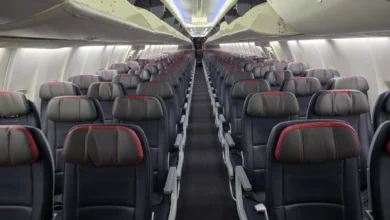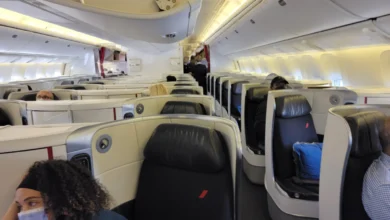
In an era where in-flight connectivity has become a standard expectation for travelers, one Air Canada passenger recently took matters into his own hands to bypass traditional device limitations and service fees. Dubbed the Wi-Fi Robinhood by social media observers, the passenger utilized a portable travel router to redistribute a single paid internet connection to fellow travelers, effectively acting as a micro-Internet Service Provider (ISP) at 35,000 feet. The incident, which was documented on the Reddit community for Aeroplan members, has sparked a broader conversation regarding the cost of in-flight connectivity, the technical vulnerabilities of captive portals, and the security risks associated with sharing public hotspots in confined spaces.
The passenger’s setup was relatively straightforward but technically proficient. After boarding an Air Canada flight, he purchased the airline’s premium streaming internet package, which is designed to handle high-bandwidth activities like video playback. Using a $79 UniFi Travel Router—a compact device designed for frequent travelers—connected to a portable power bank, he linked the router to the aircraft’s official ACWiFi.com network. Once the router was authenticated through the airline’s captive portal, he configured the device to broadcast a new, open Wi-Fi signal. This allowed any passenger within range to connect to his personal hotspot for free, bypassing the airline’s paywall and device-per-purchase restrictions.
Technical Execution and Performance Observations
According to the passenger’s account, the UniFi Travel Router performed exceptionally well within the aircraft environment. By using the router as a bridge, he was able to circumvent the standard Air Canada protocol that restricts a single purchase to one active device. Under normal circumstances, if a passenger attempts to log in with a second device, the system automatically terminates the first session. The travel router avoids this by presenting a single MAC address to the airline’s server while managing multiple internal connections locally.
The passenger reported that at the peak of the flight, up to five different users were connected to his open access point simultaneously. He noted that the premium streaming plan provided sufficient bandwidth to keep the users, including several children in nearby seats, "contented." Despite the high load, the connection remained relatively stable, with only a few minor dropouts and the expected momentary satellite outages that occur when an aircraft transitions between satellite coverage zones over the ocean.
This method of "Wi-Fi sharing" is not entirely new but has become more accessible with the advancement of compact networking hardware. In previous years, travelers utilized devices like the HooToo Nano router to achieve similar results in hotels and on flights equipped with Gogo Inflight Internet. However, the use of modern hardware like the UniFi Travel Router represents a more robust approach to bypassing modern authentication systems.
The Evolution of Air Canada’s In-Flight Connectivity
The motivation behind such "Wi-Fi Robinhood" actions often stems from the fragmented nature of in-flight internet pricing and availability. Air Canada’s current connectivity landscape is a mixture of free and paid services that vary significantly depending on the route and the specific aircraft.
Currently, Air Canada offers free Wi-Fi for messaging services—such as WhatsApp, iMessage, and Facebook Messenger—to all Aeroplan members on a large portion of its fleet. This service is sponsored by Bell and covers domestic flights within Canada, as well as routes to the United States, Mexico, and the Caribbean. However, for full internet access or streaming capabilities, passengers must still pay a fee, unless they are traveling in premium cabins or hold specific elite status.
On long-haul international routes, the disparity becomes more apparent. While the airline has begun rolling out enhanced connectivity, many of its wide-body aircraft, including older Boeing 787-9s and Boeing 777s, still require paid packages for full browsing. The airline’s official connectivity roadmap indicates a transition toward more comprehensive free services, with a promise that free high-speed Wi-Fi will be more widely available across the fleet by 2026.
The introduction of the Airbus A321XLR into Air Canada’s fleet marks a turning point in this strategy. These new aircraft are equipped with next-generation satellite technology intended to provide free, high-speed internet even on long-haul routes. However, until this rollout is complete, the fleet remains a patchwork of connected and "dark" aircraft, including some older A320s and regional Q400 turboprops that offer no connectivity at all.
Legal and Policy Implications of Connection Sharing
While the act of sharing a Wi-Fi connection may be seen as a benevolent gesture by fellow passengers, it constitutes a clear violation of Air Canada’s Terms of Service. Most airline connectivity agreements include specific clauses that prohibit the resale, redistribution, or sharing of a connection with third parties.
From a legal perspective, using a travel router to bypass a paywall can be classified as "theft of service." Airlines and their service providers, such as Intelsat or Viasat, rely on per-user revenue to offset the high costs of satellite bandwidth and hardware installation. When a single passenger redistributes a connection to multiple users, it not only results in lost revenue but also puts an unanticipated strain on the local network’s bandwidth, potentially degrading the experience for other paying customers.
Furthermore, airlines have the technical capability to detect the use of travel routers. By analyzing Traffic Fingerprinting and TTL (Time to Live) values in data packets, sophisticated network management systems can identify when multiple devices are hidden behind a single IP address. While Air Canada has not publicly commented on this specific incident, other carriers have been known to black-list MAC addresses or disable accounts of users found to be violating the terms of service.
Security Risks for Unsuspecting Passengers
Beyond the legal and contractual issues, the use of an open, passenger-provided hotspot presents significant cybersecurity risks. Security experts warn that while the "Wi-Fi Robinhood" may have had good intentions, connecting to a stranger’s hardware is a dangerous practice.
When a passenger connects to a rogue access point—even one that appears to offer free internet—they are essentially funneling all their data through a device controlled by a third party. This allows the host to capture metadata, see which websites are being visited, and potentially execute "Man-in-the-Middle" (MitM) attacks. Although most modern web traffic is encrypted via HTTPS, an attacker can still use techniques such as DNS hijacking or phishing to compromise a user’s credentials.
In a confined environment like an airplane cabin, the "Evil Twin" attack is a particular concern. An attacker could set up a hotspot with a name like "Air Canada Free WiFi" to trick passengers into connecting. Once connected, the attacker could present a fake login page to steal Aeroplan credentials, credit card information, or personal data. By encouraging the habit of connecting to unofficial hotspots, incidents like the one reported on Reddit may inadvertently make passengers more vulnerable to malicious actors in the future.
Comparative Trends in the Airline Industry
The incident highlights a growing tension between consumer expectations and airline business models. Air Canada’s competitors are increasingly moving toward a "free for all" model to differentiate their service. Delta Air Lines, for example, has made significant headlines by offering free, high-speed Wi-Fi to all SkyMiles members on the vast majority of its domestic and international flights, powered by T-Mobile. JetBlue has offered free "Fly-Fi" for years, setting a high bar for the industry.
This shift is largely driven by the entry of Starlink Aviation into the market. Starlink’s Low Earth Orbit (LEO) satellite constellation offers significantly lower latency and higher speeds than traditional geostationary (GEO) satellites. As more airlines, such as United and Qatar Airways, sign deals with Starlink to provide free, high-speed internet, legacy carriers like Air Canada are under increasing pressure to modernize their offerings or risk losing high-value frequent flyers.
The desperation of passengers to stay connected was further illustrated recently when a traveler on a Delta flight attempted to bring a personal Starlink dish onto the aircraft and hold it up to the window to get a signal. While that attempt was unsuccessful due to the shielding of the aircraft and the speed of travel, it underscores the lengths to which modern travelers will go to avoid restricted or expensive in-flight networks.
Conclusion and Future Outlook
The case of the Air Canada "Wi-Fi Robinhood" serves as a case study in the current state of in-flight technology. It reveals a gap between the technological capabilities of consumer hardware and the restrictive policies of traditional service providers. While the passenger successfully provided a temporary service to his cabin mates, the act remains a breach of contract and a potential security liability for those involved.
As Air Canada moves toward its 2026 goal of universal free Wi-Fi, the incentive for passengers to deploy such "micro-ISPs" will likely diminish. For now, the incident remains a reminder of the evolving relationship between travelers and technology. While the airline industry works to catch up with the connectivity demands of the ground, passengers will likely continue to find creative—if controversial—ways to bridge the gap. For the average traveler, the best advice remains to stick to official, encrypted channels and to be wary of any "free" connection that seems too good to be true, even at 35,000 feet.