
Category Middle East Conflicts
Middle East Conflicts: A Nexus of Geopolitical, Religious, and Economic Tensions
The Middle East, a region of profound historical significance and immense geopolitical importance, has been a persistent theater of conflict for decades. These conflicts are not monolithic but rather a complex tapestry woven from interwoven threads of territorial disputes, sectarian divisions, resource competition, and external interference. Understanding these intertwined dynamics is crucial for grasping the region’s volatile present and uncertain future. At its core, many contemporary Middle Eastern conflicts can be traced back to the artificial borders drawn by colonial powers after World War I, which often disregarded existing ethnic and religious affiliations, sowing the seeds for future grievances. The aftermath of the Ottoman Empire’s collapse created power vacuums that various internal factions and external powers sought to exploit, leading to a protracted struggle for influence and control.
The Israeli-Palestinian conflict remains a central and enduring flashpoint in the Middle East. Stemming from competing claims to the same land, the conflict has seen numerous wars, uprisings, and failed peace initiatives. The establishment of the State of Israel in 1948, and the subsequent displacement of hundreds of thousands of Palestinians, known as the Nakba, are pivotal historical events. Subsequent Israeli occupation of the West Bank and Gaza Strip following the 1967 Six-Day War has perpetuated the cycle of violence. Key issues include the status of Jerusalem, the right of return for Palestinian refugees, Israeli settlements in occupied territories, and the security concerns of Israel. International law generally considers Israeli settlements in occupied Palestinian territories illegal. The lack of a viable, independent Palestinian state and the ongoing occupation fuel resentment and radicalization, making a lasting resolution elusive. Numerous UN resolutions and international mediation efforts have failed to achieve a breakthrough, often due to intransigence from both sides and the shifting geopolitical landscape.
The rise of sectarianism, particularly the Sunni-Shia divide, has become a dominant driver of conflict in recent decades, especially since the 2003 US invasion of Iraq. While theological differences exist, the contemporary manifestation of this divide is heavily politicized, with regional powers like Saudi Arabia (Sunni) and Iran (Shia) vying for influence across the region. This proxy rivalry plays out in conflicts in Iraq, Syria, Yemen, and Lebanon. In Iraq, the overthrow of Saddam Hussein’s Sunni-dominated regime led to a power shift favoring the Shia majority, but also unleashed sectarian militias and fueled an insurgency. The ongoing instability in Iraq is a direct consequence of this sectarian animosity and the struggle for political dominance.
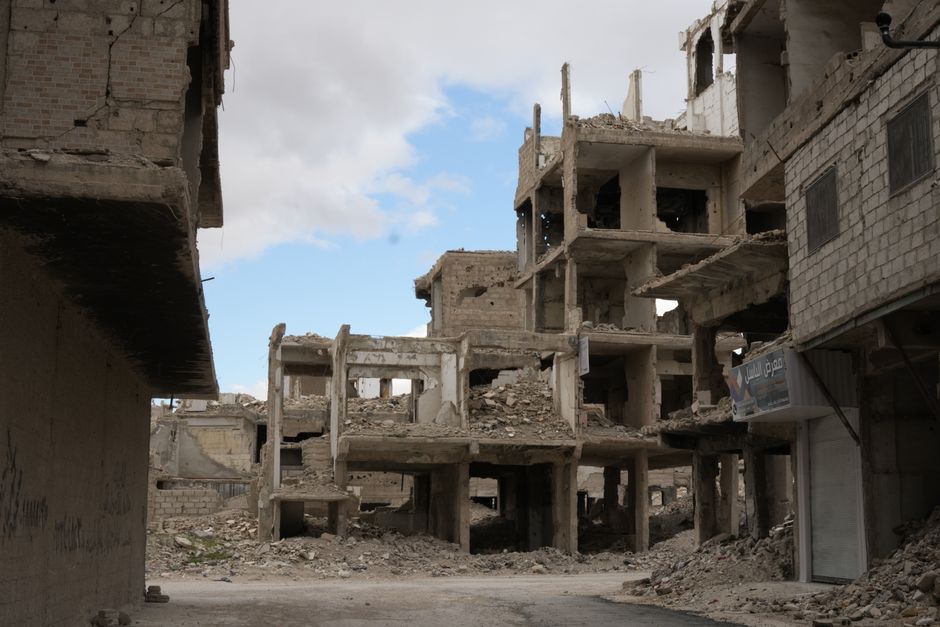
The Syrian Civil War, which erupted in 2011, is perhaps the most devastating contemporary conflict in the Middle East. Initially a popular uprising against the autocratic rule of Bashar al-Assad, it quickly devolved into a brutal multi-sided civil war, exacerbated by regional and international interventions. The Assad regime, supported by Iran and Russia, has fought against a diverse array of rebel factions, including moderate opposition groups, Islamist extremists like ISIS and al-Qaeda affiliates, and Kurdish forces. The involvement of external powers has transformed Syria into a chessboard for proxy warfare, with devastating humanitarian consequences. Millions of Syrians have been displaced, either internally or as refugees, and the country’s infrastructure has been decimated. The rise and eventual territorial defeat of ISIS, while a significant development, did not end the conflict but rather reshaped its dynamics.
The conflict in Yemen represents another critical manifestation of the Saudi-Iranian rivalry. Since 2014, the Houthi movement, an Iran-aligned Shia group, has been engaged in a war against the internationally recognized Yemeni government, which is backed by a Saudi-led coalition. The conflict has created one of the world’s worst humanitarian crises, with widespread famine, disease, and displacement. The strategic location of Yemen, bordering Saudi Arabia and controlling crucial shipping lanes, makes it a key area of contention. The war has also empowered extremist groups and further destabilized an already fragile state.
Beyond these prominent conflicts, other simmering tensions and localized disputes contribute to the region’s overall instability. The ongoing Kurdish struggle for self-determination, particularly in Turkey, Syria, Iraq, and Iran, is a persistent source of friction. The Kurdish populations, spread across these nations, have historically faced discrimination and suppression, leading to armed resistance and calls for independent states. The fight against ISIS initially saw Kurdish forces emerge as significant actors, particularly in Syria, but this has also drawn the ire of Turkey, which views Kurdish militias as extensions of the Kurdistan Workers’ Party (PKK), designated as a terrorist organization.
The competition for natural resources, particularly oil and water, also underpins many regional tensions. The Middle East holds a significant portion of the world’s proven oil reserves, making control over these resources a geopolitical imperative for many global powers. This has led to external interventions and internal struggles for control of oil-rich territories. Water scarcity is an increasingly pressing issue, with transboundary rivers like the Nile and the Tigris-Euphrates river systems becoming sources of tension between riparian states. The politicization of water resources can exacerbate existing political rivalries and create new ones.
The role of external powers in the Middle East cannot be overstated. Throughout the 20th and 21st centuries, colonial powers, the United States, Russia, and various European nations have actively intervened in the region, pursuing their strategic and economic interests. These interventions have often been destabilizing, exacerbating existing conflicts and creating new ones. The legacy of colonialism, the Cold War rivalries, and the post-9/11 "War on Terror" have all left indelible marks on the region’s security landscape. The complex web of alliances and rivalries, both internal and external, makes de-escalation and conflict resolution exceptionally challenging.
The rise of non-state actors and extremist groups like ISIS, al-Qaeda, and Hezbollah has added another layer of complexity to Middle Eastern conflicts. These groups often operate outside the traditional framework of state-based warfare, employing asymmetric tactics and exploiting political vacuums. Their ideologies, often fueled by religious extremism and anti-Western sentiment, resonate with disenfranchised populations, enabling them to recruit and operate effectively. The fight against these groups has often blurred the lines between internal insurgencies and international terrorism, leading to the involvement of global coalitions.
The economic dimensions of these conflicts are also critical. Poverty, inequality, and lack of opportunity can breed resentment and make populations susceptible to radicalization. The vast wealth generated from oil, while enriching some elites, has often not translated into broad-based economic development, leading to social discontent. Sanctions imposed on various states, while intended to pressure regimes, can also have devastating humanitarian consequences for civilian populations. The illicit trade in arms and resources also fuels and sustains prolonged conflicts.
The long-term implications of these multifaceted conflicts are profound. The humanitarian toll is immense, with millions of lives lost, displaced, and traumatized. The region’s development has been severely hampered, and its cultural heritage is under threat. The spread of extremism beyond the Middle East is a persistent concern, with the potential for global destabilization. Furthermore, the continued volatility of the region has significant implications for global energy markets and international security. Addressing these complex challenges requires a nuanced understanding of their historical roots, evolving dynamics, and the interplay of local, regional, and international factors. Sustainable peace will necessitate a multifaceted approach that prioritizes diplomacy, inclusive governance, economic development, and respect for international law, while also acknowledging the deep-seated historical grievances that continue to fuel the fires of conflict. The path forward is fraught with obstacles, but a sustained commitment to dialogue and de-escalation is essential to prevent further suffering and foster a more stable future for the Middle East. The interconnectedness of these conflicts means that progress in one area can have ripple effects, but a comprehensive strategy that addresses the underlying causes of instability is paramount for any lasting resolution.
