Versatile Defensive Depth Becomes the Cornerstone of the New York Jets Secondary Following Week 1 Injury Crisis

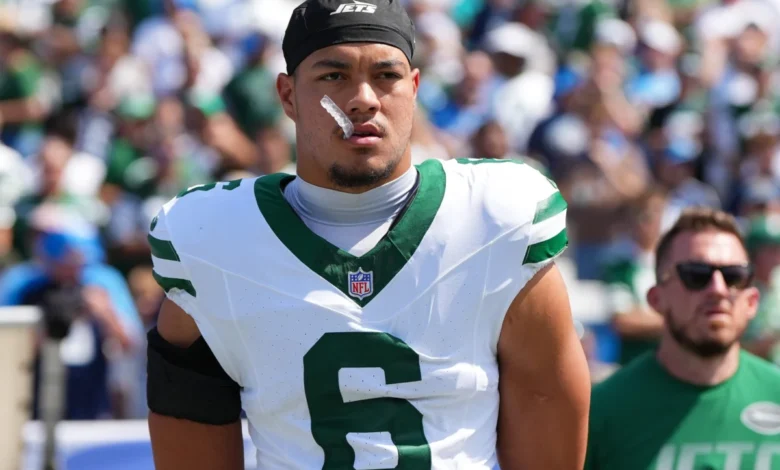
The National Football League is a game of attrition where depth, adaptability, and contingency planning often dictate the difference between sustained success and sudden collapse. For the New York Jets, the true test of their offseason roster construction arrived remarkably early in the 2026 campaign. During their hard-fought 23-10 victory over the Tennessee Titans in Week 1, the Jets defense faced a compounding series of physical setbacks that threatened to dismantle their secondary structure. Yet, amidst the chaos of shifting alignments and emergency substitutions, defensive back Dane Belton emerged as an invaluable asset, earning high praise from the coaching staff and highlighting the vital importance of multi-positional versatility in modern professional football.
As the Jets prepare to navigate a challenging upcoming matchup against the Green Bay Packers without the services of key defensive leader Minkah Fitzpatrick, the spotlight has shifted squarely onto how New York plans to manage its defensive backfield. The seamless transition executed by Belton during the Titans game offers both a blueprint and a beacon of reassurance for a team suddenly forced to rethink its secondary configuration.
The Unfolding Crisis: Week 1 Injuries Test New York’s Resilience
The foundational stability of the Jets’ secondary was severely tested early in the opening game of the 2026 NFL season. In the first quarter against Tennessee, veteran safety Minkah Fitzpatrick suffered a significant groin injury that immediately sidelined him for the remainder of the contest. Fitzpatrick, acquired to anchor the defensive backfield with his wealth of experience and elite football intelligence, left a massive void in the middle of the field.
Almost concurrently, the Jets’ defensive infrastructure absorbed another blow when nickel cornerback Jarvis Brownlee Jr. sustained an injury, forcing the coaching staff to scramble for immediate personnel solutions on the fly. In professional football, losing multiple starters in complementary positions within the span of a single half typically induces panic and exposes structural vulnerabilities. However, New York’s defensive scheme proved resilient, largely due to the rigorous cross-training implemented by head coach Aaron Glenn and his defensive staff during the spring and training camp.
Upon Fitzpatrick’s departure, Dane Belton was thrust from his rotational role into the strong safety position, while teammate Andre Cisco stepped in to fill the free safety duties. Later in the game, when Brownlee went down, Belton was asked to pivot once again, sliding effortlessly into the high-stress nickel back position. This rapid succession of defensive adjustments required absolute clarity of assignment and instantaneous mental processing from a player who had spent the week preparing for a significantly different set of responsibilities.
Dane Belton’s Path to Versatility and Seamless Execution
Speaking to reporters following the team’s victory, Belton articulated the mindset required to handle such turbulent in-game shifts. Rather than displaying hesitation or discomfort, the defensive back leaned heavily on his extensive football background, which spans both his collegiate career and his time in the professional ranks.
"It was a spur-of-the-moment understanding that my role or responsibilities are going to change just from different plays or different personnel," Belton explained. "I wasn’t sitting there like worried or uncomfortable. It’s something that I felt very comfortable doing, something I’ve done all my career in the league and also going back to college. I played mostly nickel in college. I played in the box a lot. It was a position I worked on in the spring and in training camp."
Belton’s journey to this moment reflects the modern evolution of defensive backs in the NFL, where specialization is increasingly taking a backseat to multi-dimensionality. Defensive coordinators routinely face dynamic offensive schemes that deploy hybrid tight ends, running backs in the slot, and wide receivers across multiple formations. To counter these modern threats, defenses require players who can seamlessly transition from deep safety coverage to box assignments and slot containment.
Although Belton acknowledged that his specific weekly preparation had centered around supporting Fitzpatrick’s primary role, his broader comprehension of the defensive playbook proved decisive. "For that week’s preparation, that was Minkah’s role," Belton noted. "But for me, in the back of my mind, understanding the roles of the defense, understanding different coverages and how they work, knowing all these guys really just helps me that I can really go play anywhere and I feel like I can plug and play. So it’s definitely a moment that we weren’t expecting, obviously, but something that I felt comfortable in doing and I was going to do whatever it takes."

Coaching Acclaim and Defensive Leadership
Following the conclusion of the game, Jets head coach Aaron Glenn singled out Belton during his post-game media session, expressing profound admiration for the defensive back’s mental acuity and operational readiness. In a league where backups are often evaluated solely on their ability to execute a singular assignment, Belton’s capacity to absorb multiple complex positions validated the organization’s emphasis on comprehensive positional education.
"We have other experienced guys on our team, too," Glenn stated, addressing the media regarding the broader health of the secondary. "That’s the good thing about our team right now, and those guys have to step up. I mean, Cisco’s played a lot of football in this league and he’s been a damn good player in this league. Dane, as we talked about, how impressed I was that he can come in and he can play basically the same role that Minkah had of being able to play the big nickel, playing safety. He’s an impressive player. Intelligent, smart, and he can take up that slack."
Glenn’s endorsement underscores a larger organizational philosophy. The ability of players like Andre Cisco and Dane Belton to command the defensive backfield ensures that the team’s defensive play-calling does not need to be drastically scaled back in the absence of a star player. Cisco, who brings extensive starting experience and a proven track record of production to the free safety spot, provides a steadying veteran presence on the backend. Combined with Belton’s tactical flexibility, the Jets retain a high football-IQ core capable of communicating adjustments loudly and effectively against sophisticated opposing quarterbacks.
Immediate Implications: The Road Ahead Without Minkah Fitzpatrick
The true test of New York’s defensive depth will arrive immediately as the team turns its attention to an upcoming fixture against the Green Bay Packers. Medical evaluations following the victory over Tennessee have confirmed that Fitzpatrick will be unavailable for Sunday’s contest, with early medical projections indicating a multi-week absence due to his groin strain.
For a secondary that was meticulously constructed around the veteran presence, elite range, and leadership of Fitzpatrick, his absence creates an undeniable tactical void. Packers head coach and offensive play-callers will undoubtedly attempt to stress-test the newly configured Jets secondary by testing communication levels, exploiting intermediate zones, and targeting backup combinations.
However, the silver lining for New York lies in the proactive nature of their roster management. Because players like Belton and Cisco were heavily integrated into high-level conceptual installations during spring workouts and training camp, the transition from theory to live-game execution has already been stress-tested under regular-season conditions.
Furthermore, the depth chart flexibility demonstrated in Week 1 affords defensive coordinator Aaron Glenn the tactical freedom to disguise coverages, deploy specialized sub-packages, and match personnel against Green Bay’s offensive formations without sacrificing structural integrity. Rather than relying on a like-for-like replacement who might lack the complete breadth of skills required to mimic Fitzpatrick entirely, the Jets can lean into a modular defensive approach where Belton, Cisco, and remaining defensive backs divide responsibilities based on matchup advantages.
Broader Season Outlook and Roster Construction Philosophy
As the 2026 NFL season unfolds, the early-season resilience displayed by the Jets’ secondary serves as a case study in modern roster engineering. In an era defined by grueling 17-game schedules and relentless physical collisions, championship aspirations are rarely realized by the starting eleven alone. They are fundamentally sustained by the readiness of the 48th, 49th, and 50th men on the roster.
Dane Belton’s performance against the Titans—and the immediate, unqualified support he received from his head coach—demonstrates the cultural alignment within the Jets organization. When adversity struck in the opening quarter of Week 1, there was no panic on the sideline, only an immediate recalibration grounded in preparation and trust.
As New York prepares to face Green Bay and the subsequent opponents on their rigorous schedule, the secondary will unquestionably face stiffer challenges. Yet, the foundational reassurance provided by versatile, intelligent football players like Belton ensures that the Jets enter their upcoming contests equipped not just to survive the absence of their stars, but to adapt, overcome, and continue executing at a high professional standard.
Related posts: