Federal judge rebukes Justice Department for procedural irregularities in case against former FBI officials amid ongoing Hunter Biden investigation

A federal magistrate judge on Tuesday issued a sharp rebuke of the U.S. Department of Justice (DOJ) after federal prosecutors attempted to file a superseding criminal complaint against two former FBI counterintelligence officials without the required judicial oversight. The proceedings, held in the U.S. District Court for the District of Columbia, underscored growing tensions between the executive branch and the judiciary regarding the handling of high-profile, politically sensitive investigations.
Magistrate Judge Zia Faruqui expressed significant frustration after it was discovered that the DOJ had uploaded an unsigned and unsworn criminal complaint to the public docket shortly after midnight on Tuesday. The document aimed to introduce new charges against the defendants, who are already facing allegations related to their testimony before Congress. Judge Faruqui, noting that the filing had bypassed the standard probable cause review process, ordered that the documents be struck from the record, describing the government’s actions as unprecedented and potentially harmful to the due process rights of the accused.
Chronology of the Legal Conflict
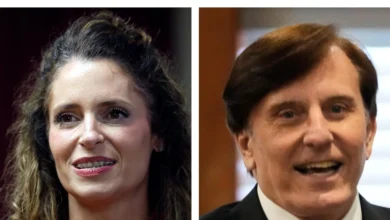
The case centers on the testimony provided by two former FBI officials, who served within the bureau’s Foreign Influence Task Force (FITF). According to the initial filings, the individuals—identified as Floris and Benavides—testified before a congressional committee on July 19, 2023, and September 28, 2023, respectively. The core of the government’s original case rests on allegations that both individuals knowingly provided false statements regarding their awareness of and involvement in the FBI’s investigations into Hunter Biden.
The timeline of the current legal friction is as follows:
- Mid-2019 – 2022: The defendants hold key leadership positions within the FITF, with Floris serving as deputy assistant director and Benavides as section chief.
- July & September 2023: The officials testify before a House committee regarding their roles in the "Round River" counterintelligence operation, which examined whether certain informant reporting on Hunter Biden constituted Russian disinformation.
- October 27, 2026: The DOJ attempts to file a superseding complaint in the middle of the night, adding a charge of obstructing a congressional proceeding without judicial authorization.
- October 27, 2026 (Morning): Judge Faruqui convenes a hearing, criticizes the government’s failure to secure a judge’s signature, and orders the filing struck from the record. The docket is subsequently updated to reflect that the filing was entered "in error."
The Nature of the Allegations
The prosecution’s case hinges on the argument that the defendants actively worked to mislead Congress regarding the FITF’s engagement with the Hunter Biden investigation. The government alleges that the officials sought to minimize the bureau’s internal communications about these inquiries to impede the legislative body’s oversight functions.
Defense attorneys, however, have characterized the prosecution as a "political football," arguing that the government’s legal strategy is fundamentally flawed. During Tuesday’s hearing, defense counsel for Floris emphasized that the substantive changes between the original complaint and the attempted superseding filing were vast, raising questions about the evidentiary standards the DOJ is applying to this case.
Ron Safer, representing Benavides, engaged in a pointed cross-examination of FBI Special Agent Bryan Witt. The questioning highlighted a lack of direct interaction between the FBI and the congressional committee staff during the investigative phase. Agent Witt admitted that the bureau was restricted from interviewing committee members directly due to the Constitution’s Speech and Debate Clause, which protects legislative processes from executive branch interference. Furthermore, it was revealed that the agent had only interviewed the general counsel for House Judiciary Committee Republicans, Steve Castor, a day before the hearing, and that Castor had not personally reviewed the transcripts of the testimony in question.
Procedural Irregularities and Judicial Concern
The intensity of Judge Faruqui’s reaction during the hearing was rooted in his assessment that the DOJ had deviated from established norms. When asked by prosecutor John Borchert if the court would allow an FBI agent to retrospectively attest to the filing to establish probable cause, Faruqui compared the suggestion to the court acting merely as a notary public.
"Everything you’re doing is making me more and more concerned," Faruqui stated during the session. "Why today on this one case have you changed the entire history of how you charge cases? It makes it look like the United States is afraid of me trying to find probable cause."
The DOJ’s internal guidelines generally caution against overt, high-profile investigative actions in cases that carry political sensitivity, particularly as national elections approach. The decision to file an unsigned document overnight has prompted legal analysts to question the motivations behind the move. The defense team for Floris released a statement following the hearing, noting: "In our combined decades of DOJ service, we have never seen or even heard of something like this being filed. The government has taken that power for itself in a desperate attempt to delay our client’s right to challenge the charges in court."
Broader Implications for the Department of Justice
The incident is likely to have lasting implications for the public’s perception of the DOJ’s independence. Critics of the current administration have already pointed to the case as evidence of systemic bias, while the defense argues that the government is prioritizing media narratives over established courtroom procedures.
The case also highlights the difficulties inherent in investigations involving the intersection of executive branch activities and congressional oversight. The constitutional protections afforded to legislative deliberations create a complex environment for federal investigators, who must balance the need for gathering evidence with the requirement to respect the separation of powers.
As the case proceeds, the judiciary’s role as a check on executive overreach has become a focal point. Judge Faruqui has made it clear that while he dismissed the superseding complaint, the original charges regarding lying to Congress remain under scrutiny. The court is now tasked with conducting a thorough preliminary hearing to determine if the initial criminal complaint meets the required legal threshold of probable cause.
Analysis of Evidence and Materiality
The question of "materiality" remains a pivotal aspect of the defense’s strategy. For a statement to be considered a criminal falsehood in a congressional context, it must typically be material to the investigation at hand. The defense contends that the FBI’s inability to demonstrate how the defendants’ statements actually influenced the committee’s decision-making process undermines the foundation of the prosecution.
With the hearing scheduled to continue on Wednesday, observers expect further debate over the extent of the government’s interaction with the House Judiciary Committee. The admission that the FBI relied on written questions and had limited access to committee staff has provided the defense with a significant avenue to challenge the credibility of the investigation.
Ultimately, the events of October 27, 2026, serve as a reminder of the fragility of institutional norms. By attempting to bypass the standard judicial review process, the Justice Department has invited intense scrutiny not only into the merits of its case against the former FBI officials but also into the internal decision-making processes that governed the timing and method of the charges. Whether this case will result in a conviction or a dismissal will depend on the court’s rigorous application of the law, independent of the external political pressures that have thus far defined the proceedings.