Judge Zia Faruqui Rebukes Justice Department Over Midnight Filing and Overreach in Hunter Biden Probe Related Case

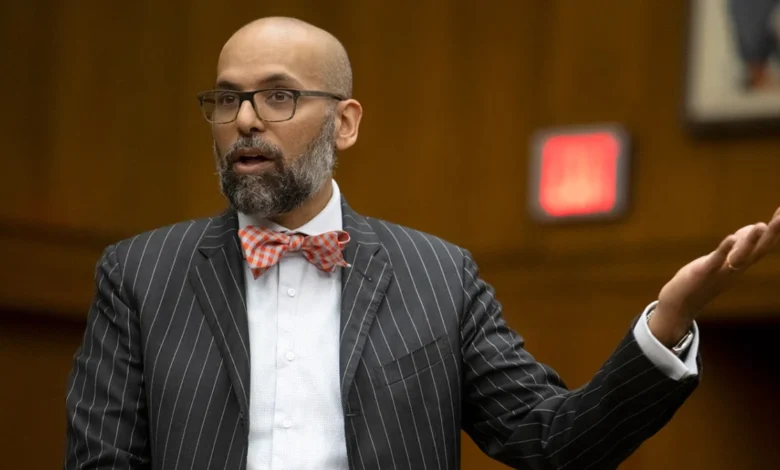
U.S. Magistrate Judge Zia M. Faruqui delivered a sharp reprimand to the Department of Justice on Tuesday, halting an eleventh-hour prosecutorial maneuver in a high-profile criminal case involving two former Federal Bureau of Investigation (FBI) officials. The confrontation unfolded in a Washington, D.C., federal courtroom just hours before a scheduled preliminary hearing designed to test the sufficiency of the government’s initial allegations.
The defendants, former FBI officials Nikki Floris and Bradley Benavides, were arrested the prior week on accusations that they misrepresented their involvement in investigations concerning Hunter Biden, the son of former President Joe Biden, during statements made to congressional committees. However, the core of Tuesday’s courtroom drama did not center solely on the underlying political sensitivities of the Hunter Biden probe. Instead, the proceedings transformed into an extraordinary institutional clash over prosecutorial transparency, procedural adherence, and the boundaries of judicial authority.
The DOJ’s attempt to introduce a superseding criminal complaint late into the night—without prior judicial consent, lacking a sworn signature, and bypassing traditional review mechanisms—provoked an explicit condemnation from the bench. Judge Faruqui rejected the amended filing outright, allowing the preliminary hearing to proceed strictly on the original charges. The incident has intensified ongoing debates regarding executive overreach, the politicization of federal law enforcement agencies, and the stringent procedural guardrails meant to protect defendants from arbitrary state power.
Anatomy of a Midnight Filing and the Courtroom Clash
The controversy crystallized in the dark hours preceding Tuesday’s preliminary hearing. Prosecutors from the U.S. Attorney’s Office for the District of Columbia filed an unsworn and unsigned superseding criminal complaint on the public docket. The document sought two primary objectives: first, to introduce new, felony-level obstruction of justice charges against Floris and Benavides; and second, to soften the descriptive language surrounding their historical involvement in the Foreign Influence Task Force’s inquiries into Hunter Biden.
Under standard federal criminal procedure, the introduction of a superseding indictment or complaint typically requires judicial review to ensure that probable cause exists to support the new allegations. By filing the document directly onto the public record in the middle of the night without preliminary judicial authorization, the prosecution effectively bypassed the gatekeeping function of the court.

"I think they should have filed nothing," Judge Faruqui stated from the bench, according to courtroom transcripts. Expressing astonishment at the deviation from historical protocol, the judge pressed federal prosecutor John Borchert on the rationale behind the unprecedented maneuver.
"Why today on this one case have you changed the entire history of how you charge cases?" Faruqui asked, querying whether the government’s actions stemmed from a fear that the judiciary would independently evaluate the strength of the probable cause. "What is it? It appears that—it makes it look like the United States is afraid of me trying to find probable cause."
Borchert acknowledged during the exchange that it was the first instance in his experience where new charges had been filed without prior judicial review. Faruqui equated the unauthorized filing to an attempt to bypass the foundational requirements of criminal complaints, noting that permitting such actions would undermine the integrity of the docket and severely prejudice the defendants.
Defense Reactions and Allegations of Trial by Media
The legal teams representing Floris and Benavides seized upon the government’s procedural misstep, characterizing the midnight filing as a desperate maneuver designed to manipulate public opinion rather than secure justice in a court of law.
In a joint statement provided to media outlets, attorneys for Nikki Floris denounced the Justice Department’s conduct, pointing out the stark contradictions between the original and modified complaints.
"In our combined decades of DOJ service, we have never seen or even heard of something like this being filed," Floris’ legal team said. "That’s because the public lodging of criminal charges must be authorized by the grand jury, a judge, or the defendant herself. Here, the government has taken that power for itself in a desperate attempt to delay our client’s right to challenge the charges in court and litigate this case in the media, rather than the courtroom."

The defense underscored that the modifications made within the superseding complaint—shifting Floris’ characterization from being at the "center" of "scores of conversations" to merely being "involved in conversations" regarding Hunter Biden—demonstrated fundamental weaknesses in the government’s initial factual assertions. Defense counsel argued that altering the descriptive language on the eve of a preliminary hearing exposed the flimsy foundation upon which the original arrests were authorized.
Legal analysts observing the case noted that charging individuals via criminal complaint rather than convening a grand jury is a procedural shortcut traditionally reserved for exigent circumstances, such as active, imminent threats to public safety. Utilizing this mechanism for white-collar or process-related offenses long after the underlying conduct allegedly occurred has drawn heightened scrutiny from both defense advocates and legal scholars.
Background Context: The Arrests and the Hunter Biden Investigations
The genesis of the case against Floris and Benavides traces back to congressional inquiries into how federal law enforcement handled various investigations involving Hunter Biden. Republicans on Capitol Hill have spent years scrutinizing the FBI and the Department of Justice over allegations of political interference or preferential treatment in probes touching upon the Biden family.
Floris and Benavides, both career intelligence and law enforcement officials, were accused of providing misleading or false statements to congressional investigators regarding the nature and extent of their oversight and participation in these sensitive matters. Specifically, the government alleged that the duo sought to minimize their awareness of specific investigative threads handled by the Foreign Influence Task Force.
The timing of the arrests has also fueled intense political debate. Unsealed weeks before critical midterm elections, the indictments drew immediate accusations from critics who suggested the timing was engineered to maximize political fallout. The intersection of high-profile federal prosecutions and electoral cycles has consistently heightened tensions surrounding the Department of Justice, prompting repeated calls from lawmakers for heightened transparency and institutional independence.
Judicial Scrutiny and Broader Legal Implications
Judge Zia Faruqui is no stranger to high-stakes litigation or public controversy. Appointed to the federal bench in the District of Columbia, Faruqui has previously faced intense criticism from conservative commentators and political figures over various rulings, his institutional advocacy for diversity, equity, and inclusion (DEI) initiatives, and his skepticism regarding certain Immigration and Customs Enforcement (ICE) practices.
Most recently, Faruqui drew national headlines and severe backlash from law-and-order advocates after issuing an explicit apology to Cole Allen, the individual accused of attempting to assassinate President Donald Trump during the 2026 White House Correspondents’ Association Dinner. During those proceedings, Faruqui expressed profound disturbance over the government’s decision to place Allen—a defendant with no prior criminal history—in five-point restraints within a secure holding facility, questioning whether such punitive measures crossed constitutional boundaries.
In the current case involving the former FBI officials, Faruqui’s defense of judicial prerogatives serves as a stark reminder of the judiciary’s constitutional role as an independent check on executive branch overreach. By refusing to let prosecutors alter the playing field overnight without accountability, the judge reasserted the necessity of probable cause determinations as a non-negotiable prerequisite in American criminal jurisprudence.
Conclusion and Next Steps
As the legal proceedings continue, the failed superseding complaint has left the prosecution on the defensive. The preliminary hearing is set to proceed on the merits of the original charges, leaving the Justice Department to establish probable cause based on the initial allegations that Floris and Benavides lied to Congress.
The broader implications of Tuesday’s ruling extend beyond the fate of the two former FBI officials. The incident highlights mounting structural friction between federal prosecutors and the judiciary over procedural shortcuts, transparency in high-profile politically sensitive cases, and the absolute requirement that the executive branch respect the established rules of criminal procedure. As both defense teams prepare to challenge the factual integrity of the underlying claims, the case remains a central focal point in the ongoing national discourse regarding accountability within America’s premier law enforcement institutions.