Beyond the Clinic Walls: Why Public Health Experts Are Rethinking Suicide Prevention in America


The 988 Suicide & Crisis Lifeline serves as an immediate, critical intervention point for individuals experiencing acute mental health distress across the United States. Callers and texters are connected with trained professionals who can de-escalate crises and link them to local services. However, public health researchers and psychiatric professionals increasingly argue that reactive crisis lines and individual therapy, while vital, are insufficient on their own to address the nation’s escalating rates of firearm-related suicide deaths.
For Dr. Paul Nestadt, a practicing psychiatrist, researcher, and graduate-level educator at the Johns Hopkins Center for Suicide Prevention, the limitations of traditional psychiatric risk assessment are stark. Despite decades of clinical experience treating patients experiencing severe depression and suicidal ideation, Nestadt confronts a sobering reality daily.
Predicting which specific individuals will die by suicide within a defined window, such as the next six months, remains exceptionally difficult. Extensive research corroborates this clinical challenge, indicating that predictive models for individual suicide risk perform only slightly better than a random coin toss. Furthermore, statistical accuracy in behavioral prediction has shown little measurable improvement over the past fifty years.
This statistical reality does not breed professional despair for Nestadt and his colleagues; rather, it shifts the strategic paradigm. Instead of relying solely on overburdened clinicians to identify and involuntarily commit high-risk individuals—an approach that can infringe upon civil liberties while missing many who quietly suffer—public health experts are increasingly championing population-level interventions. Chief among these strategies is the restriction of access to lethal means, a method designed to save lives without requiring preemptive risk profiling.
The Lethal Means Model and the Reality of Behavioral Crises
The core philosophy of lethal means restriction borrows heavily from historical successes in public health and industrial safety, most notably the regulation of motor vehicle transportation. Modern traffic safety engineering does not attempt to predict which specific driver will experience a collision due to slowed reaction times or momentary distraction. Instead, federal and state governments implemented structural safeguards, including mandatory seatbelt laws, strict speed limits, structural highway dividers, and the mandatory installation of front and side-impact airbags. Consequently, over decades of implementation, the rate of motor vehicle crash fatalities declined significantly.
Translating this structural approach to suicide prevention involves creating protective barriers on high-altitude bridges and prominent public buildings, limiting the number of over-the-counter or prescription pills an individual can acquire in a single transaction, and enacting measures that delay or restrict immediate access to firearms.
This approach challenges a persistent misconception among the public: the belief that individuals determined to end their lives will simply substitute one lethal method for another if their preferred option is blocked. Decades of empirical research refute this assumption. Studies examining means restriction consistently demonstrate that limiting access to a specific lethal method does not typically result in displacement to alternative methods.
This behavioral resilience is deeply tied to the temporal nature of suicidal crises. Extensive data compiled by public health researchers indicate that a significant proportion of suicidal crises are acute and short-lived. Studies show that individuals experiencing a crisis frequently spend less than an hour—and in some cases, five minutes or less—between the initial internal decision to take their life and the execution of the act.
Because the window of intense vulnerability is often brief, introducing friction into the process provides a vital buffer. For example, requiring an individual to unlock a heavy gun safe or navigate a multi-day waiting period creates a crucial delay. That temporal pause affords the individual critical time to experience a reduction in acute emotional distress, reconsider their decision, or allow an intervening family member or bystander to step in.
A Growing Public Health Crisis: Data and Demographics
Preliminary federal data underscore the urgency of addressing firearm-related suicides. Last year, more than 28,000 individuals in the United States ended their lives using a firearm, accounting for over half of all suicide fatalities nationwide. While overall suicide rates have experienced minor fluctuations or localized dips in recent years, firearm suicide rates have charted an uninterrupted upward trajectory, hitting historic record highs for five consecutive years.

Historically, demographic tracking identified middle-aged white men and military veterans as the primary populations affected by high rates of firearm suicide—trends that persist today. However, contemporary public health data reveal a broadening demographic impact. Firearm suicide rates have increased markedly among women, as well as specific communities of color, including Black and Latino men.
Public health analysts point to broader societal shifts, including a massive surge in first-time firearm acquisitions during the COVID-19 pandemic—when nearly 30 million guns were purchased nationwide, including 11 million by first-time owners—as a compounding factor. This widespread distribution of lethal means across diverse households underscores the necessity for broad, non-discriminatory prevention measures rather than narrow interventions dependent on clinical identification.
Political Polarization and Federal Policy Shifts
Despite the statistical backing for lethal means restriction, discussions surrounding firearms policy remain exceptionally contentious within the United States. Even within the traditionally bipartisan sphere of public health and suicide prevention, the introduction of measures such as mandatory background checks, purchase waiting periods, or extreme risk protection orders quickly triggers intense political debate.
Firearm owners and trade associations frequently argue that broad regulatory proposals infringe upon constitutionally protected Second Amendment rights. Furthermore, many policymakers view new restrictions as politically untenable.
This divide has been reflected at the federal level. Across recent administrations, federal approaches to firearm regulation and public health messaging have shifted dramatically. Under the administration of President Donald Trump, who has positioned himself as a staunch defender of gun owner rights, federal agencies have systematically rolled back numerous firearms regulations. Notably, the administration rescinded a prior Surgeon General’s advisory that formally classified gun violence as a public health crisis. Additionally, federal grants dedicated to municipal community gun violence intervention programs have faced revocation, alongside reductions in federal staffing levels allocated to firearm research and prevention initiatives.
When questioned regarding the potential impacts of these policy rollbacks on national suicide statistics, White House officials pointed instead to alternative mental health initiatives. Administration spokespersons have emphasized presidential commitments to improving mental health care through accelerated clinical trials for novel psychedelic treatments for severe psychiatric illness, alongside the distribution of tens of millions of dollars in targeted grant funding aimed at veteran suicide prevention.
The Scope and Limits of Extreme Risk Protection Orders
One specific legislative approach that has gained traction across a significant portion of the country, despite facing sustained political opposition, is the Extreme Risk Protection Order (ERPO), widely known as a red flag law.
Currently adopted in some form by 22 states and the District of Columbia, ERPO statutes empower state judges to issue temporary orders authorizing law enforcement agencies to remove firearms from individuals whose behavior or documented communications indicate they pose an imminent physical danger to themselves or others. Although these legislative frameworks frequently receive public attention and political momentum in the aftermath of high-profile mass casualty shootings, empirical studies suggest they are statistically more effective at preventing individual suicides.
State-level evaluations indicate that for every 10 to 20 firearms legally removed pursuant to an extreme risk protection order, one suicide is averted. Yet, despite these documented successes, legal scholars and clinicians emphasize that red flag laws possess inherent structural limitations.
The primary limitation of an ERPO is its reliance on third-party identification. To initiate a red flag petition, a family member, law enforcement officer, or clinician must first recognize the warning signs of crisis, interpret them correctly, and possess the knowledge and financial resources to navigate the judicial system.
For many families, those warning signs are entirely invisible. This reality is reflected in the personal history of Dorothy Paugh, a prominent advocate for gun safety legislation and suicide prevention. Paugh’s personal experience with suicide spans generations. In 1965, her father experienced acute financial distress following a job loss, reviewed his life insurance policy, purchased a handgun, and died by suicide. Decades later, in 2012, Paugh experienced a similar tragedy when her 25-year-old son, Peter, fatally shot himself.
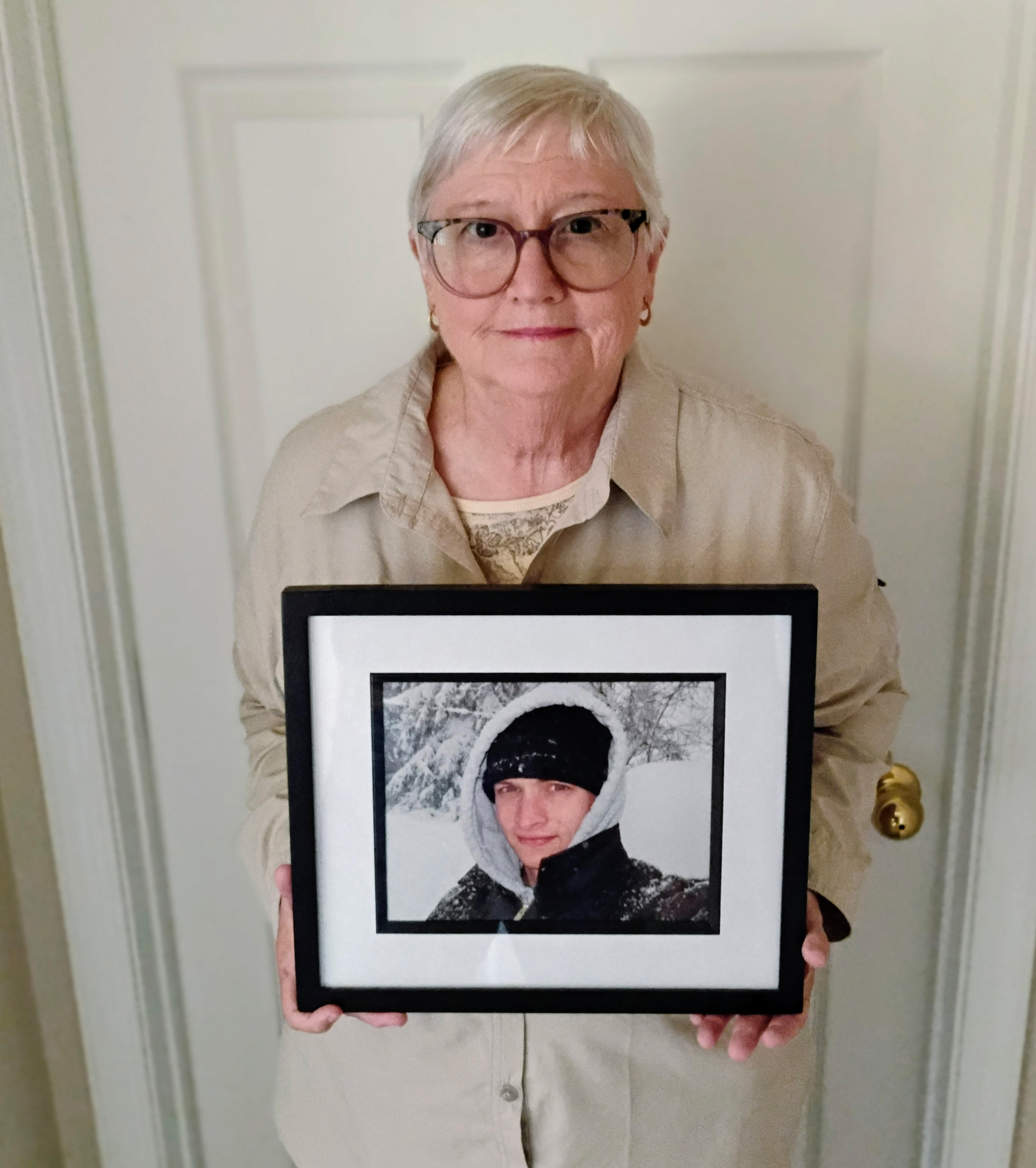
Unlike her grandfather’s situation, Paugh observed no external behavioral indicators that her son was struggling with suicidal ideation. Peter had recently purchased a home with his partner, celebrated his brother’s birthday, and purchased advance gifts for Mother’s Day. Paugh acknowledges that even if extreme risk protection orders had been widely available in her jurisdiction at the time, she would not have known to utilize them, as her son exhibited no recognizable pre-crisis markers.
Clinical research supports Paugh’s observation. Studies examining the behavioral history of individuals who die by firearm suicide show that they are statistically less likely to have sought formal mental health care in the months leading up to their deaths compared to those who utilize other methods. Furthermore, data specific to military veterans and active-duty service members indicate that the vast majority who die by firearm suicide never communicate their suicidal ideation to family members, friends, or military healthcare providers.
Expanding Prevention: Storage Laws, Permits, and Community Coalitions
Because reactive mechanisms like red flag laws fail to capture individuals who conceal their distress, researchers advocate for broad structural policies, such as universal permit-to-purchase requirements, mandatory waiting periods, and secure storage mandates.
Comparative analyses of state laws highlight the tangible impact of these policies. Research evaluating the implementation of permit-to-purchase requirements in Connecticut identified a statistically significant association with a roughly 15% reduction in local firearm suicide rates. Conversely, the repeal of a similar permit law in Missouri was linked to a 16% increase in firearm suicides within the state.
Similarly, Child Access Prevention (CAP) laws—enacted in approximately three dozen states and the District of Columbia—legally require firearm owners to securely lock and store firearms in residential environments where minors reside. These regulations have been shown to effectively reduce youth suicide rates. This is a matter of urgent public health concern, given that federal data reveal firearm suicide rates among Black youth have surged by 245%, and among Latino youth by 98%, since 2014.
Public health experts note that safe storage and permitting laws yield broad community benefits by simultaneously reducing rates of accidental shootings and interpersonal homicides. Exposure to community violence introduces severe psychological trauma, which researchers describe as a compounding risk factor that increases long-term vulnerability to suicide.
While firearm industry groups and advocacy organizations, such as the National Rifle Association (NRA) and the National Shooting Sports Foundation (NSSF), maintain opposition to universal legislative mandates like waiting periods and purchase permits, points of pragmatic collaboration have emerged. Industry associations have increasingly partnered with public health agencies to distribute educational materials within retail gun shops, promoting safe storage practices and encouraging gun owners to recognize warning signs of distress among peers.
Furthermore, grassroots initiatives across the country have successfully united unlikely stakeholders—including independent gun store owners, public health researchers, librarians, and community volunteers—to distribute free cable locks, establish voluntary temporary firearm storage networks for individuals facing acute mental health crises, and train commercial sellers to identify and deter potential impulsive firearm purchases by individuals in distress.
For advocates like Dorothy Paugh, these multifaceted community efforts, combined with sustained legislative and mental health advocacy, represent a vital path forward. While acknowledging that no single policy can eliminate the complex phenomenon of suicide, she remains steadfast in her commitment to structural prevention. In the context of suicide prevention, she emphasizes, systemic interventions that save even a single life alter the entire world for the family left behind.
If you or someone you know is struggling or in crisis, help is available. You can call or text 988 or chat at 988lifeline.org in the United States and Canada. If you are in immediate danger, please call your local emergency services (like 911) or go to the nearest hospital emergency room.
Related posts: