Federal Firefighters Reach Breaking Point as Aggressive Suppression Policies Meet Historic Climate Challenges

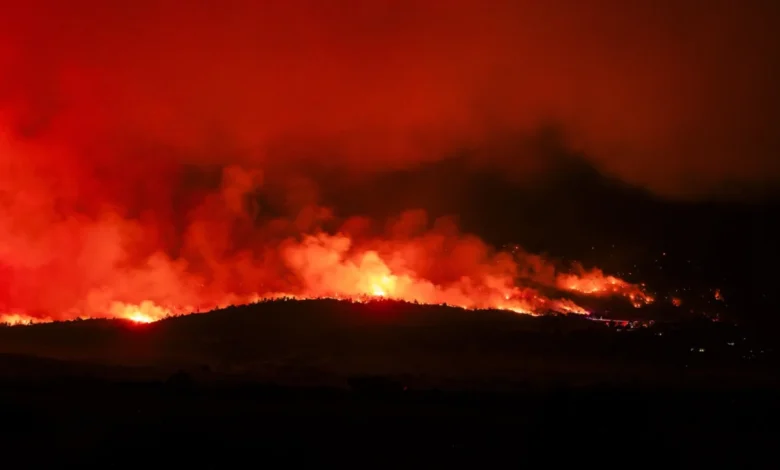
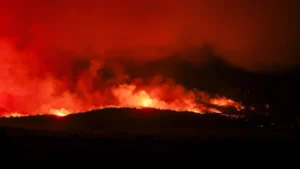
The 2026 wildfire season has pushed the United States federal firefighting apparatus to a historical breaking point, as record-breaking infernos intersect with severe personnel shortages and an administration-mandated shift toward aggressive suppression tactics. As of mid-September, the United States has seen over 54,400 individual wildfire ignitions, which have collectively scorched more than 8.4 million acres—a staggering 149 percent of the 10-year average. This unprecedented level of activity, compounded by a policy pivot that demands the immediate containment of nearly all ignitions, has created what experts describe as a “perfect firestorm” of operational risk, leading to the highest rate of firefighter entrapments in two decades.
A Chronology of Escalation
The 2026 fire season began with an ominous early start, placing immediate strain on federal resources that were already hampered by a long-standing recruitment and retention crisis. By April, crews were already deployed on near-nonstop assignments, leaving little time for the physical and mental recovery required for such high-intensity labor.
Throughout the early summer, the intensity of these blazes defied traditional containment methods. The situation reached a grim milestone in July with the Aspen Acres fire in Rye, Colorado. Growing to over 73,000 acres, it solidified its place as the eighth-largest fire in state history. Shortly thereafter, the Knowles fire in Colorado resulted in the tragic deaths of three firefighters, with a fourth member of their team succumbing to injuries weeks later. These fatalities, coupled with a series of near-miss entrapments, brought the total count of on-duty fatalities for the season to 14 by late summer.
The strain on the system was further quantified by the National Interagency Fire Center (NIFC), which maintained a “Preparedness Level 5” (PL5) status—the highest possible designation for resource demand—for 48 consecutive days. This duration is nearly double the 10-year average for PL5 conditions, illustrating the relentless pressure placed on the nation’s frontline responders.
The Conflict Between Policy and Reality
At the center of the current controversy is a fundamental disagreement regarding wildfire management strategy. Under the direction of Agriculture Secretary Brooke Rollins and Interior Secretary Doug Burgum, the federal government has moved to abandon “softer” management strategies that allowed some fires to burn when they posed little threat to human infrastructure. Instead, the administration has issued directives mandating a “fast and full” suppression approach, requiring agencies to aggressively target every ignition.
While agency leadership, including U.S. Forest Service (USFS) Chief Tom Schultz, has maintained that the workforce is “fully staffed and equipped to respond aggressively to every unplanned ignition,” those on the ground tell a different story. Nine active-duty firefighters and several retired officials interviewed for this report described a workforce that is exhausted, under-resourced, and increasingly demoralized. They argue that the directive to prioritize direct, aggressive attacks—often in terrain that is dangerous or inaccessible—is being implemented without the necessary depth of experienced leadership required to manage such risks safely.
Analysis of the Leadership Deficit
The professional firefighting community relies on a specific hierarchy of highly trained, experienced personnel: taskforce leaders, division supervisors, and heavy equipment bosses. These roles require years, often decades, of field experience to master. Over the past several years, the USFS has struggled with a “brain drain,” as experienced personnel depart for better pay, more stable schedules, or due to burnout.
The absence of these seasoned leaders has forced agencies to rely on temporary supervisory structures, where less experienced personnel are promoted into high-stakes roles prematurely. This, according to veteran fire chief and advocate Bobbie Scopa, sets teams up for failure. “We have had shortages for 20 years, and it’s only gotten worse,” Scopa noted. “It is not like we are trying to add bureaucracy; we are trying to keep people alive.”
The failure to replace these leaders has created a mismatch between the desired policy outcomes and the physical capacity of the crews. As one Pacific Northwest-based fire captain succinctly stated, “Firefighting capacity is like wages, and the fire environment is like inflation—it has not kept up.”
Legislative and Scientific Pushback
The severity of the crisis prompted a bipartisan group of senators, including Michael Bennet, Alex Padilla, Ron Wyden, Adam Schiff, and John Hickenlooper, to issue a formal letter to the Department of the Interior and the USDA. The senators expressed grave concern over the exhaustion of the $6 billion suppression budget and the reliance on temporary, under-qualified supervisory teams.
Beyond the political fallout, fire ecologists like Timothy Ingalsbee, executive director of Firefighters United for Safety, Ethics and Ecology, argue that the current strategy is ecologically and operationally shortsighted. By suppressing every fire, the government is effectively building up a massive fuel load—dead vegetation and brush—that will eventually result in even larger, more catastrophic fires in the future.
“Climate change is half the explanation,” Ingalsbee stated, noting that the combination of hotter, drier conditions and a policy of total suppression has created a cycle of perpetual, high-stakes combat that is unsustainable. He warns that when crews are pushed to the breaking point, their ability to make critical, life-saving decisions in the heat of a fire is severely compromised.
The Human and Economic Cost
The implications of this policy shift extend beyond the immediate safety of the firefighters. Economically, the cost of “full suppression” is astronomical, particularly when applied to fires that pose no direct threat to communities. Experts suggest that the current trajectory will continue to drain federal coffers while failing to mitigate the actual danger posed by the increasing frequency of mega-fires.
As the season enters its final phase, the question remains whether the federal government will recalibrate its strategy to favor sustainability over total suppression. For the thousands of firefighters currently on the lines, the immediate future remains precarious. With rosters depleted and the cumulative effects of smoke inhalation, chronic fatigue, and malnutrition setting in, many crews are operating on their final reserves of strength.
The disparity between the official assurances from Washington and the reality on the fire line has created a crisis of confidence. As the nation grapples with the long-term impacts of a changing climate, the firefighting community serves as the primary indicator of whether the federal government can adapt its policies to meet a new, more dangerous reality—or whether it will continue to press a strained system until it can no longer hold. For now, the 2026 season stands as a sobering testament to the limits of that system and the high price paid by those tasked with defending the landscape.