Collective Bargaining for Climate Comfort How Heat Pump Group Buy Programs Are Reducing Costs for Homeowners Nationwide

The transition to a carbon-neutral home has long been characterized by a significant financial hurdle: the high upfront cost of electrification. However, a growing movement of collective purchasing is beginning to dismantle these barriers. For Marie Tai, a condominium owner in Boston, the necessity of an upgrade became apparent as rising summer temperatures—driven by a rapidly warming global climate—rendered her window air-conditioning units nearly useless. Beyond her own comfort, the health of her 16-year-old cat, Mittens, who was recovering from a significant injury, made the installation of a reliable climate control system a priority. Despite the urgency, Tai found herself stalled by the market’s high entry price. Initial quotes from three different contractors for her 1,000-square-foot home ranged from $28,000 to $40,000, figures she deemed excessive for the scope of the project.
Tai’s experience is not unique. Across the United States, homeowners are increasingly turning to heat pump group-buy initiatives to bypass the "sticker shock" often associated with green energy transitions. These programs, organized by a mix of startups, nonprofits, and local governments, aggregate consumer demand to secure discounts that typically range from 10 to 20 percent. By transforming individual residential projects into bulk commercial orders, these initiatives are making all-electric heating and cooling accessible to a broader demographic, even as federal incentives face significant rollbacks.
The Mechanics of Group Purchasing in the HVAC Sector
The concept of group buying, often compared to the business model of wholesale retailers like Costco, relies on the principle of economies of scale. In a traditional HVAC (heating, ventilation, and air conditioning) transaction, a contractor must spend significant resources on marketing, lead generation, and individual site visits, many of which do not result in a sale. These "soft costs" are inevitably passed on to the consumer.
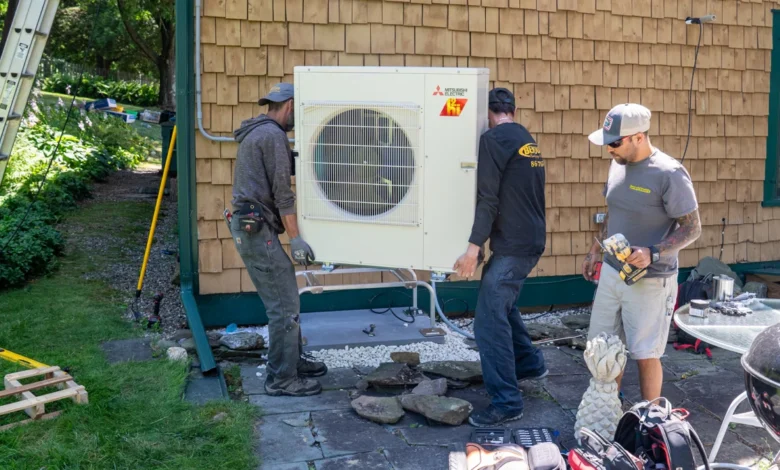
Group-buy programs, such as those organized by the Boston-based startup Laminar Collective or the California-based VoltHub, streamline this process. By vetting contractors through a competitive bidding process and presenting them with a "ready-to-buy" cohort of neighbors, the organizers eliminate much of the administrative and marketing overhead. Installers can purchase equipment in bulk and schedule multiple installations in the same geographic area, significantly reducing travel time and labor costs.
In Marie Tai’s case, participating in a Laminar Collective program allowed her to secure a ductless mini-split system for $20,000—a price thousands of dollars lower than her lowest independent quote. When combined with a $8,500 state rebate from the Mass Save program and zero-percent interest financing, the project became financially viable. Beyond the initial savings, the long-term economic benefits have been substantial; Tai reported saving approximately $1,300 on energy bills within the first year of operation, as she no longer required fuel oil for heating.
A Chronology of the Group-Buy Movement
The trajectory of collective electrification has its roots in the solar industry. Since 2007, the nonprofit Solar United Neighbors has utilized this model to help thousands of households install rooftop solar panels at reduced rates. The expansion into heat pumps represents the next logical step in the "electrify everything" movement.
- 2007–2022: Solar co-ops establish the blueprint for community-led energy purchasing, proving that localized demand aggregation can drive down costs for renewable technology.
- January 2023: Early adopters in regions like Windham, Maine, and parts of Massachusetts begin testing heat pump-specific group buys as state-level climate goals intensify.
- July–September 2024: The international company iChoosr, through its "Switch Together" platform, partners with Solar United Neighbors to launch pilot programs in the Colorado Front Range and the Washington, D.C., metro area.
- Late 2025–Early 2026: A shift in federal policy leads to the elimination of a $2,000 federal tax credit for home heat pumps and the restriction of energy-efficiency rebates for gas-to-electric conversions. This policy shift accelerates interest in private and local group-buy alternatives.
- Spring 2026: Major expansions are announced for metro areas in Houston, Dallas, Chicago, and Northern Arizona, signaling that the model is viable outside of traditional "green" coastal enclaves.
Data and Economic Impact: Analyzing the Savings
The financial argument for group buying is supported by data from electrification advocacy groups like Rewiring America. Under normal market conditions, whole-home heat pump installations typically range from $17,000 to $30,000. Factors such as home insulation quality, local climate, and existing ductwork can push these prices even higher.
According to Cole Merrick, CEO of VoltHub, the "sticker shock" of a $30,000 quote is the primary reason homeowners abandon electrification projects. Group-buy initiatives address this by providing transparent, pre-negotiated pricing menus. Data from recent programs indicates:
- Direct Discounts: Participants typically see a reduction of $3,000 to $6,000 per installation.
- Soft Cost Reduction: Contractors save an average of $300 to $500 per project on marketing and lead acquisition.
- Operating Efficiency: By scheduling "clusters" of installations, companies can increase their labor productivity by an estimated 15 percent.
Furthermore, the environmental benefits are quantifiable. Heat pumps are three to four times more efficient than traditional furnaces because they move heat rather than generating it through combustion. For a homeowner like Tai, this efficiency translates to a dramatic reduction in carbon footprint, alongside improved indoor air quality through advanced filtration systems.

The Contractor Perspective: Solving the Seasonality Problem
While consumers benefit from lower prices, contractors view group-buy programs as a tool for business stabilization. The HVAC industry is notoriously seasonal; companies often struggle to manage a deluge of "emergency" calls during the first heatwave of summer or the first freeze of winter, followed by periods of significant downtime.
Shreyas Sudhakar, founder and CEO of the general contracting firm Vayu, notes that while emergency replacements will always constitute the bulk of the industry’s work, group buys provide a "predictable floor" for revenue. "To be able to have some guaranteed revenue that is on the books and can fill downtime is really valuable," Sudhakar stated. By scheduling group-buy installations during the "shoulder seasons"—spring and autumn—contractors can maintain a steady workload for their technicians, reducing the need for seasonal layoffs and improving employee retention.
DR Richardson, CEO of Elephant Energy, echoed this sentiment, noting that his company has integrated community bulk buys across its markets in California, Colorado, and Massachusetts. The model allows contractors to focus on the technical execution of the work rather than the high-pressure sales tactics often associated with the industry.
Official Responses and the Role of Local Government
The success of these programs often hinges on the endorsement of local governments. While federal support for residential electrification has become a point of political contention, municipal leaders are increasingly viewing group buys as a low-cost way to meet local climate action goals.
Fred Wu, director of community engagement for iChoosr, emphasizes that local government partnerships lend essential credibility to these initiatives. "The first thing we need is a local government that wants to bring this to their constituents," Wu explained. Cities like Denver and Boston have begun promoting these programs through official channels, helping to mitigate consumer fears regarding "too-good-to-be-true" pricing and ensuring that participating contractors are properly vetted for quality and licensing.
In regions where federal rebates have been curtailed, local officials are framing group buys as a matter of economic resilience. By helping residents lower their utility bills and upgrade their home infrastructure, municipalities are insulating their populations against volatile fossil fuel prices.
Broader Implications and Future Outlook
The rise of heat pump group buying represents a shift in the philosophy of climate action—moving from a top-down, incentive-heavy approach to a bottom-up, community-driven model. This evolution suggests that even in the absence of robust federal support, the market for clean energy technology can continue to grow if the barriers to entry are lowered through collective action.
For the individual homeowner, the benefits extend beyond the financial. Marie Tai described the process as "empowering," noting that it provided a pressure-free environment to learn about the technology. Her experience has already had a ripple effect; after seeing the results, her neighbor joined a subsequent bulk-buy round to electrify their own home.
As the program expands into diverse climates—from the humid heat of Houston to the high-altitude winters of Flagstaff—the data collected will provide a roadmap for national decarbonization. If the 10 to 20 percent discount threshold can be maintained at scale, the heat pump may move from a luxury upgrade for the environmentally conscious to a standard appliance for the American middle class.
The transition to a cleaner grid and more efficient homes is no longer just a technical challenge; it is a logistical and social one. Group-buy initiatives prove that when neighbors band together, they possess the market power to demand a more affordable, sustainable future. As more communities adopt this "Costco model" for the climate, the path to electrification becomes not just a moral choice, but a clear economic one.