Federal Judges Strike Down New York Climate Superfund Act as States Wrestle with Fossil Fuel Liability

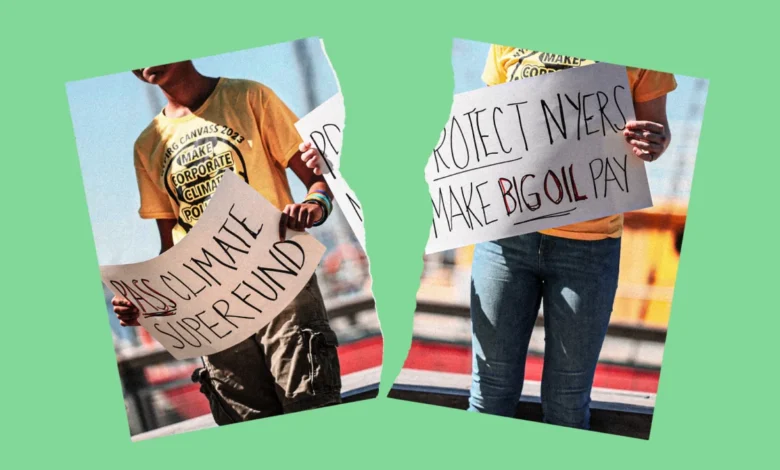
During the fourth day of New York’s annual Climate Week, a significant legal and political setback occurred for state-level environmental regulation. U.S. District Judge P. Kevin Castel issued a ruling that invalidated New York’s Climate Change Superfund Act, a pioneering piece of legislation designed to hold major fossil fuel corporations financially accountable for the damages wrought by climate-driven disasters. The court’s decision asserts that the state’s attempt to recoup costs for infrastructure repair and climate adaptation constitutes an overreach, citing preemption by the federal Clean Air Act and potential interference with the federal government’s constitutional authority over foreign affairs.
This judicial blow follows a similar ruling handed down just weeks earlier by Judge Brenda Sannes in a parallel case involving a coalition of Republican-led states, industry trade groups, and prominent fossil fuel entities. Together, these decisions represent a consolidated effort by the judiciary to block state-level attempts to internalize the costs of carbon emissions, effectively insulating the oil and gas industry from the localized financial consequences of global climate change.
The Genesis of the Climate Superfund Strategy
The New York legislation, enacted in 2024, was conceived as a direct response to the federal government’s inability to pass comprehensive climate liability reform. Drawing inspiration from the federal Comprehensive Environmental Response, Compensation, and Liability Act (CERCLA)—commonly known as the "Superfund" statute used in the 1980s to force chemical companies to pay for toxic waste cleanup—New York lawmakers sought to apply the "polluter pays" principle to the climate crisis.
Under the state’s proposed framework, major fossil fuel companies would have been assessed a total of $75 billion over a 25-year period. These funds were earmarked for essential climate adaptation and infrastructure resiliency projects, such as upgrading aging bridges, flood-proofing coastal properties, and reinforcing power grids against increasingly frequent extreme weather events. The model was quickly adopted by environmental advocates as a blueprint for other states, leading to legislative efforts in Minnesota, Washington, Connecticut, and Vermont.
Chronology of Legislative and Judicial Conflict
The tension between state action and federal preemption has been building since the inception of these bills. The following timeline outlines the key developments in the ongoing legal and legislative struggle:
- 2023: Lawmakers in New York and other states formally introduce climate superfund legislation, citing the growing burden of climate-related disasters on state budgets.
- May 2024: Vermont becomes one of the first states to successfully pass a climate superfund law, sparking immediate legal challenges from industry groups.
- 2025: The U.S. Department of Justice (DOJ) enters the fray, filing motions for summary judgment against New York and Vermont, arguing that federal oversight of environmental policy precludes state-level mandates.
- Mid-2025: The EPA formally rescinds its own authority to regulate greenhouse gas emissions, creating a legal vacuum that states argued necessitated their own legislative action.
- September 2026: Federal judges in New York strike down the state’s superfund law in two separate rulings, citing the Clean Air Act and constitutional constraints on foreign policy.
The Economic Burden of Climate Disasters
The legal debate occurs against a backdrop of escalating climate-related costs. According to data previously tracked by the National Oceanic and Atmospheric Administration (NOAA) and now maintained by Climate Central, the United States has seen a dramatic increase in "billion-dollar disasters."
Minnesota, for instance, recorded 62 such events between 1980 and 2024. State Representative Athena Hollins, a primary driver of Minnesota’s version of the superfund bill, notes that projections suggest the state could face $20 billion in climate-related damages by 2040. This figure represents approximately one-third of the state’s current annual budget. The agricultural sector, which is central to the state’s economy, and the outdoor recreation industry have already seen significant disruptions due to erratic rainfall and record-high temperatures. Similar pressures are visible in Connecticut, where Hurricane Sandy’s 2012 impact—which damaged 3,000 homes—remains a touchstone for why state officials are seeking independent funding mechanisms for resiliency.
Official Responses and Industry Opposition
The legal fight has drawn sharp divides between state policymakers and federal officials. The U.S. Department of Justice has been a consistent opponent of these state laws. In a public statement following Judge Castel’s ruling, DOJ official Adam Gustafson praised the decision, noting that the court correctly identified the federal government as the sole arbiter of national policy regarding global pollution. This position is complicated by the fact that the current administration has actively dismantled federal regulatory mechanisms, such as the EPA’s authority over greenhouse gases, leaving states to wonder where the "national policy" they are supposedly deferring to actually resides.
Conversely, state legislators remain defiant. Representative Shaun Scott of Washington, who is drafting his own climate superfund legislation for the January session, views the New York ruling as a "legal roadmap." He argues that by identifying where the courts found "landmines," his office can refine the language of their bill to avoid similar constitutional pitfalls.
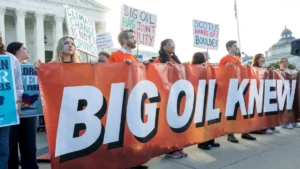
Advocacy groups, such as 350Seattle, are also continuing their push. Their argument remains consistent with the broader movement: the costs of climate externalities are currently borne by taxpayers through property taxes and disaster relief, whereas the firms that profited from the historical emissions that triggered these events remain insulated.
Implications for Future Litigation
The broader impact of these rulings may extend far beyond the borders of New York. While these decisions are currently limited to specific federal districts, they provide a strong legal precedent that corporations will likely cite in every state where similar legislation is proposed.
Furthermore, the legal landscape is set to become even more complex as the U.S. Supreme Court prepares to hear arguments in Suncor Energy v. Boulder. While the Suncor case involves tort-based liability rather than statutory superfund assessments, the high court’s ruling will likely establish a framework for how state laws interact with federal authority in the context of climate change. Legal analysts suggest that the Supreme Court’s reasoning in Suncor will be immediately adopted by lower courts to evaluate the constitutionality of climate superfund statutes nationwide.
Despite these headwinds, the momentum at the state level has not dissipated. Vermont State Senator Anne Watson remains confident in her state’s standing, noting that the local urgency—highlighted by back-to-back years of catastrophic flooding in Montpelier—makes the "polluter pays" model a political necessity, regardless of federal legal hurdles.
As the battle shifts to the upcoming legislative sessions in 2027, the primary question for lawmakers remains: Can they craft legislation that satisfies the constitutional demands of federal courts, or will the "polluter pays" model be effectively barred by the current judicial interpretation of the Clean Air Act? For now, the divide between the states seeking to address the mounting costs of a warming planet and a federal judiciary prioritizing centralized regulatory authority remains as wide as ever.