The Battle for Climate Accountability: Inside the Supreme Court’s Landmark Suncor Energy v. Boulder Hearing

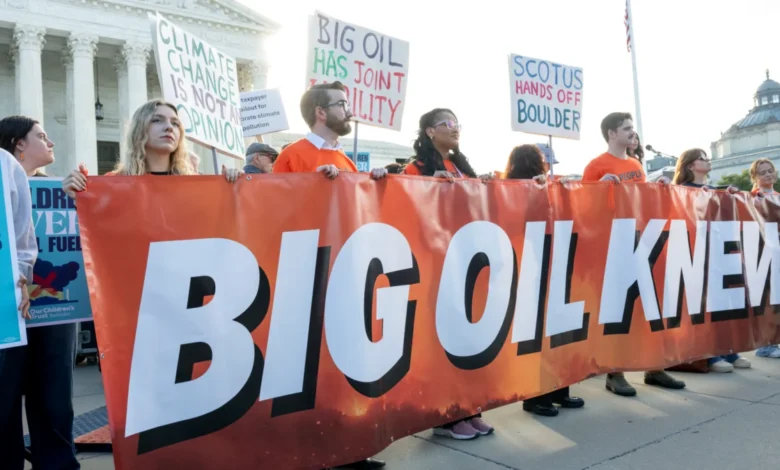
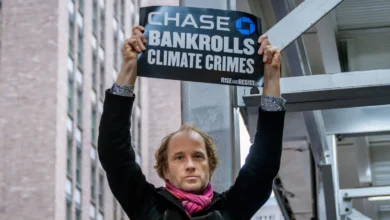
On Monday, October 5, 2026, the steps of the United States Supreme Court became the epicenter of a high-stakes legal confrontation that could redefine the future of corporate liability in the era of global climate change. While the justices inside heard oral arguments for Suncor Energy v. Boulder—a case questioning whether multinational fossil fuel conglomerates can be held responsible in state courts for the damages wrought by a warming planet—a crowd of approximately one hundred climate survivors, ranchers, and activists gathered outside to demand a day in court. The atmosphere was charged with the weight of years of litigation, as protestors chanted, “They knew, they lied,” a direct indictment of fossil fuel executives who, according to decades of internal documents, understood the catastrophic implications of their products as early as the 1970s.
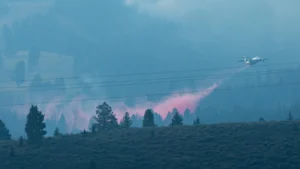
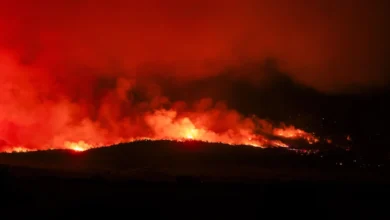
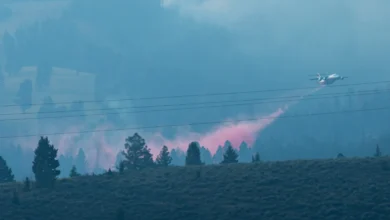
The Supreme Court’s involvement in this case follows years of procedural maneuvering. The dispute originates from a 2018 lawsuit filed by the City and County of Boulder, Colorado, which alleged that energy giants Suncor and ExxonMobil engaged in a campaign of deception, intentionally misinforming the public about the environmental risks associated with the combustion of oil and gas. Boulder’s legal counsel argues that these companies should be held financially liable for the mounting costs of climate-induced disasters, including unprecedented heat waves, severe droughts, and the devastating wildfires that have plagued the American West.
A Chronology of Conflict: From Discovery to the High Court
The legal battle over climate accountability is not a new phenomenon, but it has reached a critical inflection point. The origins of this specific struggle trace back to the mid-20th century, when internal scientific research conducted by major oil companies began to identify the link between fossil fuel consumption and rising atmospheric carbon dioxide levels. Despite this internal clarity, public-facing efforts by these firms often emphasized uncertainty or denied the human contribution to climate change.
In 2018, the City and County of Boulder, alongside San Miguel County, initiated their legal action in Colorado state court. The industry’s response was immediate and consistent: they sought to move the cases into federal court, where they hoped for more favorable rulings or dismissal. This "removal" strategy became a hallmark of fossil fuel defense, leading to a multi-year tug-of-war over jurisdiction. By the time the case reached the Supreme Court in 2026, it had become a bellwether for dozens of similar lawsuits pending across the United States.
The urgency of the situation was underscored by the recent recusal of Justice Samuel Alito, who stepped back from the case in late September 2026. While the court did not provide a detailed explanation, the move has fueled speculation regarding the court’s internal deliberations and the potential for a split decision among the remaining eight justices.
The Human Cost: Survivors and Stewards of the Land
The rally outside the court served as a visceral reminder of the tangible consequences of the policy failures being debated inside. Louie Delaware, a resident who lost his home in the 2021 Marshall Fire, spoke with a gravity that resonated through the crowd. The Marshall Fire, which destroyed roughly 1,000 homes in Boulder County, remains a harrowing example of the "new normal" in Colorado. For survivors like Delaware, the lawsuit is not merely a financial claim but a moral necessity.
The testimonials extended beyond urban displacement to the agricultural heartland. Dr. Kathryn Bedell and Deirdre Macnab, regenerative ranchers from Rio Blanco County, provided a sobering look at the economic reality of the climate crisis. For these generational ranchers, the impact is existential. "If you can’t grow food, we have to import it, and we won’t have any food security or control over the price," Bedell noted. Her decision to sell her cattle—a herd managed by her family for generations—serves as a microcosmic indicator of how extreme weather and prolonged drought are forcing the liquidation of rural livelihoods.

The human toll was further amplified by Zaire Calvin, who spoke of the 2025 Eaton Fire in Altadena, California. The loss of his sister, Evelyn McClendon, in that disaster brought a somber silence to the protest, shifting the focus from property damage to the irreparable loss of life. These stories represent the front lines of the climate crisis, where the abstract nature of carbon emissions is translated into the concrete reality of scorched earth and empty family homes.
Legal and Economic Implications
The legal arguments in Suncor Energy v. Boulder hinge on the doctrine of federal preemption. The fossil fuel industry contends that global climate change is a matter of national and international policy, and that allowing state courts to adjudicate damages for global phenomena would create a chaotic, fragmented regulatory landscape. Conversely, plaintiffs argue that their claims are grounded in state common law regarding public nuisance and consumer fraud.
The broader implications are staggering. Should the Supreme Court rule in favor of Suncor and Exxon, it could effectively provide a "liability shield" that would insulate the fossil fuel industry from a wave of litigation currently pending in various jurisdictions. Such a decision would likely halt ongoing efforts in states like California, where officials are actively pursuing similar accountability measures.
Economists observing the case suggest that the outcome could fundamentally alter the financial risk profile of the energy sector. If these companies are found liable for damages, the costs could reach into the billions, potentially requiring them to adjust their long-term capital allocation strategies, insurance premiums, and investment in transition technologies.
Official Responses and the Path Forward
Former Washington Governor Jay Inslee, a prominent advocate for climate accountability, utilized the platform outside the court to characterize the industry’s actions as "malignant." His presence highlighted the political dimension of the issue, as state leaders increasingly look to the courts to force the hand of industries they believe have obstructed meaningful climate action.
The industry’s perspective, while not represented at the rally, has been articulated in previous filings and public statements. Oil and gas representatives maintain that they are not responsible for the global consumption habits of billions of people and that energy policy should be dictated by legislatures rather than trial courts. They contend that these lawsuits are politically motivated attempts to use the judiciary to bypass the democratic process.
As the Court prepares its ruling, the nation remains divided. The judiciary is now tasked with balancing the rights of local governments to protect their citizens against the potential for an unprecedented expansion of corporate liability. For those like Jenny Singer-Rupp, a Marshall Fire survivor, the stakes are not about political theory, but the future of the next generation. "I’m doing everything I can to protect that future," she said.
The decision in Suncor Energy v. Boulder will be a defining chapter in the history of climate litigation. Regardless of the ruling, the events of October 5, 2026, suggest that the demand for accountability from the fossil fuel industry will not dissipate. Whether through the halls of justice or the court of public opinion, the tension between historical corporate conduct and the reality of a changing climate appears destined to continue for years to come. The case now sits with the justices, but for the survivors in Colorado and beyond, the trial is already long underway.