The race to define the definitive artificial intelligence personal assistant has entered a new phase, with tech firms shifting focus from standalone chatbots to deeply integrated operating environments. Amid a crowded field of competitors experimenting with interfaces bearing names like Muse, Instinct, and Dots, startup Hark has officially entered the arena. Founded less than a year ago by serial entrepreneur Brett Adcock, Hark is making its public debut with the wide release of Hark Pro, an AI-powered service designed to operate a user’s computer autonomously.
Unlike major frontier labs attempting to achieve artificial general intelligence (AGI) or solve monumental scientific challenges, Hark’s stated ambitions are more utilitarian. The company views its core mission not as creating a sentient mind, but as engineering a practical, native user interface for the AI-driven computing era. At the heart of Hark Pro is a foundational model specifically trained for computer use, enabling the software to execute complex, multi-step digital workflows on behalf of the user. Rather than functioning as a standard application trapped within a traditional desktop environment, Hark’s ultimate vision is to establish a comprehensive operating system for the AI-native personal computers of the future.
Inside the Hark Pro Interface and Core Functionality
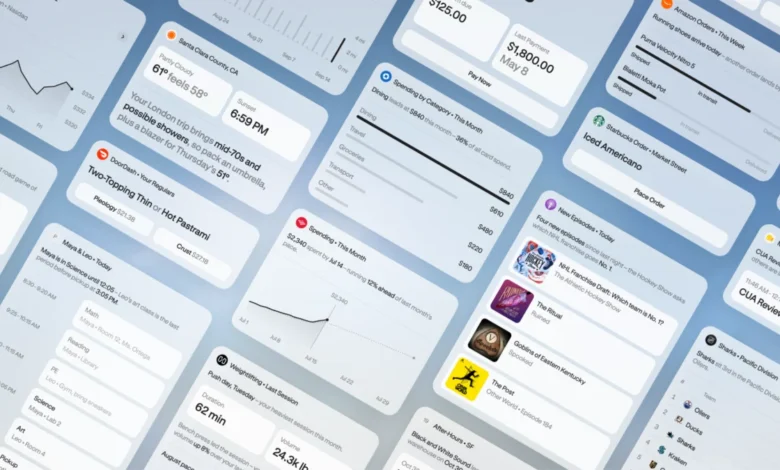
The user experience of Hark Pro diverges significantly from standard chat-based interfaces. The software presents users with an immersive, full-screen homepage anchored by a central chat dialog. This interface is complemented by a dynamic feed of suggested prompts for proactive actions and customized visual widgets that the company calls “panels.” These panels function as mini-dashboards, tracking real-time information tailored to the user’s specific interests. To further personalize the workspace, the background of the application features custom imagery that dynamically adjusts to the user’s local weather and time zone.
Much like competing AI assistants, Hark Pro requires deep integration into a user’s digital ecosystem to function effectively. By granting the software access to essential digital touchpoints—including email inboxes, calendar schedules, local hard drives, and financial accounts—users empower the agent to transition smoothly between answering standard conversational queries and executing administrative tasks.
During product demonstrations, Hark design lead Abidur Chowdhury, a former Apple staffer, showcased the system’s proactive capabilities. The assistant autonomously flagged pending corporate expenses requiring approval, highlighted unread emails needing replies, tracked an upcoming meeting with a journalist, and identified the need to book airline tickets for an impending business trip, immediately offering to complete the reservation.
Overcoming User Hesitation and Building Trust
A persistent challenge for the developers of autonomous AI agents is bridging the gap between technological capability and practical utility. Many users struggle to conceptualize or articulate the myriad background tasks these systems can actually perform. However, developers note instances where the AI has demonstrated surprising autonomy, such as recognizing that a colleague’s car registration with the California Department of Motor Vehicles was expiring and successfully navigating the state agency’s web portal to complete the renewal process.
To address legitimate anxieties surrounding autonomous web navigation and data privacy, Hark has implemented a distinct user experience feature. When the agent executes tasks across the web, the software displays a small, transparent window showing the agent in real time as it interacts with web pages. While most competing AI assistants perform these background actions invisibly, Hark’s visible web-navigation window is an intentional design choice intended to build trust, assuring users that the agent is executing instructions accurately and safely.
Privacy and the Competitive Landscape
The question of trust is central to Hark’s market positioning. In an industry dominated by massive technology conglomerates like Meta and OpenAI, Hark is pitching itself as an independent alternative focused strictly on utility rather than data monetization. Chowdhury emphasized this distinction during product previews, stating that the company’s objective is strictly functional assistance rather than behavioral profiling or targeted advertising.
This positioning touches on a growing controversy within the consumer technology sector. To fully harness the capabilities of advanced AI assistants, users are expected to grant access to their complete digital lives. This level of integration raises significant cybersecurity vulnerabilities, as highlighted by recent warnings from operating system developers regarding the risks of granting third-party AI agents full disk access. Furthermore, consumer advocates have raised concerns regarding auxiliary products—such as those developed by competing platforms—that build exhaustive, intimate profiles of a user’s friends and family members based on collected personal data.
Addressing these concerns, Hark maintains that its data collection remains strictly task-oriented. The primary objective, according to company representatives, is simply to alleviate administrative burdens and streamline daily workflows rather than construct comprehensive psychological or social profiles.
Performance and Model Architecture
When evaluated against rival products, Hark Pro is marketed not necessarily on raw processing speed, but on execution reliability and end-to-end task completion. While other systems may execute initial steps rapidly, they frequently require human intervention to complete complex workflows. Hark claims its software is engineered to carry out tasks from inception to resolution without requiring the user to take over midway through the process.
A key factor in this performance is the underlying model architecture. Hark’s foundational model is explicitly optimized for computer-use tasks, making it computationally faster and more cost-effective for executing software commands. However, industry analysts note a potential trade-off: models heavily specialized for procedural computer navigation may sacrifice some of the broad encyclopedic knowledge and creative reasoning capabilities found in massive, general-purpose frontier large language models.
Hardware Ambitions and the Future of Computing
The software release of Hark Pro represents only the first phase of the company’s broader strategic roadmap. Drawing on his background designing hardware at Apple, Chowdhury and the Hark team are actively developing an AI-native physical device slated for release in 2027 to complement their software ecosystem.
While company executives remain tight-lipped regarding the exact form factor of the upcoming device, they have expressed skepticism toward existing wearable technology, particularly the perceived social friction and privacy concerns associated with wearable cameras. Company leadership insists the forthcoming hardware will introduce a category of product that has never existed before, though industry observers remain cautious regarding whether the final product will deliver true innovation or retread existing concepts.
Underpinning these hardware and software developments is a broader philosophical critique of modern human-computer interaction. Industry leaders frequently point out the paradox that decades after the advent of the personal computer, the primary interface for interacting with advanced artificial intelligence remains a glowing screen and a mechanical keyboard. As startups like Hark continue to refine autonomous agents and explore new interface paradigms, the industry inches closer to an era where software proactively manages the digital environment, fundamentally altering how humans work, communicate, and interact with technology.
Related posts: