Federal Prosecutors Urge Conviction in Landmark Huawei Trial, Arguing the Tech Giant Built Its Global Empire on Systematic Corporate Crime

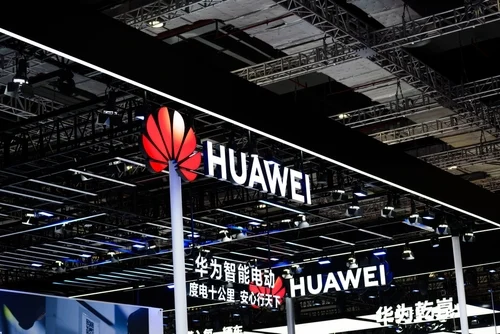
The culmination of an exhaustive, multi-year legal saga arrived in a federal courtroom as prosecutors delivered a scathing closing argument against Chinese telecommunications giant Huawei. In the final phases of a high-stakes, 11-week trial in the Eastern District of New York, federal attorneys implored the jury to return a guilty verdict, asserting that the multi-billion-dollar enterprise engineered its ascent to global market dominance through an aggressive, decades-long pattern of calculated criminality, intellectual property theft, and deliberate evasion of U.S. economic sanctions.
Assistant U.S. Attorney Meredith Arfa, leading the prosecution’s summation, laid out a narrative of corporate malfeasance that spanned two decades. According to the government, Huawei’s rapid expansion was not merely the result of innovative engineering or competitive market strategies, but rather a systematic corporate policy characterized by the aggressive acquisition of proprietary technology by any means necessary. The trial, which has drawn intense international scrutiny amid broader geopolitical tensions between Washington and Beijing, addresses core allegations that Huawei systematically weaponized industrial espionage and financial fraud to outmaneuver Western competitors.
The Anatomy of Intellectual Property Theft
To substantiate the sweeping racketeering, trade secret theft, and wire fraud charges, prosecutors presented a mountain of digital and physical evidence detailing specific instances of corporate espionage targeting U.S. technology firms. Among the most prominent exhibits was footage capturing a former Huawei employee dismantling and removing a portion of "Tappy"—a specialized testing robot engineered by T-Mobile to evaluate smartphone touchscreens—directly from the carrier’s secure laboratory facility.
In addition to the physical pilfering of testing equipment, prosecutors focused heavily on the digital theft of source code belonging to networking giant Cisco Systems. Displaying side-by-side comparisons of source code from Cisco routers and their Huawei equivalents, Arfa pointed out undeniable similarities, noting that the code matched line for line down to an internal engineer’s stray comment referencing an individual named "Bob."
"This simply couldn’t happen without copying," Arfa told the jury during her closing arguments.
The prosecution argued that these incidents were not isolated occurrences driven by overzealous local technicians, but rather part of a centrally coordinated corporate directive. Prosecutors presented internal company documents and forum posts indicating that Huawei managers routinely cultivated an environment of industrial espionage by offering explicit financial bonuses and performance incentives to employees who successfully acquired confidential intellectual property from international competitors. This institutionalized reward system, the government argued, proved that the upper echelons of the company were fully aware of, and complicit in, the systematic theft of trade secrets.
Sanctions Evasion and the Shadow of Skycom
Beyond the allegations of intellectual property theft, the trial placed heavy emphasis on Huawei’s alleged circumvention of United States economic sanctions, particularly concerning trade with Iran. Central to this aspect of the prosecution’s case was Skycom Tech Co., a Hong Kong-based firm that prosecutors described as a secret, wholly controlled subsidiary used by Huawei to funnel embargoed U.S. technology and financial services into the Islamic Republic.
Arfa argued that Huawei engaged in a sophisticated corporate shell game to obscure its ownership and operational control over Skycom, repeatedly lying to international financial institutions regarding the nature of the subsidiary’s business dealings. A critical piece of evidence introduced by the government involved the legal admissions of Meng Wanzhou, Huawei’s chief financial officer and the daughter of company founder Ren Zhengfei.
Meng, whose December 2018 arrest in Canada at the request of U.S. authorities ignited a major diplomatic firestorm, spent nearly three years fighting extradition before ultimately entering into a deferred prosecution agreement with the U.S. Department of Justice in September 2021. As part of that agreement, Meng acknowledged that Skycom’s business operations in Iran violated American sanctions and that she had misled HSBC—Huawei’s primary international clearing bank—regarding the true nature of the relationship between Huawei and Skycom. Prosecutors argued that Meng’s admissions served as an undeniable proxy for the company’s broader institutional practice of financial deception and sanctions non-compliance.
A Chronology of a Geopolitical Legal Battle
The courtroom showdown represents the latest chapter in a protracted legal conflict that has reshaped international trade and diplomatic relations over the past decade. A comprehensive timeline highlights the critical milestones in the government’s investigation and prosecution of the tech giant:
- January 2019: The U.S. Department of Justice unseals two comprehensive indictments against Huawei, its chief financial officer Meng Wanzhou, and various affiliates, charging them with bank fraud, wire fraud, conspiracy to steal trade secrets, and obstruction of justice.
- December 2018 – September 2021: Meng Wanzhou is detained under house arrest in Vancouver, Canada, fighting extradition to the United States. The detention severely strains diplomatic ties between Ottawa, Beijing, and Washington, resulting in the retaliatory detention of Canadian citizens in China.
- September 2021: Meng reaches a deferred prosecution agreement with U.S. prosecutors, admitting to misleading banks about Huawei’s business dealings in Iran. Following the agreement, she is released and allowed to return to China, though the broader criminal case against the corporate entity remains active.
- 2022 – 2025: Pre-trial motions, evidentiary hearings, and complex discovery processes consume federal court dockets in the Eastern District of New York as Huawei’s defense teams mount extensive challenges to the government’s jurisdictional authority and evidentiary claims.
- Fall 2026: The long-awaited trial officially commences, spanning 11 weeks of intensive testimony, expert witness analyses, and the presentation of thousands of pages of corporate documents, culminating in late-November closing arguments.
Defense Arguments and Institutional Stance
Throughout the lengthy proceedings, Huawei has vehemently denied all allegations of systemic criminality, maintaining its innocence across all counts. Represented by elite defense teams from prominent law firms including Jenner & Block, Sidley Austin, and Steptoe, the telecommunications titan has mounted a defense centered on the theory of "rogue actors."
Huawei’s legal counsel argued before the jury that any instances of trade secret misappropriation or policy violations were the unauthorized, independent actions of isolated employees acting outside the scope of their employment and corporate policy. The defense contended that whenever management discovered employee misconduct, the company took swift and decisive disciplinary action. Furthermore, Huawei’s attorneys asserted that the government’s case relies heavily on circumstantial evidence, exaggerated claims, and misinterpretations of standard corporate communications, arguing that the prosecution is attempting to criminalize ordinary competitive behavior and global commercial operations.
As one of the world’s largest providers of telecommunications equipment and a pioneer in next-generation 5G networking infrastructure, Huawei has long claimed that the U.S. prosecution is politically motivated. The company has argued that the legal onslaught is designed less to uphold traditional intellectual property laws and more to suppress a formidable foreign competitor capable of dominating the global digital landscape.
Broader Economic and Geopolitical Implications
The outcome of the trial carries monumental implications for international trade, corporate compliance, and the global technology sector. As the jury deliberates on the multi-count indictment, legal and economic analysts point to several broader consequences stemming from the case:
- Corporate Compliance Standards for Multinationals: The prosecution serves as a stark warning to international corporations operating across geopolitical divides. The verdict will likely establish a critical precedent regarding the extent to which parent companies can be held criminally liable for the actions of subsidiaries, joint ventures, and overseas employees.
- The Enforcement of U.S. Extraterritorial Jurisdiction: By prosecuting a foreign entity for actions involving non-U.S. subsidiaries doing business in third-party nations like Iran, the Justice Department continues to assert its broad authority to police global financial transactions that touch the U.S. banking system. This aggressive enforcement posture has reshaped how international firms handle risk assessment and compliance.
- Supply Chain Security and Intellectual Property Protection: The detailed public airing of industrial espionage techniques highlights the persistent vulnerabilities of Western technology sectors to state-backed or corporate-sponsored theft. The verdict may spur increased legislative and regulatory scrutiny regarding foreign investments and partnerships in sensitive technology domains.
As the case moves into the hands of the jury, the legal world waits to see whether the government’s extensive portfolio of evidence will convince the panel that Huawei’s global expansion was indeed fueled by a calculated strategy of systemic crime, or if the defense’s argument regarding isolated employee misconduct will prevail in one of the most significant corporate criminal trials in modern American history.
Related posts: