US Passport Rankings Stagnate at Tenth Place as Global Mobility Trends Shift Toward Asia and Europe

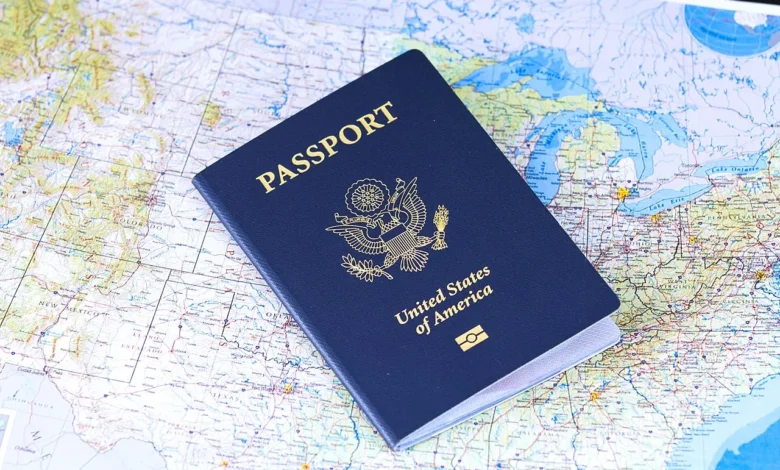
The United States passport has maintained its position at tenth place in the latest release of the Henley Passport Index, a ranking system that evaluates the world’s travel documents based on the number of destinations their holders can access without a prior visa. While the U.S. currently grants its citizens entry to 180 destinations—a slight increase from the 179 recorded in January—the nation continues to trail behind a growing number of international peers. Due to the methodology of the index, which allows multiple countries to share a single rank, the U.S. actually trails 36 other nations, underscoring a period of relative stagnation in American diplomatic mobility that has persisted for several years.
The current ranking reflects a broader trend identified by Henley & Partners, the firm responsible for the index. The U.S. has seen a gradual descent from its peak a decade ago, mirroring a similar decline in the United Kingdom’s passport power. This shift suggests a significant realignment in global mobility, as traditional transatlantic powers lose ground to agile economies in Asia and a unified bloc of European nations. The U.S. reached a historic low in October 2023, falling to 12th place for the first time in the index’s 20-year history, and its current stabilization at 10th place indicates a struggle to regain its former dominance.
The Evolution of the Henley Passport Index and Methodology
The Henley Passport Index is widely regarded as the standard reference for global citizens and sovereign states when assessing the strength of a passport. The index is based on exclusive data from the International Air Transport Association (IATA), which maintains the world’s largest and most accurate database of travel information. The ranking includes 199 different passports and 227 different travel destinations.
The scoring system is straightforward: for each travel destination, if no visa is required for passport holders from a country or territory, then a score of 1 is created for that passport. This also applies if a passport holder can obtain a visa on arrival, a visitor’s permit, or an electronic travel authority (ETA) when entering the destination. Conversely, where a visa is required, or where a passport holder has to obtain a government-approved electronic visa (e-visa) before departure, a score of 0 is assigned.
Over the last two decades, the index has evolved from a simple travel metric into a sophisticated tool for geopolitical analysis. It highlights the direct correlation between a country’s visa-free access and its economic freedom, diplomatic relations, and internal stability.
A Decade of Transatlantic Decline
The trajectory of the U.S. and UK passports provides a stark illustration of shifting global influences. In 2014, both the United States and the United Kingdom jointly held the number one spot on the Henley Passport Index. At that time, the transatlantic alliance represented the pinnacle of global mobility. However, the intervening decade has seen both nations steadily slip down the rankings.
While the U.S. now sits at 10th, the United Kingdom has experienced a similar trajectory, falling from 3rd place to 6th place over the same 20-year period. Analysts point to several factors for this decline, including more restrictive domestic immigration policies, a slower pace in negotiating new bilateral visa-waiver agreements, and the rise of other nations that have prioritized "visa-free diplomacy" as a core component of their foreign policy.
In the case of the United States, the decline is not necessarily due to a loss of access—the U.S. has actually added destinations over the years—but rather because other nations are expanding their diplomatic reach at a much faster rate. The U.S. has remained relatively static in its visa-waiver program, whereas countries like Singapore and members of the European Union have aggressively pursued new agreements to facilitate the ease of movement for their citizens.
The Global Leaders: Asia and Europe Take the Lead
The top of the Henley Passport Index is currently dominated by a mix of Southeast Asian and European nations. Singapore has solidified its position as the world’s most powerful passport, offering its citizens visa-free access to an unprecedented 195 destinations. This achievement is the result of years of strategic diplomatic engagement and a national policy focused on global integration.
Following Singapore, a group of five nations shares the second-place ranking, with access to 192 destinations: France, Germany, Italy, Japan, and Spain. The dominance of European nations in the top tier is largely attributed to the Schengen Area and the European Union’s collective bargaining power in negotiating travel agreements. Japan, which held the top spot for several years, remains a powerhouse of mobility, reflecting its high level of international trust and economic importance.
The 2024 rankings highlight a growing "mobility gap" between the world’s most and least powerful passports. While Singaporeans can visit 195 destinations without a visa, citizens of Afghanistan—which sits at the bottom of the index—can only access 26. This is the lowest score ever recorded in the 19-year history of the index.
The Economic Implications of Passport Power
The significance of a high passport ranking extends far beyond the convenience of tourism. In a globalized economy, the ability to travel without the bureaucratic hurdles of visa applications is a vital economic asset. As noted in the Henley release, visa-free access is a "powerful economic tool" that drives growth and attracts foreign investment.
For business leaders and entrepreneurs, a powerful passport facilitates international cooperation, allows for rapid response to global market opportunities, and simplifies the process of establishing international offices. Conversely, countries with limited mobility often face challenges in attracting talent and investment, as the difficulty of travel creates a friction point for international business.
Research conducted by Henley & Partners has shown a strong correlation between a country’s "visa-free score" and its "economic power score," which takes into account a nation’s share of global GDP. Passports that provide greater access to the world’s markets tend to belong to wealthier, more stable nations. For the U.S., remaining at the 10th spot—while still prestigious—suggests that it is not maximizing its potential to leverage mobility for economic advantage compared to the leaders in Singapore and Europe.
The Reciprocity Gap and U.S. Policy
One of the primary reasons for the U.S. passport’s relative stagnation is the "reciprocity gap." The Henley Passport Index often contrasts a country’s passport power (how many countries its citizens can visit) with its "openness" (how many countries it allows to enter without a visa).
The United States has historically maintained a strict visa policy, requiring travelers from many nations to undergo rigorous application processes. While the U.S. Visa Waiver Program (VWP) allows citizens from 41 countries to enter for tourism or business for up to 90 days without a visa, this list has expanded slowly compared to the visa-free lists of other top-tier nations.
Diplomatic reciprocity is a core tenet of international relations; countries are often unwilling to grant visa-free access to U.S. citizens if the U.S. does not offer the same privilege to their citizens. As other nations, particularly in the Middle East and Southeast Asia, become more "open," they are rewarded with reciprocal agreements that boost their passport rankings. The U.S., by maintaining a more closed-door policy for security and immigration control reasons, effectively limits the growth potential of its own passport power.
Regional Highlights: The Rise of the Middle East
While the U.S. and UK have seen their influence wane, the Middle East has emerged as a region of rapid growth in mobility. The United Arab Emirates (UAE) continues its meteoric rise, having climbed from 62nd place in 2006 to 9th place in 2024. The UAE now offers visa-free access to 185 destinations, surpassing the United States for the first time.
The UAE’s success is attributed to a concerted effort by the government to position the country as a global hub for trade, tourism, and investment. By aggressively negotiating visa-waiver agreements and maintaining a highly open economy, the UAE has transformed its passport into one of the most desirable in the world. Other Gulf Cooperation Council (GCC) nations, such as Qatar and Saudi Arabia, are also following this trajectory, albeit at a slower pace, as they seek to diversify their economies away from oil.
Future Outlook and Global Trends
The stagnation of the U.S. passport at 10th place serves as a barometer for the changing dynamics of global influence. As the world becomes more interconnected, the value of mobility will only increase. For the United States to regain its position at the top of the index, it would likely need to re-evaluate its visa policies and engage in more proactive bilateral negotiations.
However, the current political climate in the U.S., characterized by intense debates over border security and immigration, makes a significant shift toward "openness" unlikely in the near term. This suggests that the U.S. may continue to hover around the 10th position or slip further as other nations prioritize global mobility.
Furthermore, the rise of digital nomad visas and "citizenship by investment" programs is adding a new layer of complexity to the global mobility landscape. Many affluent individuals are no longer relying on a single passport, instead seeking "sovereign equity" through second citizenships that offer greater travel freedom and economic security.
In conclusion, the latest Henley Passport Index rankings confirm that the era of transatlantic dominance in global mobility is giving way to a more multipolar world. With Singapore at the helm and the UAE breaking into the top ten, the map of global influence is being redrawn by those who prioritize open borders and international cooperation. For U.S. travelers and policymakers, the 10th-place ranking is a reminder that in the race for global connectivity, standing still is often the same as falling behind.