Southwest Airlines Passenger Removed After Confrontation Over Mandatory Gate-Checking of Carry-On Luggage

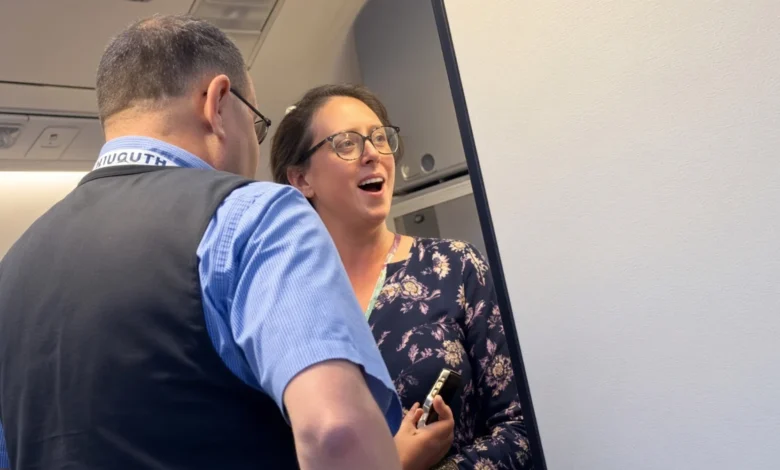
A viral video circulating on social media has ignited a fresh debate regarding airline boarding policies after a Southwest Airlines passenger was removed from a flight following an intense confrontation with crew members over a mandatory gate-check requirement. The incident, which took place at the boarding door of the aircraft, centered on the passenger’s refusal to surrender her carry-on bag despite her observation that overhead bin space remained available. The altercation, which escalated to allegations of physical assault, resulted in the passenger being denied passage and removed from the aircraft by law enforcement.
The roughly two-and-a-half-minute video, which was initially shared on Instagram by the aviation community account A Fly Guy, depicts a heated verbal exchange between the passenger and a flight attendant. Throughout the recording, the passenger is heard repeatedly accusing the flight attendant of "assault and battery," claiming that ground staff had forcibly taken her luggage against her will. In response, the flight attendant maintains a notably composed demeanor, informing the passenger that she is no longer permitted to fly due to her behavior and the alleged physical contact that occurred prior to the recording.
Chronology of the Confrontation
The sequence of events leading to the removal began at the boarding gate, where ground staff identified the passenger’s bag as one that needed to be checked into the cargo hold. This is a common, albeit contentious, practice known as a "gate check." The passenger contested the decision, citing the presence of empty overhead bins within the cabin as evidence that her bag could have been accommodated.
As the situation moved to the aircraft door, the passenger refused to relinquish the item, leading to a physical and verbal standoff. While the full context of the physical interaction remains unverified—with the flight attendant accusing the passenger of assault and the passenger leveling the same accusation at the crew member—the flight attendant ultimately made the executive decision to remove the passenger from the flight. The video concludes with the flight attendant requesting the intervention of airport police, a standard safety procedure when a passenger is deemed non-compliant or disruptive to the boarding process.
The Logic and Mechanics of Mandatory Gate-Checking
To understand the friction caused by this incident, it is necessary to examine the operational pressures airlines face during the boarding window. Gate-checking is rarely a malicious act; rather, it is a risk-mitigation strategy designed to protect the airline’s "on-time performance" (OTP) metrics.
Airlines frequently implement mandatory gate-checking when they anticipate that overhead bins will reach capacity before all passengers have boarded. The primary operational concern is that if a passenger walks to the back of the aircraft only to find no space available, they must navigate against the flow of incoming passengers to return to the front. This process is time-consuming and can lead to significant departure delays. Furthermore, because different bags vary in size and passengers often misload items—such as placing small jackets or personal items in prime overhead bin space—agents must make an educated, often conservative, estimate regarding bin capacity.
In recent years, the industry has leaned into predictive technology to manage this. For example, since 2022, airlines like American Airlines have utilized proprietary software that integrates aircraft type, passenger load factors, and route data to inform agents exactly how many bags must be checked at the gate. However, these systems do not provide real-time, sensor-based data on actual bin availability, leading to the "empty bin" frustration experienced by passengers who see space that the system predicted would be full.

The Financial Incentives of Boarding Efficiency
The tension is exacerbated by the economic structure of modern air travel. When airlines charge for checked bags, passengers are incentivized to maximize their carry-on capacity to avoid fees. This influx of luggage into the cabin increases the burden on flight attendants to manage bin space during the critical boarding period.
From the airline’s perspective, there is a clear incentive to avoid a flight delay. Departure delays are tracked meticulously by management and can result in significant operational costs, including crew re-scheduling and missed connections. Conversely, a passenger who is delayed at baggage claim upon arrival does not impact the departing flight’s performance metrics. Consequently, gate agents are often instructed to prioritize a swift departure over the immediate convenience of a passenger who objects to checking their luggage.
Broader Industry Implications
The incident involving Southwest Airlines is part of a growing trend of passenger-crew conflicts that have become more visible in the age of smartphone documentation. Similar incidents have occurred across major carriers, including Delta and United, often involving passengers attempting to leverage their status or personal connections to circumvent gate policies, only to be met with rigid enforcement by crew members who are increasingly trained to prioritize flight safety and scheduling over individual negotiation.
Industry experts suggest that the current "license to hunt" model of overhead bin space—where passengers compete for limited storage—is fundamentally flawed. By selling boarding priority, airlines have created a tiered system where passengers who pay more expect a guaranteed level of service, including stowage space. When that space is not available, or when it is preemptively taken away, the breakdown in the passenger-airline contract becomes apparent.
Some aviation analysts have proposed that airlines should move toward a model where overhead bin space is a premium product. Under this framework, passengers could purchase a "guaranteed stowage" add-on, which would require the airline to manage the cabin inventory more effectively to fulfill a specific service promise. Until such a shift occurs, the reliance on gate-checking will remain a volatile point of contact between staff and travelers.
Regulatory and Safety Considerations
From a safety standpoint, airline crews are granted broad authority to remove passengers who are deemed disruptive. Federal regulations prohibit interfering with flight crew members in the performance of their duties. Once a passenger is informed they are no longer authorized to fly, lingering in the boarding area or the aircraft cabin constitutes a violation of these safety protocols.
The Southwest Airlines incident serves as a cautionary tale regarding the limitations of passenger influence at the boarding door. While the frustration of having to gate-check a bag is a valid pain point for frequent travelers, the escalation of such disputes into physical altercations almost invariably results in the passenger being barred from the flight and potentially facing further legal consequences or placement on an airline’s internal no-fly list.
Conclusion
The confrontation highlights a systemic failure in how airlines communicate the necessity of gate-checking to passengers. When agents are unable to explain the operational necessity, or when passengers feel that their compliance is being met with perceived dishonesty, the cabin atmosphere deteriorates before the aircraft has even pushed back from the gate. As airlines continue to balance the competing pressures of fast turnarounds and passenger satisfaction, the debate over overhead bin management is likely to persist as a defining issue of the modern air travel experience. For now, the takeaway for travelers remains clear: while questioning a gate-check request may be common, the boarding door is rarely the place where such disputes are resolved in the passenger’s favor.