Cornwall Prepares for Historic Milestone as the United Kingdom Enters the Global Space Race with its First Domestic Orbital Launch

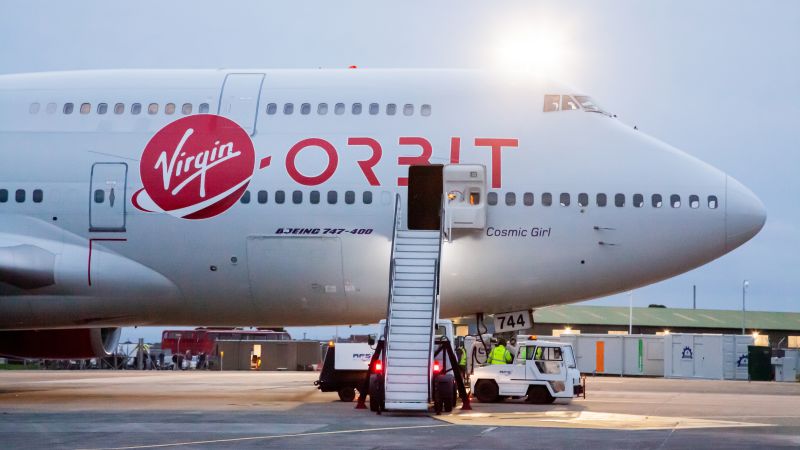
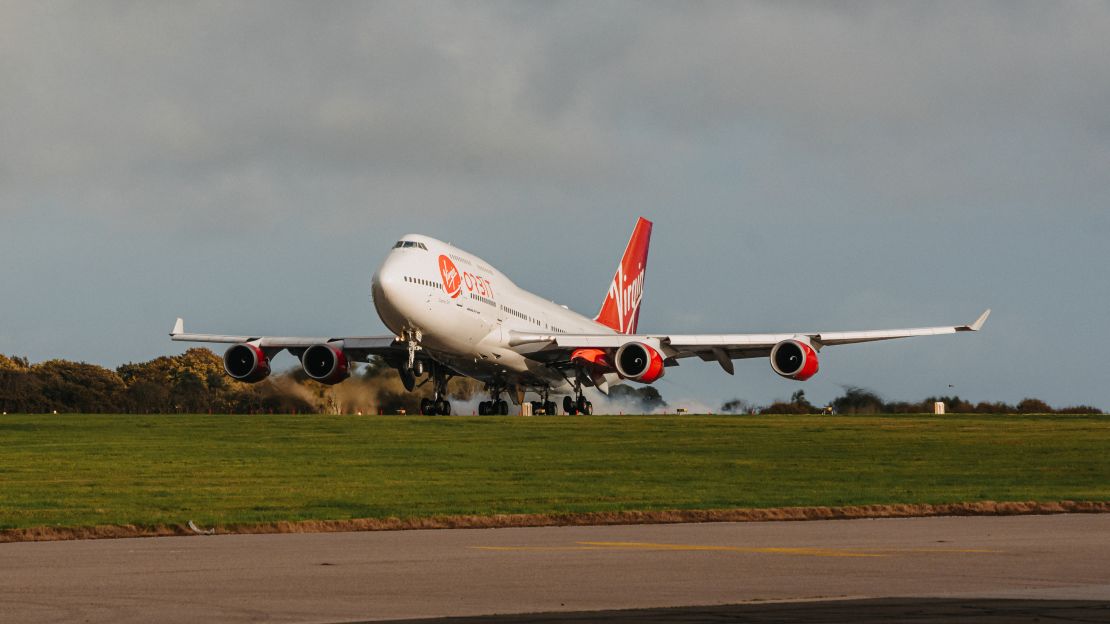
The rugged coastline of Cornwall, situated at the southwestern extremity of the United Kingdom, has long been defined by its maritime heritage and remote geographical isolation. However, the region is currently undergoing a radical transformation into a pivotal hub for the burgeoning "New Space" economy. For weeks, residents near Newquay have observed an unconventional sight in the skies: a modified Boeing 747-400 performing low-altitude maneuvers over the Atlantic. This aircraft, christened "Cosmic Girl," represents the vanguard of a mission that will see the first-ever orbital space launch from British soil, marking a definitive shift in the nation’s aerospace capabilities.
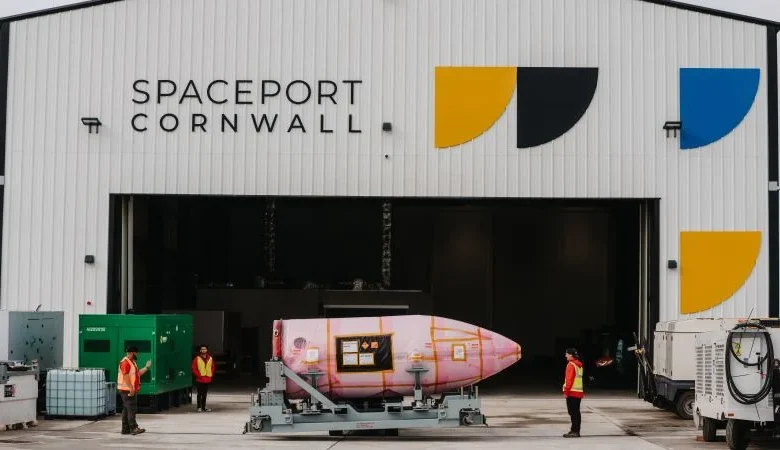
Operating out of Spaceport Cornwall—a facility integrated into the existing infrastructure of Cornwall Airport Newquay—the mission is a collaborative venture between Virgin Orbit, the UK Space Agency, and the Cornwall Council. While Newquay Airport is traditionally ranked as the 29th busiest in the UK by passenger traffic, its 1.7-mile (2.7-kilometer) runway and clear access to the Western Approaches of the Atlantic make it an ideal site for horizontal launch operations. The upcoming mission, titled "Start Me Up" in an homage to the Rolling Stones, is poised to deploy seven diverse satellite payloads into Low Earth Orbit (LEO), signaling the UK’s intent to capture a significant share of the global space market.
The Engineering of a Horizontal Launch: Cosmic Girl and LauncherOne
At the heart of this operation is the "Cosmic Girl" aircraft, a former Virgin Atlantic passenger jet that served the airline until 2015. Unlike traditional vertical rockets that require massive launch pads and fixed infrastructure, Virgin Orbit utilizes a horizontal launch system. This method involves a carrier aircraft transporting a rocket to a high altitude before release.
The modification of the Boeing 747 for this purpose was an engineering feat of its own. Technicians removed the aircraft’s commercial interior to reduce weight and installed a specialized pylon under the left wing, located between the fuselage and the inboard engine. This pylon is designed to carry LauncherOne, a 70-foot-long, two-stage rocket manufactured in Long Beach, California.
The operational profile of the launch is precise. Cosmic Girl will take off from the Newquay runway like a standard commercial flight. Once it reaches an "extraction zone" over the Atlantic Ocean at an altitude of approximately 34,000 to 35,000 feet, the pilot will execute a "pull-up" maneuver. At the apex of this maneuver, LauncherOne will be released. Seconds later, the rocket’s first-stage NewtonThree engine will ignite, generating 73,500 pounds of thrust to propel the vehicle out of the atmosphere. Following a stage separation, the NewtonFour upper-stage engine will take over, eventually reaching speeds of 17,000 miles per hour to deliver the satellites into their designated orbits.
Strategic Importance and the National Space Strategy
The Cornwall launch is not merely a technical demonstration but a cornerstone of the UK’s National Space Strategy. The British government has set an ambitious target to capture 10% of the global space economy by 2030. While the UK has long been a world leader in satellite manufacturing—producing a significant portion of the world’s small satellites—it has lacked a domestic launch capability. Historically, British-built satellites had to be shipped to sites in the United States, India, or Kazakhstan for deployment.
By establishing a "sovereign launch" capability, the UK aims to provide a "one-stop-shop" for the space industry, encompassing design, manufacturing, and now, launch services. This autonomy is viewed as a critical asset for both economic growth and national security.
Ian Annett, Deputy CEO of the UK Space Agency, emphasized the regional significance of the event, noting that it represents the first satellite launch from European soil. While vertical launch sites are currently under development in the Shetland Islands and Sutherland in Scotland, the horizontal approach in Cornwall has allowed the UK to accelerate its timeline for entering the orbital market.
A Detailed Timeline: The Road to the "Start Me Up" Mission
The journey to this historic moment has been years in the making, involving complex regulatory hurdles and international logistics:
- 2014: The UK government first identifies Newquay as a potential site for a domestic spaceport due to its long runway and proximity to the sea.
- 2019: Virgin Orbit signs a formal agreement with Cornwall Council to establish Spaceport Cornwall as a permanent base for horizontal launches.
- January 2021: Virgin Orbit successfully completes its first orbital launch from the Mojave Air and Space Port in California, proving the viability of the LauncherOne system.
- October 11, 2022: Cosmic Girl arrives at Cornwall Airport Newquay after a trans-Atlantic flight, greeted by local officials and aerospace engineers.
- October 14, 2022: The aircraft completes a successful three-hour test flight over the Southwest of England to verify aircraft systems and local airspace integration.
- October 21, 2022: The LauncherOne rocket, having completed final rehearsals in California, is integrated with the carrier aircraft in the Spaceport Cornwall hangar.
- November 2022 (Target): The final launch window is scheduled, contingent upon licensing from the Civil Aviation Authority (CAA) and optimal weather conditions.
The Payloads: Satellites with Global Purpose
The "Start Me Up" mission will carry seven payloads into orbit, representing a mix of commercial, governmental, and academic interests. These satellites illustrate the practical applications of modern space technology:
- Prometheus-2: Two cubesats developed by the UK Ministry of Defence (MoD) in collaboration with international partners. These will act as a testbed for imaging and radio signals to support allied military operations.
- CIRCE (Coordinated Ionospheric Reconstruction CubeSat Experiment): A joint mission between the UK’s Defence Science and Technology Laboratory (Dstl) and the US Naval Research Laboratory to monitor the space environment and its effects on GPS and communications.
- DOVER: A satellite designed by Roke Manor Research, intended to test resilient Position, Navigation, and Timing (PNT) signals, providing a backup to traditional GPS systems.
- ForgeStar-0: Developed by the Welsh company Space Forge, this mission aims to test the feasibility of manufacturing high-value materials, such as pharmaceuticals or semiconductors, in the microgravity of space.
- IOD-3 Amber: The first of a planned constellation by Horizon Technologies to provide Maritime Domain Awareness, tracking ship signals to combat illegal fishing and piracy.
- AMAN: Oman’s first orbital mission, a single Earth observation satellite intended to demonstrate the Sultanate’s burgeoning space ambitions.
- STORK-6: Part of the Polish company SatRev’s constellation, focused on high-resolution Earth observation for agricultural and environmental monitoring.
Local Impact and Economic Revitalization
For the residents of Cornwall, the spaceport is more than a scientific curiosity; it is an economic engine. Traditionally dependent on seasonal tourism and agriculture, the region has faced challenges regarding year-round employment and high-skill job opportunities.
The development of Spaceport Cornwall is estimated to have created 150 immediate jobs, with projections suggesting the broader "Space Cluster" in the region could support up to 2,000 positions over the next decade. Melissa Thorpe, Head of Spaceport Cornwall, has frequently highlighted the "inspiration factor" of the project. By bringing high-tech aerospace operations to a rural county, the project aims to encourage local students to pursue careers in Science, Technology, Engineering, and Mathematics (STEM).
"Seeing the infrastructure in place makes our launch ambitions a reality," Thorpe stated during the recent arrival of the flight hardware. The facility includes a new Space Systems Integration Facility, where satellites are processed and encapsulated into the rocket fairing in a "clean room" environment, ensuring that Cornwall remains a permanent fixture in the global aerospace supply chain.
Environmental Considerations and Global Expansion
The horizontal launch model is often cited for its relative efficiency compared to vertical launches. Because the rocket is ignited in the thinner atmosphere of the upper troposphere, it requires less fuel to overcome Earth’s gravity and atmospheric drag. Furthermore, the carrier aircraft is fully reusable, landing back at the airport to be prepared for its next mission.
However, the environmental impact remains a point of discussion. Virgin Orbit and Spaceport Cornwall have committed to a "Carbon Neutral" goal, exploring the use of sustainable aviation fuels and carbon offsetting programs to mitigate the emissions generated by the 747 and the kerosene-based RP-1 fuel used in the rocket.
Beyond the UK, Virgin Orbit is looking to replicate the Cornwall model globally. The mobile nature of a 747 carrier aircraft allows for the establishment of "responsive launch" capabilities in any nation with a sufficiently long runway. Plans are currently in development for similar operations in Australia, Brazil, Japan, Poland, and the Republic of Korea.
Conclusion: A New Chapter for British Aerospace
As Cosmic Girl undergoes its final checks on the Newquay tarmac, the atmosphere in Cornwall is one of cautious optimism and historic anticipation. The "Start Me Up" mission represents the culmination of years of international diplomacy, technical innovation, and local investment.
If successful, the launch will prove that the United Kingdom is not just a consumer of space data, but a provider of the infrastructure required to access the stars. For Marc Andrew and the other locals who gathered to watch the 747 touch down, the sight of a "Queen of the Skies" repurposed for the space age is a reminder that the center of the world is sometimes found in the most unexpected of places. The eyes of the global aerospace community are now fixed on the Cornish coast, waiting for the moment when a modified passenger jet carries the UK’s orbital dreams into the silence of space.