A Culinary Odyssey: The Essential Guide to China’s Most Influential Dishes and Regional Gastronomy

Defining the "best" Chinese cuisine is a task that defies singular categorization due to the country’s vast geographical expanse, which encompasses eight distinct culinary traditions, thousands of years of imperial history, and a staggering diversity of micro-climates. From the numbing spice of the Sichuan basin to the delicate, umami-forward profiles of the Cantonese coast, Chinese food is not a monolith but a complex mosaic of cultural identity. Understanding the foundation of this global culinary powerhouse requires a journey through the dishes that have defined China’s history, social structures, and international influence.

The Imperial Legacy: Peking Duck and the Evolution of Roast Meat
Peking Duck stands as perhaps the most recognizable emblem of Chinese culinary prestige. Its origins trace back to the Northern and Southern Dynasties (420–589 AD), though the specific preparation popularized in Beijing gained prominence during the Ming Dynasty. When the capital shifted to Beijing in the 15th century, imperial chefs brought refined roasting techniques from Nanjing. The dish’s hallmark—a lacquered, crispy skin paired with tender meat—is achieved through a meticulous process of air-drying and roasting in wood-fired ovens, typically fueled by fruitwoods like date or pear to impart a subtle, aromatic smokiness.
Historical accounts from the Qing Dynasty suggest that the duck was a centerpiece of imperial banquets, symbolizing prosperity and status. Today, the dish is served with thin pancakes, scallions, cucumbers, and a sweet bean sauce, reflecting a balance of textures and flavors that has remained largely unchanged for centuries.

Sichuan and the Art of Spice: Dan Dan Noodles and Mapo Tofu
In the southwestern province of Sichuan, the philosophy of "ma la" (numbing and spicy) dominates the palate. Dan Dan Noodles (dan dan mian) exemplify this tradition. Historically, the name derives from the "dan dan"—a carrying pole used by 19th-century street hawkers to balance two baskets: one containing the noodles and the other the spicy, savory sauce. The dish serves as a testament to the ingenuity of street food culture, combining minced pork, preserved vegetables, chili oil, and Sichuan peppercorns.
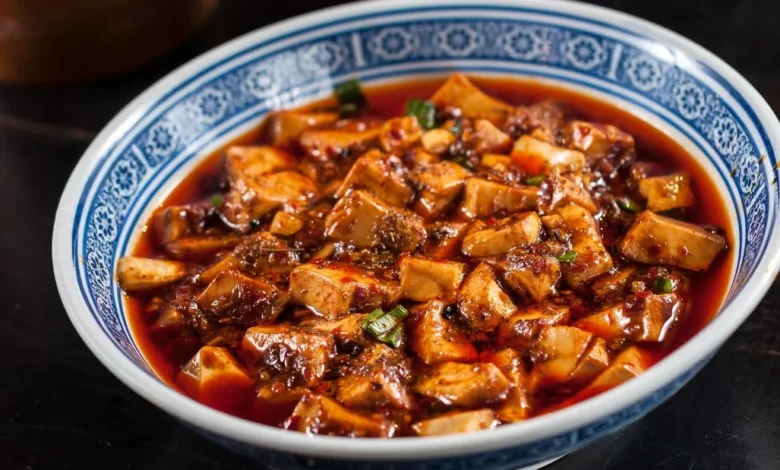
Similarly, Mapo Tofu represents the intersection of local geography and chemistry. Legend attributes the dish to a pockmarked woman (the "Mapo") who operated an inn in Chengdu. The dish utilizes the numbing properties of Hanyuan peppercorns and the depth of Pidu doubanjiang (broad bean chili paste). Modern food scientists often cite this dish as a masterclass in texture, contrasting the softness of silken tofu with the crunch of fermented beans and the structural bite of minced beef or pork.

The Cantonese Influence: Dim Sum and Steamed Delicacies
Cantonese cuisine, originating from the Guangdong region, emphasizes the "original flavor" of ingredients. This is best observed in the cultural institution of Dim Sum. Unlike a singular dish, Dim Sum is a dining format that evolved from teahouse culture along the Silk Road. By the 19th century, Guangzhou had become a bustling trade hub, and teahouses began offering small, bite-sized portions of food to accompany tea service—a practice known as "yum cha" (drinking tea).
This tradition includes classics like Xiaolongbao (soup dumplings). While technically a Shanghainese creation, its presence in global Cantonese-style Dim Sum menus highlights the fluidity of Chinese regional food. The technical difficulty of creating a thin, pleated dough that encapsulates hot, savory broth without bursting remains a benchmark for culinary skill in the industry.

The Complexity of Regional Staples
The regional diversity of China is further evidenced by dishes like Hunan-style steamed fish head with chopped salted chili (duo jiao yu tou). Hunan cuisine, or Xiang cuisine, is distinct from Sichuan’s spice; it favors a dry, sour, and sharp heat provided by pickled chilies. This dish is a staple of Hunanese hospitality, where the fermentation process—using ginger, garlic, and rice liquor—reflects a long history of preservation techniques necessitated by the region’s humid, mountainous climate.
In the northern coastal city of Tianjin, the breakfast staple Jianbing Guozi serves as a primary example of urban food culture. This mung-bean crepe, topped with egg, scallions, and a crunchy "guozi" (deep-fried dough crisp), represents the evolution of street food as a functional, rapid, and nutrient-dense meal for the working population.

Historical and Social Implications of Culinary Traditions
Chinese culinary history is deeply intertwined with its political and social shifts. For example, the "Cross-the-Bridge" rice noodles of Yunnan province are rooted in folklore regarding a scholar and his devoted wife. Beyond the legend, the dish illustrates the sophisticated understanding of food safety and thermodynamics; by keeping the broth and ingredients separate until the moment of consumption, the cook ensures that the raw ingredients are perfectly poached by the residual heat of the soup.
Furthermore, the prevalence of braised dishes like Dongpo Rou—named after the legendary Song Dynasty poet Su Dongpo—demonstrates the cultural importance of pork in Chinese society. The dish, involving a slow-braised pork belly cooked with rock sugar, soy sauce, and Shaoxing wine, is a hallmark of Hangzhou cuisine and reflects the literati culture of ancient China, where food and poetry were inextricably linked.

Modern Challenges and Global Impact
Today, Chinese cuisine faces a dual reality: it is simultaneously one of the most localized and globalized food systems on Earth. While the preservation of regional techniques, such as the hand-beating of beef for Chaozhou-style meatballs, remains a priority for local artisans, the rapid industrialization of China has also led to a standardization of many traditional dishes.
Economic data from the Chinese Ministry of Commerce indicates that the catering industry contributes significantly to the national GDP, with traditional culinary tourism becoming a major driver for secondary cities like Xi’an, Chengdu, and Guangzhou. The "Rou Jia Mo," often described as the world’s oldest hamburger, has become a symbol of Xi’an’s cultural tourism strategy, effectively bridging the gap between historical preservation and the modern fast-casual dining market.

Conclusion
To eat through China is to trace the history of its dynasties, its trade routes, and its environmental adaptations. Whether it is the therapeutic herbal soups of the Cantonese families designed to balance the body’s "qi," or the robust, spice-heavy dishes of the western provinces, the consistency of Chinese cuisine lies in its dedication to technique and ingredient integrity. As international interest in Chinese regional food grows, the focus shifts toward maintaining these traditional methods in an era of rapid convenience. The dishes highlighted here—ranging from the simple, soul-warming congee to the complex, labor-intensive Peking Duck—provide not only a menu for the traveler but a comprehensive map of a civilization that has, for millennia, prioritized the table as the primary site of cultural and social engagement.
Related posts: