Grail Shares Surge as FDA Documents Signal Potential Path Toward Approval for Multi-Cancer Early Detection Test

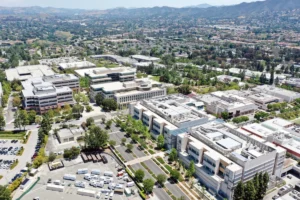
Shares of Grail, the pioneer in multi-cancer early detection (MCED) technology, experienced a significant market rally on Monday, climbing 33% following the release of briefing documents by the U.S. Food and Drug Administration (FDA). The documents, published ahead of a pivotal advisory committee meeting scheduled for Wednesday, indicate that the regulatory agency is taking a constructive, albeit cautious, approach to the company’s flagship Galleri test. This development marks a critical juncture for the Menlo Park-based firm, which has long aimed to transition from a laboratory-developed test (LDT) model to a fully FDA-approved diagnostic tool capable of identifying over 50 types of cancer from a single blood draw.
The Galleri test utilizes next-generation sequencing to detect cell-free DNA (cfDNA) in the bloodstream, searching for specific methylation patterns—chemical modifications that act as biological fingerprints for various malignancies. While the test has been available to clinicians as a laboratory-developed test for several years, formal FDA approval remains the "holy grail" for the company. Approval would not only provide a federal stamp of clinical validity but would fundamentally alter the company’s financial trajectory by unlocking broad reimbursement pathways from Medicare, Medicaid, and private health insurance providers.
A Chronology of the Galleri Development Path
The journey of Grail, which was initially incubated within the genomics giant Illumina before being spun off as an independent entity, has been marked by both rapid technological advancement and complex regulatory hurdles.
In 2016, Grail was founded with the ambitious goal of detecting cancer in asymptomatic individuals. By 2020, the company had entered into a definitive merger agreement with Illumina, a move that triggered extensive antitrust scrutiny from both the U.S. Federal Trade Commission and the European Commission. The subsequent years were defined by legal battles over the acquisition, eventually culminating in a divestiture order that forced Illumina to spin Grail back out as a separate, publicly traded company in 2024.
Throughout this period of corporate turbulence, the clinical development of Galleri continued. The company’s foundational clinical studies, including the Circulating Cell-free Genome Atlas (CCGA) study, provided the primary evidence base for the test’s efficacy. These trials demonstrated that the test could detect a wide array of cancers—many of which have no current standard-of-care screening—with a very low false-positive rate, a critical metric for any screening tool intended for the general population.
FDA Briefing Documents: The Regulatory Perspective
The documents released by the FDA this week provide the first clear window into how the agency’s reviewers have interpreted the mountains of clinical data submitted by Grail. Unlike traditional single-cancer screenings, such as mammograms for breast cancer or colonoscopies for colorectal cancer, the Galleri test is designed to screen for dozens of cancers simultaneously.

The FDA’s briefing material suggests that while the agency recognizes the immense public health potential of a "pan-cancer" blood test, it remains focused on the "clinical utility" of the findings. A central question for the advisory committee will be how a positive result—which identifies that a cancer signal is present but does not immediately pinpoint the exact tumor site—should be managed in a clinical setting. The FDA reviewers appear particularly concerned about the diagnostic odyssey a patient might face following a positive result, and whether the test provides enough actionable information to prevent unnecessary follow-up procedures.
Despite these concerns, the market reaction reflects investor optimism that the FDA’s tone is far from dismissive. By allowing the test to go before an advisory committee, the agency is signaling that it is actively exploring a pathway for approval, rather than issuing a rejection.
The Economic and Clinical Implications of Reimbursement
The financial impact of this week’s news cannot be overstated. Currently, Galleri is largely an out-of-pocket expense for many patients, limiting its adoption to those with the financial means or access to specific concierge medicine programs. The current lack of widespread insurance coverage is the primary barrier to the company’s scalability.
If the FDA grants approval, it will set off a secondary process with the Centers for Medicare & Medicaid Services (CMS) regarding coverage determinations. Legislation known as the Multi-Cancer Early Detection Screening Coverage Act has been debated in Congress for several sessions, aimed at creating a pathway for Medicare to cover such tests once they receive FDA approval. With the FDA now clearly engaged in the approval process, the legislative momentum for this coverage is expected to accelerate.
"The shift from a boutique diagnostic to a standard-of-care screening tool is contingent on two things: regulatory approval and payer reimbursement," said one healthcare equity analyst, who requested anonymity due to the sensitivity of the pending advisory committee meeting. "If the FDA clears this, the floodgates for insurance coverage open, and Grail transitions from a high-burn research startup to a central player in the diagnostic landscape."
Clinical Utility and the Future of Screening
The medical community remains divided on the broad implementation of MCED tests. Proponents argue that catching aggressive, late-stage cancers—such as pancreatic or ovarian cancer—at an earlier, treatable stage could significantly reduce cancer mortality rates. Data from the company’s PATHFINDER study, which tracked patients who received the Galleri test, showed that the test could indeed lead to the discovery of early-stage cancers that would have otherwise gone undetected.
However, critics in the oncology community caution against the potential for over-diagnosis and the psychological burden of "false alerts." The American Cancer Society and other health organizations have previously maintained that until more data is available on long-term outcomes—specifically whether catching these cancers earlier actually improves survival rates compared to existing standards—the tests should be used with caution.

The advisory committee meeting on Wednesday is expected to address these nuances. Experts will be tasked with weighing the sensitivity and specificity of the test against the potential risks of follow-up testing. The panel’s recommendations, while not binding, will heavily influence the FDA’s final decision, which is expected in the coming months.
Broader Impact on the Diagnostics Industry
Grail’s progress is being closely watched not just by investors, but by competitors across the biotechnology sector. Companies like Exact Sciences, Guardant Health, and various academic laboratories are all racing to develop their own versions of multi-cancer liquid biopsies. The FDA’s eventual decision on Galleri will effectively establish the "rules of the road" for the entire industry.
If the FDA establishes a high bar for clinical utility, it may slow the entry of smaller competitors. Conversely, a clear, well-defined pathway for approval could ignite a wave of innovation, leading to a new era of "cancer screening as a service" integrated into annual physicals.
As the industry waits for the results of the Wednesday committee meeting, the focus remains on the balance between innovation and clinical rigor. For Grail, the 33% surge in share price is a validation of its years of data collection and legal maneuvering, but the true test lies in the hands of the FDA advisors. Whether or not this marks the beginning of a new paradigm in oncology—where cancer is managed as a chronic, detectable condition rather than a late-stage diagnosis—depends on how the agency interprets the trade-offs inherent in this groundbreaking technology.
The upcoming days will be critical, not only for the company’s shareholders but for the millions of patients who stand to benefit from a future where a simple blood test might be the difference between a routine procedure and a life-altering diagnosis. As the FDA prepares its final review, the biotech world watches with anticipation, aware that the decision will echo through the halls of oncology for decades to come.
Related posts: