CNN MS NOW and Politico File Lawsuit Against the Trump Administration Over Revocation of White House Press Credentials

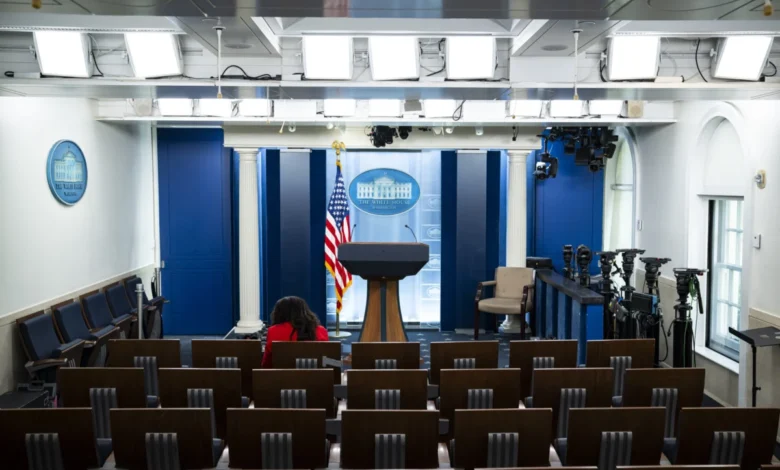
In a significant constitutional confrontation that pits the executive branch against major media institutions, CNN, MS NOW, and Politico have officially filed a lawsuit against the Trump administration. The legal action follows the White House’s decision to summarily revoke the press credentials of journalists from these organizations, effectively barring them from the White House complex. This move has created an unprecedented barrier for these outlets to cover the President and his staff, prompting a high-stakes legal challenge aimed at upholding First Amendment protections and the principle of an independent press.
The lawsuit, spearheaded by prominent First Amendment attorney Ted Boutros, argues that the administration’s actions constitute a direct assault on the Constitution. By denying access without due process or prior notification, the administration has effectively asserted the power to choose which media organizations may report on the highest office in the land, a move the plaintiffs argue is fundamentally incompatible with American democratic traditions.
A Chronology of the Dispute
The escalation leading to the current litigation began late last week when President Trump publicly announced his intention to ban the three outlets. The announcement, delivered via a social media post on Friday, immediately sparked confusion among the press corps and White House staff, as journalists from the affected outlets were still physically present within the West Wing complex at the time.
By Saturday morning, the ambiguity was replaced by firm executive action. Reporters attempting to enter the White House complex were denied access, informed that their security credentials had been revoked. The timing of the ban was particularly disruptive for CNN, which had been scheduled to serve as the primary television press pool for the following Monday. This role is essential for coordinating coverage of the President’s travel and official meetings, including a high-profile trip to New York for engagements with Mayor Zohran Mamdani and French President Emmanuel Macron on the sidelines of the United Nations General Assembly.
Legal Arguments and Constitutional Principles
The lawsuit filed by the media coalition leans heavily on established legal precedent, specifically citing the landmark 1964 Supreme Court decision in New York Times Co. v. Sullivan. The plaintiffs contend that the White House’s rationale—which centers on the President’s disapproval of the tone and substance of the outlets’ coverage—is a direct violation of the “profound national commitment” to uninhibited, robust, and wide-open public debate.
The legal brief articulates that the Constitution protects the liberty and property interests inherent in White House press credentials. These credentials are not merely administrative badges; they are tools that enable the dissemination of information to the public. The lawsuit posits that no government official possesses the authority to deprive news organizations of these interests on a whim. The lack of notice, the absence of a defined appeals process, and the lack of a clear, non-retaliatory justification for the revocation are cited as central failures of the administration’s approach.
The Administration’s Rationale
President Trump has been characteristically candid regarding his motivation for the ban. During an appearance in the Oval Office, he suggested that the decision was the culmination of years of frustration with the media. He explicitly dismissed the idea that any single story triggered the move, instead pointing to a broader pattern of what he characterized as “purposely negative” and “one-sided” reporting.
The President went so far as to frame the ban as a necessary response to journalism he deems “never good,” even referring to his own policy as a “ban on the free press.” In his remarks, the President acknowledged the likelihood of litigation, suggesting that the ultimate outcome would hinge on the specific judicial interpretation of the case. His stance underscores a recurring theme of his presidency: the belief that the executive branch has the prerogative to manage its public image by restricting access to organizations that provide critical coverage.
Historical Context and Precedent
This is not the first time the Trump administration has engaged in a public battle over press access. During his first term, the White House famously attempted to revoke the credentials of CNN correspondent Jim Acosta. That effort, however, was swiftly challenged in court. A federal judge eventually ordered the restoration of Acosta’s credentials, ruling that the government’s revocation lacked the necessary due process and violated First Amendment protections.
The legal landscape surrounding White House access is further informed by other historical disputes. For instance, the Associated Press once initiated legal proceedings after being barred from covering specific events because its style guide diverged from the administration’s preferred terminology regarding a geographical location—specifically, the refusal to refer to a body of water as the “Gulf of America.” These incidents suggest a pattern of utilizing access as a lever to exert influence over media output.
Implications for Press Freedom
The current lawsuit carries significant implications for the future of journalism in the United States. If the administration’s actions are permitted to stand without challenge, it could establish a dangerous precedent where access to government officials becomes a conditional privilege rather than a standard function of a transparent democracy. Legal analysts note that while the White House has legitimate interests in security and orderly conduct, those interests must be balanced against the public’s right to be informed.
By restricting access to major news outlets, the administration creates an information vacuum that is often filled by less rigorous or more partisan sources. The three plaintiffs—CNN, MS NOW, and Politico—represent a broad spectrum of the media ecosystem. Their unified legal front suggests a recognition that this is a collective issue of industry survival and democratic integrity.
Data and Public Perception
Public polling data consistently shows that the American electorate remains deeply divided on the role of the media. While some segments of the public view the administration’s antagonism toward the press as a necessary check on perceived bias, others view it as an authoritarian overreach. The challenge for the judiciary will be to strip away the political rhetoric and focus on the narrow legal question: Does the Executive Office have the right to revoke press access as a form of content-based punishment?
The impact of this ban extends beyond the immediate exclusion of reporters from the White House. It affects the ability of the public to receive timely, independent updates on executive decisions, international diplomacy, and the daily operations of the government. When the “pool” system—which is designed to ensure that a rotating group of journalists can document the President’s activities for the entire press corps—is disrupted, the entire infrastructure of government reporting is compromised.
The Road Ahead
As the case moves through the court system, the nation will be watching to see how the judiciary reconciles executive authority with constitutional protections. The legal team representing the news organizations is expected to press for an immediate injunction to restore their credentials, arguing that every day they are denied access constitutes irreparable harm to the public interest.
The White House, conversely, is expected to argue that the President has broad discretion over who is granted entry into his workplace, citing the unique security requirements and the nature of the West Wing as a private office rather than a public forum. This argument, however, has historically struggled in court, where the White House is widely recognized as a "limited public forum" for the purposes of the press.
In conclusion, the lawsuit filed by CNN, MS NOW, and Politico represents a critical moment in the ongoing debate over the boundaries of executive power. Whether the courts reaffirm the necessity of an open press or allow the administration to narrow the parameters of independent reporting, the decision will likely serve as a foundational reference for the relationship between the government and the media for years to come. The case underscores the essential, yet often fraught, role of the Fourth Estate in holding those in power accountable, regardless of the political climate or the personal preferences of the executive.
Related posts: