Farmer who voted for Trump talks about impact of high costs of Iran war, tariffs: “We’re all just in survival mode”

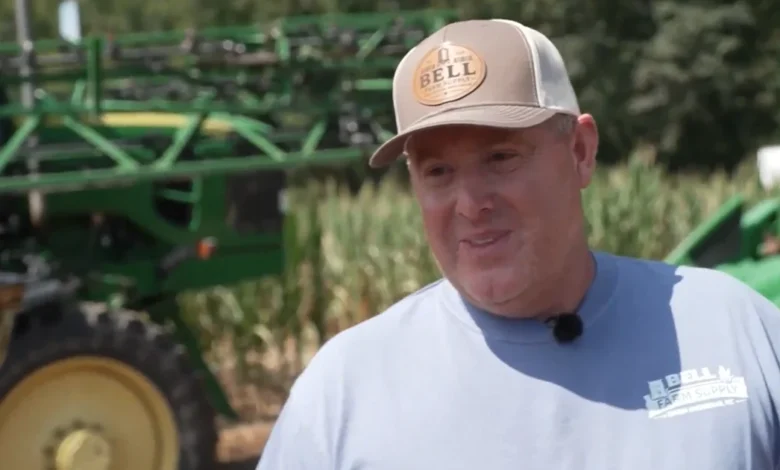
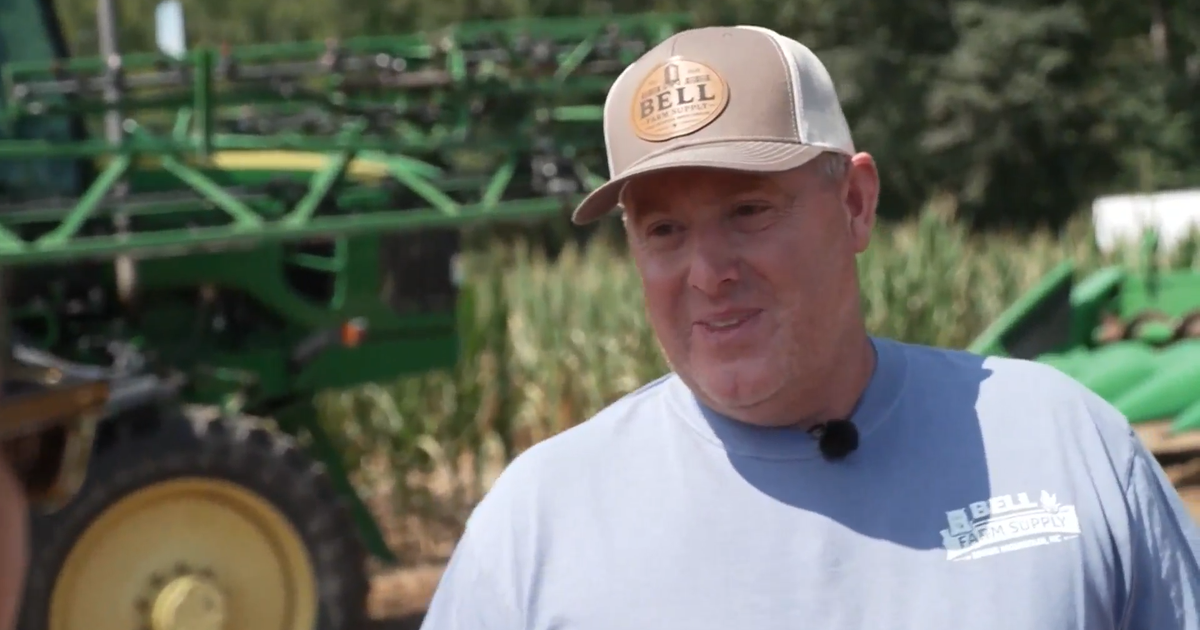
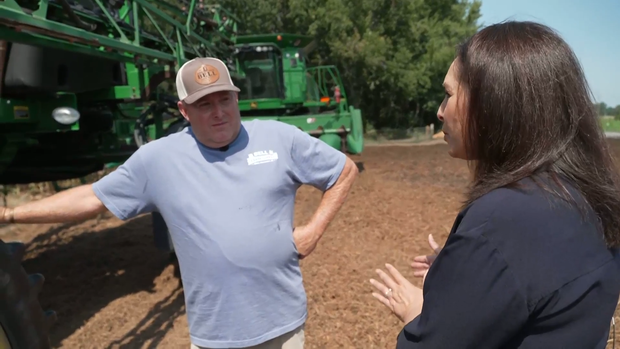
For 34 years, Matt Bell has navigated the volatile rhythms of agriculture on his 1,000-acre farm in Kings Mountain, North Carolina. A lifelong producer of soybeans, corn, and wheat, Bell has weathered droughts, market fluctuations, and shifting government policies. However, the current economic climate has pushed his operation—and many others like it—to a precarious breaking point. Bell, who supported President Trump in previous elections, now finds himself caught in a tightening vice of energy-driven inflation and the lingering consequences of international trade disputes.
The financial strain is multifaceted, driven primarily by an unprecedented surge in diesel fuel prices and the cascading costs of essential inputs such as fertilizer and machinery. These expenses have eroded profit margins to the point where, for many in the agricultural sector, the upcoming harvest season may be the last.
The Macroeconomic Roots of the Crisis
The current inflationary pressure on American farmers is inextricably linked to ongoing geopolitical instability. The conflict involving Iran has fundamentally altered the global energy market, with the Strait of Hormuz—a vital artery for global oil transit—operating under a de facto naval blockade. This disruption, coupled with persistent volatility in the Red Sea resulting from clashes between Iranian-backed Houthi rebels and Saudi infrastructure, has constricted the global supply of oil.
Compounding this, the extended conflict involving Russia and Ukraine has severely limited global oil refining capacity. According to data from the American Automobile Association (AAA), diesel prices have climbed to an average of $6.40 per gallon, nearly double the levels observed just one year ago. In North Carolina, local averages have reached historic peaks, frequently exceeding $6.19 per gallon.
For a farm operation like Bell’s, which relies entirely on diesel-powered heavy machinery, these costs are not merely an inconvenience; they are existential. Bell reports that his combine alone now consumes $600 worth of fuel daily—a 100% increase over the previous year. His annual fuel budget, originally capped at $35,000, was exhausted by August, with projections now suggesting a year-end total between $50,000 and $60,000.
The Ripple Effect of Tariff Policies
Beyond the immediate energy crisis, the agricultural sector is grappling with the sustained impact of trade protectionism. President Trump’s administration has implemented a series of broad, wide-ranging tariffs designed to leverage international trade agreements. While these policies were intended to bolster domestic industry, the reality for farmers has been an increase in the cost of production—everything from synthetic fertilizers to specialized farm equipment parts has seen a sharp price hike.
The soybean market serves as a primary example of this policy friction. In May 2026, the administration announced a deal for China to purchase 25 million metric tons of U.S. soybeans annually through 2028. While export volumes have increased relative to 2025, a 10% retaliatory tariff imposed by Beijing—a direct response to U.S. levies related to fentanyl trade—remains in effect.

This creates a paradox for producers: they are encouraged to produce for a massive export market, yet the profit margin is effectively taxed at the border. As the American Soybean Association noted in a recent letter to the White House ahead of high-level meetings with Chinese President Xi Jinping, the domestic cost of production has risen across the board, while the revenue per bushel remains stagnant due to these ongoing trade barriers.
A Shifting Political Landscape
Bell’s disillusionment reflects a broader trend among rural voters who once formed a bedrock of support for the current administration. Initially, many farmers were willing to endure short-term economic discomfort, viewing it as a necessary sacrifice for national security goals, such as the containment of Iranian nuclear ambitions.
However, as the conflict has dragged on and the economic toll has deepened, the sentiment has shifted from patience to frustration. "We were sold a bill of goods that agriculture was going to be on the forefront," Bell remarked, citing a sense of being misled by policymakers who promised to prioritize the needs of the American farmer.
While the administration has rolled out various bailout programs, critics argue these measures are insufficient to cover the structural costs of modern farming. This dissatisfaction is prompting a realignment in voting behavior. Many farmers who have historically voted along party lines are now signaling an intention to support candidates who prioritize "common sense" economic policies, with many explicitly mentioning a willingness to split their tickets in the upcoming November elections.
Chronology of the 2026 Agricultural Downturn
- January–March 2026: Global oil prices begin a steady climb as tensions in the Middle East escalate, leading to increased logistical costs for agricultural transport.
- May 2026: The White House announces a landmark soybean export agreement with China, sparking optimism in the Midwest and South.
- June–July 2026: Retaliatory tariffs from China persist, effectively nullifying the benefits of the new export volume for individual farmers.
- August 2026: Diesel prices breach the $6.00 per gallon mark in multiple states, forcing small and mid-sized farms to burn through annual operational budgets months ahead of schedule.
- September 2026: Commodity associations, including the American Soybean Association, petition the administration for urgent relief as the fall harvest approaches.
Broader Implications and Outlook
The potential for a wave of farm closures poses a long-term threat to food security and rural economic stability. When farms like Bell’s—which have operated for generations—are forced to shutter, the ripple effects extend to local equipment dealers, supply stores, and the rural tax base.
The strategy of "cutting the fat" has, according to many in the industry, reached its limit. Farmers have already shifted crop rotations, extended the lifespan of depreciating equipment beyond recommended maintenance intervals, and diversified into agritourism—such as Bell’s pumpkin patches and hayrides—to generate supplemental income. Yet, these measures are proving inadequate against the sheer scale of the inflationary surge.
As of late September 2026, the administration faces a critical juncture. The dual pressure of energy costs and trade disputes has created a legislative challenge that traditional subsidies may no longer be able to solve. For producers, the plea is no longer for pity, but for a fundamental recalibration of trade and energy policy that recognizes the unique, capital-intensive nature of American agriculture.
"We are fighting for survival," Bell said. "You can’t put a dollar sign on the pride we take in this work, but you also can’t stay in business when the math no longer adds up." As the administration heads into critical diplomatic meetings, the eyes of the American agricultural heartland remain fixed on Washington, waiting to see if policy will finally shift to support those who remain on the front lines of the nation’s food supply.