Federated learning on the battlefield: Scaleout deploys decentralized AI-driven learning to military bases and drones

The landscape of modern warfare is undergoing a rapid technological shift as European militaries integrate advanced artificial intelligence into autonomous systems. At the forefront of this evolution is Scaleout Systems, a Swedish startup originally spun out of Uppsala University in 2018. The company has pivoted from its foundational work in optimizing machine learning for commercial logistics and vehicle fleets toward a critical defense application: deploying federated, decentralized AI models capable of operating on drones and tactical edge hardware in high-intensity combat zones.
The impetus for this strategic transition was the 2022 full-scale invasion of Ukraine, an event that underscored the vulnerability of centralized, cloud-dependent military systems. As NATO allies seek to maintain a technological edge, Scaleout Systems has been selected to join the Defence Innovator Accelerator for the North Atlantic (DIANA) Challenge Program, a prestige initiative designed to foster dual-use technologies that enhance collective security.
The Technical Foundation: Federated Intelligence at the Edge
Traditional artificial intelligence models typically rely on massive, centralized computing clusters to process data. This model is inherently flawed in the context of active combat. Large data centers are primary targets for kinetic strikes and cyber-warfare, and the reliance on constant, high-bandwidth connectivity makes traditional AI susceptible to signal interference, electronic jamming, and latency issues.
Scaleout Systems addresses these challenges through the implementation of federated learning. In this decentralized architecture, AI models are trained across multiple distributed devices—drones, pilot tablets, and mobile command posts—without the need to transmit sensitive, raw sensor data back to a central server. Instead, only anonymized model updates are shared. This allows for a "living" intelligence network that continuously improves as individual units encounter new battlefield variables.
"Models might have been trained in a desert environment, and if we try to deploy them in an urban environment, they’re not going to perform well," explains Andreas Hellander, co-founder and CEO of Scaleout Systems. "If we can release several new versions of this model that—during the course of a single day or certainly an operation—keep learning and keep improving from this massive amount of sensor data that is generated at a practical edge, that is the sustainable advantage."
Chronology of Development and Strategic Pivots
The progression of Scaleout’s technology has followed a deliberate path from civilian logistics to military resilience:
- 2018: Scaleout Systems is established by researchers from Uppsala University, focusing on machine learning for commercial vehicle fleets.
- 2022: The Russian invasion of Ukraine serves as a catalyst, shifting the company’s focus toward defense and the operationalization of edge data in conflict zones.
- January 2026: The ALMA (Affordable Loitering Modular Ammunition) project, led by BAE Systems Bofors, is showcased at the Winter Demo 2026 in Sweden. Scaleout provides the onboard AI architecture.
- June 2026: A successful field test at a Swedish Air Force base in Uppsala demonstrates the system’s ability to maintain AI inference capabilities even when disconnected from central servers.
- 2025–2026: The company enters the NATO DIANA program, scaling its Federated Aerial Intelligence for Recon project for broader alliance adoption.
The ALMA Project: Autonomous Precision in Real-Time
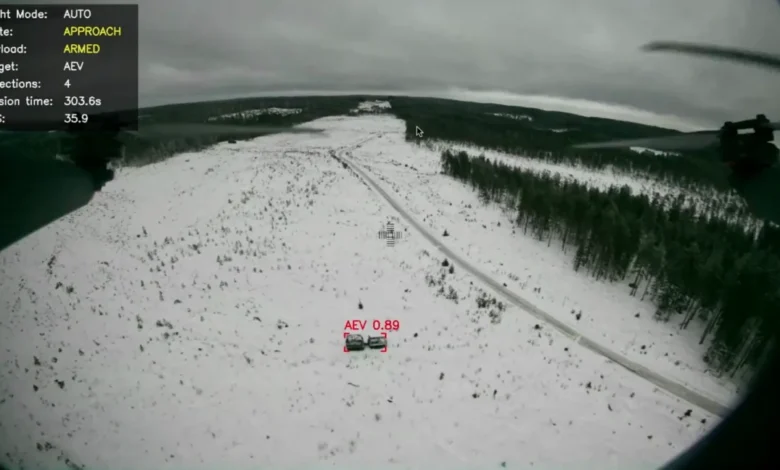
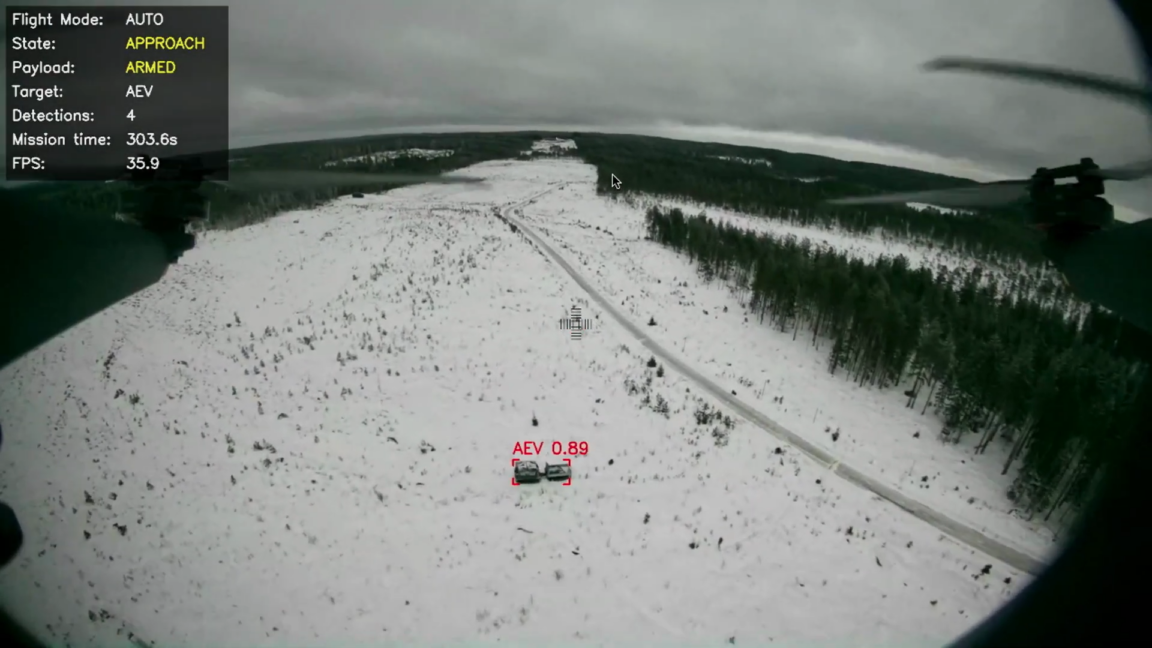
One of the most significant applications of Scaleout’s technology is the ALMA project. Designed as a low-cost, modular, and autonomous kamikaze drone, the system is engineered to perform target detection, identification, and geolocating entirely on-board.
In public demonstrations, the drone showcased its ability to autonomously prioritize high-value targets, such as armored engineering vehicles, without requiring direct, real-time input from a human operator. While a human remains "in the loop" for mission oversight, the AI handles the complex computational heavy lifting of identifying threats in real-time. By processing data locally, the drone eliminates the vulnerability of command-and-control links that enemy forces frequently attempt to disrupt through electronic warfare.
Implications of Decentralized Warfare
The shift toward decentralized AI has profound implications for global security. Recent geopolitical conflicts, including the war between the United States and Iran, have demonstrated the fragility of centralized data infrastructure. When large-scale data centers become legitimate military targets, the ability to maintain decentralized, autonomous systems becomes a matter of strategic survival.
Furthermore, the "learning loop" provided by Scaleout’s platform offers a decisive advantage. In a theater of war, the environment is constantly changing—terrain shifts, camouflage techniques evolve, and weather patterns fluctuate. A centralized AI model updated via monthly patches would be obsolete within hours. By contrast, a federated network that pushes incremental updates to field units allows the entire fleet of drones to benefit from the localized knowledge gained by a single unit. If one drone encounters a new type of enemy radar signature, that data can be synthesized and distributed to the entire platoon’s network, effectively "teaching" the collective force within minutes.
Operational Challenges and Ethical Considerations
Despite the tactical benefits, the deployment of autonomous systems raises complex questions. The integration of AI into weapons systems—even for the purpose of target identification—requires rigorous validation. NATO’s interest in the project suggests that the alliance is prioritizing "resilient intelligence" to keep pace with adversaries like Russia and China, who are also investing heavily in autonomous drone swarms and AI-enhanced reconnaissance.

The technical hurdle for Scaleout lies in hardware variability. Military equipment ranges from sophisticated edge workstations to small, embedded processors with limited power and thermal envelopes. Ensuring that high-fidelity models can function effectively across this heterogeneous hardware landscape is a primary focus of the DIANA program collaboration.
Broader Impact on NATO Interoperability
Beyond the tactical benefits of a single unit, the potential for cross-national collaboration is significant. Hellander envisions a future where federated learning unlocks collaboration between NATO member states. By sharing model updates rather than raw intelligence data, countries can improve their collective defense capabilities while maintaining strict data sovereignty.
As the technology matures, the standard for "AI-readiness" within NATO will likely evolve. Militaries will no longer look solely for the most powerful model, but for the most adaptable one—a system that can "learn" the specific character of a battlefield, survive the loss of communication, and continue to execute its mission with high precision.
The success of Scaleout Systems reflects a broader trend in the defense industry: the move away from monolithic, proprietary tech stacks toward open, resilient, and distributed architectures. As the war in Ukraine continues to serve as the world’s most high-stakes laboratory for drone warfare, the lessons learned by companies like Scaleout will undoubtedly define the next generation of military doctrine.
In the coming years, the ability to process data at the edge will likely be the deciding factor in modern reconnaissance and strike missions. Whether through the modularity of the ALMA drone or the adaptability of federated learning, the integration of autonomous AI is no longer a future-looking concept; it is an active, evolving component of the modern battlefield. As these systems continue to undergo field testing and refinement under the NATO DIANA umbrella, they are set to transform how military forces perceive, process, and act upon the information landscape of the 21st century.