A Tale of Two Standards: California Prison Workers and Incarcerated Populations Left Vulnerable to Escalating Extreme Heat Crises

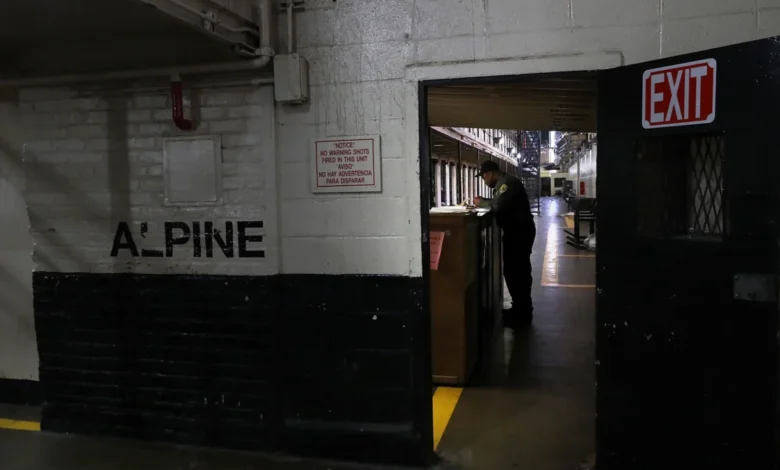
As severe heat waves continue to sweep across California with increasing frequency and intensity, state workplace safety regulators have maintained a steady drumbeat of reminders directed at employers. Across the board, businesses and institutions are repeatedly urged to safeguard their workforces from the debilitating impacts of heat-related illnesses by guaranteeing reliable access to drinking water, shaded areas, designated cooldown zones, and supplementary rest breaks whenever ambient temperatures rise. Yet, nestled within this regulatory framework lies a glaring omission: a notable exception that leaves nurses, correctional officers, administrative staff, and tens of thousands of incarcerated individuals entirely unprotected under the primary state mandate. These populations toil within aging correctional facilities across California that remain overwhelmingly devoid of adequate air conditioning or modern climate control systems.
The roots of this regulatory blind spot trace back to 2024, when California celebrated the adoption of landmark rules designed to protect more than 1 million employees who labor in sweltering indoor environments, including commercial warehouses, restaurant kitchens, and heavy manufacturing plants. However, during the rulemaking process, the Occupational Safety and Health Standards Board carved out a sweeping exemption for state prisons, local detention centers, and juvenile facilities. This exemption was enacted after the administration of Democratic Governor Gavin Newsom raised urgent fiscal concerns, warning that compliance could impose a multi-billion-dollar financial burden on state coffers.
Two years later, the Newsom administration has advanced a secondary, significantly watered-down set of indoor heat standards specifically tailored for California correctional facilities. This move has sparked immediate and widespread alarm among labor unions, worker advocacy organizations, and public health experts, who argue that the proposed rules offer dangerously inadequate protection against the escalating dangers of extreme heat driven by ongoing climate change. According to draft regulations released by the Division of Occupational Safety and Health (Cal/OSHA) in May, the new protections would not even trigger until indoor temperatures reached 87 degrees Fahrenheit—a threshold five degrees higher than the trigger point established for standard indoor workplaces across the state.
Critics and public health advocates have sharply condemned the tiered approach. Stephen Knight, co-executive director of Worksafe, a California-based nonprofit dedicated to advancing workplace health and safety, voiced vehement opposition to the differential treatment. "It’s basically a second-class standard, and we don’t accept that correction workers get weaker protections than everybody else, with no scientific or medical basis," Knight stated. Emphasizing the biological reality of human physiology, he added, "The human body doesn’t handle heat differently in a prison than, you know, an Amazon warehouse."
The Escalating Health Hazards of Extreme Heat
Extreme heat currently stands as the leading weather-related killer in the United States. During prolonged heat waves, morbidity and mortality rates spike significantly as elevated ambient temperatures exacerbate pre-existing medical conditions, most notably cardiovascular and respiratory diseases. Furthermore, even among healthy individuals who lack underlying health vulnerabilities, extended exposure to high temperatures without effective mechanisms for bodily cooling can trigger severe physiological crises, including heat exhaustion and fatal heat stroke.
The environmental context in California underscores the urgency of these risks. Average annual temperatures across the state have risen by approximately 2.5 degrees Fahrenheit since 1895, with at least nine of the 10 warmest years on record occurring since 2014. Climate scientists and meteorological models project that the current year could surpass previous records to become the hottest in recorded history.
This rapid warming trend, primarily driven by the continued combustion of fossil fuels, has vastly outpaced the infrastructure of California’s 31 adult state prisons, many of which were constructed decades ago. A significant portion of these institutions are geographically situated in the state’s most thermally volatile regions—such as the Central Valley and the inland expanses of Southern California—where outdoor summer temperatures routinely surge past the triple-digit mark.
Data from a January air cooling report published by the California Department of Corrections and Rehabilitation (CDCR) reveals that fewer than 25 percent of the prison system’s 791 housing units feature any form of mechanical cooling, such as central air conditioning. Instead, these facilities rely on auxiliary measures like industrial fans and evaporative swamp coolers. However, because the buildings feature uninsulated concrete walls that absorb and trap thermal energy, these ad hoc interventions frequently prove ineffective.
Leonard Brown, a community organizer with Worksafe who spent over three decades incarcerated across 10 state facilities—including institutions in Lancaster and the now-shuttered Chuckawalla Valley State Prison in Blythe—offered a vivid description of the conditions. "The best way to describe it is like someone turned on the microwave, and then they put you in it," Brown remarked, recalling environments where oppressive outdoor heat translates directly into unbearable indoor conditions.
According to internal CDCR documents, the complete absence of proper thermal insulation makes it exceptionally difficult to maintain indoor temperatures below 89 degrees, even in spaces equipped with basic air conditioning. Given that the average age of these correctional institutions is 52 years, historical design blueprints reflect an era when the physiological comfort and thermal safety of incarcerated individuals and institutional staff were not prioritized. Documentation from a June 2025 departmental memo underscores this legacy. In 2024 alone, the CDCR recorded 86 distinct days when interior temperatures met or exceeded 90 degrees in at least one correctional institution, with 45 of those days pushing past the 95-degree threshold.
The Coercive Nature of Incarcerated Labor
Public health specialists emphasize that workers operating within institutional settings face unique vulnerabilities because they lack autonomy over their immediate physical surroundings. Unlike workers in traditional employment sectors who retain the theoretical freedom to leave a hazardous environment, seek out air-conditioned spaces, or adjust their personal climate controls, incarcerated laborers possess virtually zero control over their microclimate.
Bharat Venkat, director of the UCLA Heat Lab, which researches the socio-economic disparities of extreme heat exposure, highlighted this fundamental disparity. "Say you’re working in a warehouse or an agricultural field. It can be really hard to walk away because you need the money for yourself or for your family. But you can, right? It’s an option," Venkat explained. "If you’re incarcerated, you can’t really say no."
Compounding this lack of environmental control is the economic reality of prison labor. Incarcerated workers in California often earn mere cents per hour—frequently less than 50 cents—meaning that acquiring basic self-preservation items, such as a personal portable fan or a specialized cooling towel, can require weeks of labor. A comprehensive June 2026 economic analysis conducted by the UCLA Heat Lab quantified these financial hurdles, illustrating the severe barrier to self-protection faced by institutional workers.
Chronology of Regulatory Action and Political Friction
The debate over workplace heat protections in California has evolved over two decades, marked by progressive milestones for standard workers alongside persistent delays for institutional populations.
- 2005: Following the tragic heat-related deaths of multiple agricultural workers in the Central Valley, California initiates regulatory action, adopting emergency safety standards for outdoor workers.
- 2006: The emergency outdoor standards are formally codified into permanent state regulations, positioning California as a national pioneer in occupational heat safety.
- 2016–2024: Over an eight-year development period, Cal/OSHA drafts and debates comprehensive indoor heat safety rules, ultimately culminating in the 2024 adoption of standards protecting over 1 million indoor workers in warehouses, factories, and commercial kitchens. Prisons and local juvenile facilities are explicitly exempted.
- August 2024: The federal Occupational Safety and Health Administration (OSHA) proposes nationwide indoor and outdoor heat protections under the Biden administration, though federal rules remain unfinalized under subsequent political shifts.
- August 2026: Governor Gavin Newsom releases a comprehensive strategic action plan addressing extreme heat, emphasizing the state’s leadership in climate resilience while noting that specialized correctional worker rules remain under development.
- May 2026: Cal/OSHA releases preliminary draft rules for correctional facilities, establishing an 87-degree temperature trigger and omitting heat index metrics, drawing immediate backlash from labor advocates.
Governor Newsom has frequently sought to project an image as a progressive leader on environmental and climate policy. Upon releasing the state’s strategic action plan in August, Newsom asserted, "Californians are feeling the impacts of extreme heat earlier, longer, and more intensely than ever before. We’re setting the path for the next chapter of our hotter, drier future."
Despite these broad environmental policy declarations, Newsom has faced sustained criticism for his administration’s cautious approach to prison heat regulations. The prolonged policymaking timeline has fractured relationships between the administration and safety advocates. Notably, Laura Stock, a former member of the Occupational Safety & Health Standards Board, was removed from her position by Newsom following her public criticisms of the administration’s delays in extending protections to correctional and incarcerated personnel. "You’re leaving a very important population uncovered. That’s very unjust. There’s no argument for that," Stock noted regarding the exclusion.
Divergent Standards and Institutional Hurdles
The substantive differences between the standard 2024 indoor heat regulations and the newly proposed correctional framework reveal a profound regulatory gap. The established 2024 standards mandate that employers institute cooldown areas and implement mitigation protocols once indoor temperatures reach 82 degrees. Furthermore, those rules require employers to ensure that both the ambient temperature and the heat index—a metric incorporating ambient humidity—remain below 87 degrees, dropping to 82 degrees if workers wear heavy, heat-restrictive garments or operate near heavy thermal equipment like commercial ovens.
Conversely, the draft rules formulated for correctional institutions establish a higher intervention threshold of 87 degrees and conspicuously omit requirements to calculate the heat index, radiant heat, or humidity levels.
Janice O’Malley, a legislative advocate with the American Federation of State, County and Municipal Employees (AFSCME)—a union representing medical, mental health, and support personnel within CDCR facilities, as well as staff in local detention and juvenile centers—criticized the reliance on raw temperature metrics alone. "Temperature alone does not accurately measure how dangerous working conditions are in these facilities," O’Malley explained. "The heat index accounts for humidity and reflects how hot conditions actually feel to the human body, and it’s incredibly difficult to cool down through sweating in the correctional facilities where our folks work." O’Malley further emphasized that correctional personnel operate within poorly ventilated structures while frequently required to wear specialized protective equipment that inherently traps body heat.
State officials, however, continue to point to the unique operational and structural realities of the prison system as primary obstacles to full compliance. Testifying at a public stakeholder meeting, Eric Berg, Cal/OSHA’s deputy chief of health, research, and standards, defended the bifurcated approach. "These facilities were exempted from the indoor heat standard due to the unique challenges in the correctional institutions with complying," Berg stated, adding that the state is "creating a separate standard to kind of address their unique conditions they have in those facilities."
Similarly, Alex Norring, assistant secretary for legislative affairs for the CDCR, underscored the logistical complications during a May hearing. Norring pointed out that providing mandatory cooldown relief breaks for correctional officers necessitates robust relief staffing to maintain continuous facility security. "The biggest challenge is the direct fiscal impact because staff provide guarding for the incarcerated population, and we need to ensure that there is appropriate staffing in order to cover that and comply with providing the relief," Norring noted.
Local correctional partners have echoed these operational concerns. The Chief Probation Officers of California formally cautioned that establishing dedicated cooldown zones within juvenile detention facilities could necessitate extensive architectural redesigns, the acquisition of specialized supplemental cooling equipment, and the installation of portable air conditioning units, all of which introduce distinct institutional security risks.
The Fiscal Debate and Future Implications
Underpinning the policy standoff is a significant discrepancy regarding the projected financial cost of retrofitting California’s expansive prison network. When the occupational safety board initially evaluated the matter in 2023, preliminary fiscal estimates suggested that implementing cooling measures would require an upfront investment of approximately $900,000, followed by modest annual maintenance costs under $500,000.
However, within a year, those initial projections escalated dramatically. Following revised assessments submitted by the CDCR, the Department of Finance announced that total modernization and cooling costs could range from several hundred million to upwards of $6 billion. Despite the monumental scale of these fiscal projections, state agencies have consistently declined to release detailed methodological breakdowns supporting the figures. Both the Department of Finance and the CDCR have denied public records requests filed under the California Public Records Act seeking transparency on the cost estimates.
As climate projections point toward hotter, more volatile summers, the policy debate over California’s correctional heat standards highlights a critical intersection between public infrastructure, fiscal stewardship, and human rights. Labor organizations and public health advocates maintain that deferring investments in climate resilience within state-run institutions merely transfers the ultimate cost onto the health and safety of workers and vulnerable populations. With the official timeline for finalizing the correctional heat standards remaining open-ended, thousands of state employees and incarcerated workers face an uncertain future inside facilities where the indoor climate continues to mirror the intensifying pressures of a warming world.