Aaron Rowe Defends Ed Sheeran Amid Loop Tour Fallouott and Points Blame at Robert Kraft Over Macklemore Removal

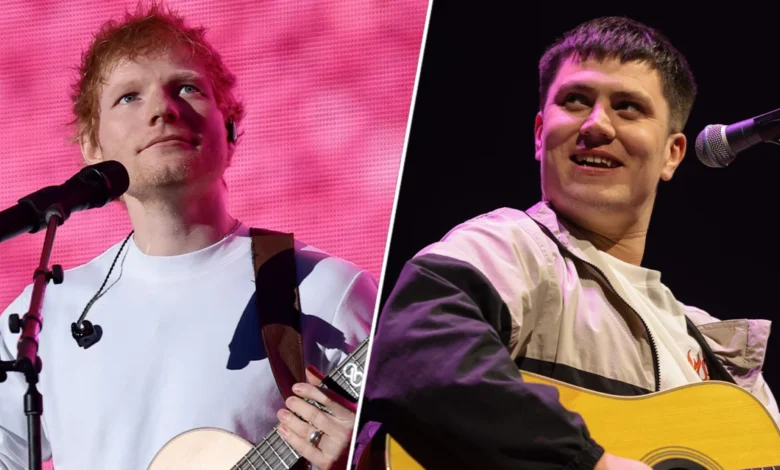
The contemporary intersection of live entertainment, corporate venue management, and geopolitical discourse has resulted in an unprecedented crisis for Grammy-winning pop star Ed Sheeran’s Loop Tour. Following a cascade of controversies sparked by the removal of rapper Macklemore over his public "Free Palestine" remarks, the tour has been radically upended. Openers and supporting acts have systematically pulled out of the lineup, leaving Sheeran without supporting acts. Yet, even as artists distance themselves from the tour’s primary billing, Aaron Rowe—one of the supporting acts who chose to depart—has emerged as an unlikely voice in Sheeran’s defense. In a detailed social media address, Rowe urged the public and the media to redirect their anger away from Sheeran, labeling the singer’s compliance with venue ultimatums as a "human fucking error," while casting a harsh spotlight on Gillette Stadium owner Robert Kraft and broader industry power dynamics.
The controversy underscores a volatile climate within the global music industry, where artistic expression regarding foreign policy, particularly the Israel-Hamas conflict, frequently collides with the corporate interests of venue magnates, major promoters, and institutional stakeholders. As the fallout continues to reverberate across cultural and commercial spheres, industry analysts are closely monitoring the long-term implications for artist management, free speech advocacy, and live concert logistics.
Chronology of the Controversy
The sequence of events that brought the Loop Tour to its current state unfolded rapidly over a matter of days in September 2026, transforming a standard routing schedule into a multi-tiered public relations crisis.
The catalyst occurred during a concert stop where Macklemore delivered impassioned remarks from the stage advocating for Palestinian rights and utilizing the phrase "Free Palestine." The comments immediately drew sharp criticism from various pro-Israel advocacy organizations and venue stakeholders who argued that the platform of a major international tour should not be utilized for polarizing geopolitical statements.
Chief among the displeased stakeholders was Robert Kraft, owner of Gillette Stadium and a prominent figure in professional sports and corporate philanthropy. According to subsequent disclosures, Kraft reportedly organized a coalition of key tour venue operators to issue a collective ultimatum regarding Macklemore’s continued presence on the bill. Faced with the potential loss of multiple high-capacity venues across North America, the tour’s promotion apparatus moved to excise the rapper from the lineup.
On Monday, the decision became public when Ed Sheeran officially dropped Macklemore from the tour. The announcement triggered an immediate and fierce backlash across social media and within the broader artistic community. Critics accused Sheeran of capitulating to censorship and silencing legitimate discourse surrounding the humanitarian crisis in Gaza.
In an effort to clarify his position, Sheeran released a subsequent statement asserting that the decision was fundamentally driven by the promoter and venue stakeholders after Kraft and other stadium owners applied intense pressure. However, this explanation failed to quell the discontent. Instead, it precipitated a mass exodus of supporting talent. Within 48 hours of Sheeran’s statement, multiple high-profile acts—including Aaron Rowe, Finneas, and Lukas Graham—announced their decisions to withdraw from the tour. Furthermore, Sheeran’s longtime traditional backing band, Beoga, also severed ties with the remaining dates, effectively leaving the headliner without supporting acts or an accompanying ensemble.
Aaron Rowe’s Defense and Critique of Corporate Power
Despite choosing to leave the Loop Tour himself, Aaron Rowe utilized his platform to reframe the narrative surrounding Ed Sheeran’s involvement. In a widely circulated video posted to Instagram on Friday, Rowe argued that public anger was being misdirected toward a sympathetic artist rather than the corporate figures exerting institutional pressure.
"I’m gonna be honest, I think you are all focusing on the wrong person here," Rowe stated in the video. "All I keep hearing is Ed Sheeran this, Ed Sheeran that, but you really should be focusing on the likes of Robert Kraft… You really should be focusing on the Zionist lobbies that are trying to silence the voices of people who are shouting about genocide, the genocide that is happening in Palestine right now, by Israel."
Rowe acknowledged that Sheeran’s initial public statement could have been handled with greater clarity and maintained his stance that Macklemore’s removal was unjust. Nevertheless, he attributed the headliner’s actions to panic rather than malice. He described the decision as a panicked reaction from a team "getting it from all angles" during a high-stakes standoff.
"That’s a mistake from a person," Rowe continued. "And I haven’t had a chance to fucking talk to Ed too much, but I fully believe he knows that was a mistake."
To support his assertion of Sheeran’s character, Rowe pointed to the ideological makeup of the tour’s supporting roster, noting that multiple participating artists had openly expressed pro-Palestinian sentiments. "If Ed Sheeran was a fucking Zionist, why would he have all these fucking people on the fucking tour? It was human fucking error. You all know my stance on Palestine. I’ll tell you right now, firsthand, I know Ed Sheeran has done so much for so many fucking people, including artists like me, who he’s literally changed their entire lives. All he has inside of him is kindness."
Rowe ultimately redirected his critique toward the structural power dynamics of the music and media industries, urging activists and fans to focus their energy on accountability for venue owners and corporate power brokers. "In the music industry, within the media, there are people with so much money and fucking power that they’re able to basically shut down any opinion they don’t agree with. You should be using this opportunity to plaster Robert Kraft’s face everywhere, someone who tried to shut down free speech, someone who tried to silence the voices of people who are shouting about genocide. That’s what you should be using your energy on, not fucking Ed Sheeran."
Broader Industry Implications and Free Speech Debates
The fallout from the Loop Tour cancellation highlights an increasingly contentious debate within the entertainment sector regarding the boundaries of artistic expression and the responsibilities of major headliners toward their supporting acts and touring personnel. In recent years, musicians have faced mounting pressure from fans, sponsors, and political interest groups to take public stances on global conflicts, particularly the Israel-Hamas war.
While artists frequently utilize their platforms to advocate for humanitarian causes, venue owners and corporate partners retain significant commercial leverage through facility contracts, insurance requirements, and ticketing infrastructure. Stadium operators, who manage multi-million-dollar venues hosting diverse public events, often enforce strict codes of conduct or neutrality agreements to mitigate reputational risks and avoid alienating segments of their customer base.
However, the intervention of venue owners to dictate the artistic lineup of a touring act represents a formidable crossing of traditional boundaries between venue management and creative control. Critics of Kraft’s actions argue that utilizing facility access as leverage to remove artists based on their political speech establishes a dangerous precedent for censorship within the live entertainment industry. Conversely, defenders of venue management contend that private property owners and corporate partners possess a legitimate right to dissociate from political rhetoric that they deem inflammatory or inconsistent with their organizational values.
For Ed Sheeran, the crisis represents a complex management challenge. As one of the highest-grossing touring acts in contemporary music history, Sheeran’s brand has historically been built upon accessibility, inclusivity, and personal rapport with fans and collaborators. The sudden departure of his entire supporting roster—including critically acclaimed songwriters like Finneas and Lukas Graham, alongside independent acts like Rowe—threatens to overshadow the remaining commercial viability of the tour.
Furthermore, the incident has intensified scrutiny regarding the role of independent promoters versus major stadium conglomerates in shaping live music itineraries. As stakeholders analyze the wreckage of the Loop Tour, industry observers suggest that future touring contracts may incorporate more explicit clauses regarding political speech, venue autonomy, and the arbitration of disputes between artists and facility owners.
Conclusion
As the dust settles on the immediate administrative crisis of the Loop Tour, the underlying tensions that triggered the mass walkout remain potent. Aaron Rowe’s defense of Ed Sheeran provides a nuanced perspective from within the touring ecosystem, illustrating the friction between individual artistic relationships and massive institutional power structures. Whether the public and the media will heed Rowe’s call to shift their focus from the pop star to corporate power brokers like Robert Kraft remains to be seen. What is certain, however, is that the intersection of geopolitics, major venue management, and live music performance has entered a new and highly volatile era of accountability.