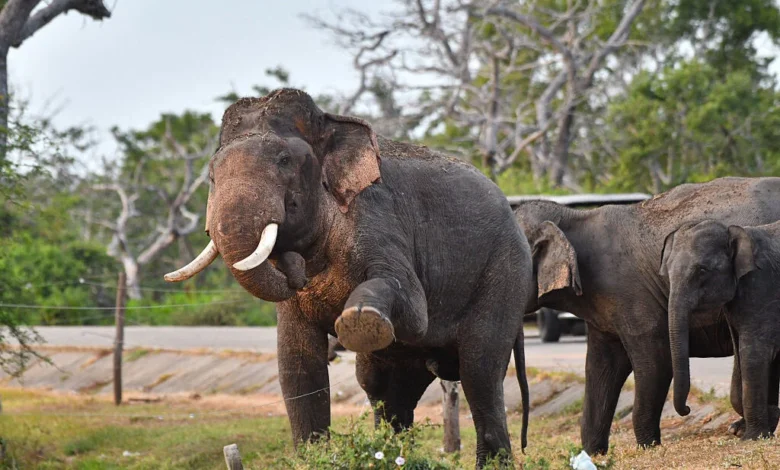
A Shifting Landscape: The Rise and Fall of Udawalawe
The story of the Udawalawe elephant population is deeply tied to the history of the land itself. Established in the 1970s, the park was designed to protect the catchment area of a major reservoir built on one of Sri Lanka’s four primary rivers. Prior to its designation as a national park, the region was characterized by dense, tropical deciduous forest.
The creation of the reservoir necessitated the relocation of farming communities that had occupied the area. As these settlers departed, the land they had cleared for agriculture—previously dominated by crops—began to transition into expansive grasslands. This "accidental savanna" provided an ideal habitat for elephants, offering an abundance of forage that supported high population densities and the formation of large, iconic herds.
However, ecosystems are rarely static. Without the anthropogenic disturbances of fire and manual clearing, the landscape began to undergo a natural succession back toward forest cover. This transition was accelerated by the encroachment of invasive plant species, most notably Lantana camara. These invasive thickets create impenetrable barriers that offer no nutritional value to elephants. As the grasslands dwindled, the park’s carrying capacity shifted, directly impacting the ability of the elephant population to thrive, reproduce, and maintain their complex social networks.
Chronology of a Social Collapse
The research team, led by behavioral ecologist Anastasia Madsen of the University of California, San Diego, and senior author Shermin de Silva, utilized a 12-year dataset spanning from 2007 to 2018. By conducting rigorous observations along designated routes, the researchers identified 443 adult and subadult female elephants. The identification process relied on the unique physical characteristics of the animals, specifically the distinct patterns of tears and holes in their ears, which function similarly to a human fingerprint.
The study established a timeline of the population’s trajectory:
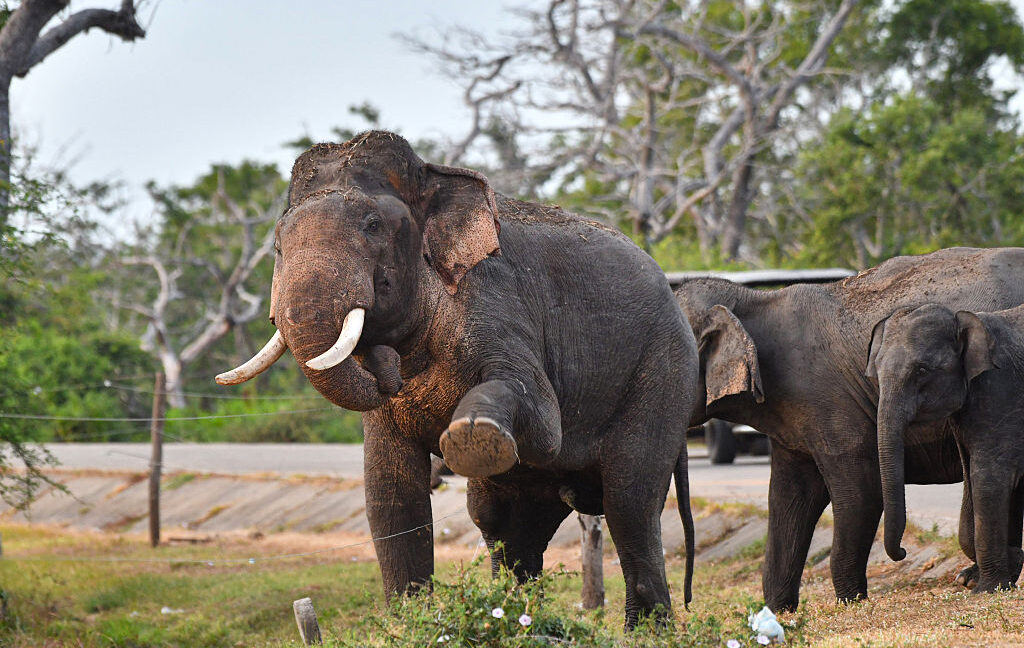
- 2007–2011: The population remained relatively stable, with social networks showing strong, consistent clusters.
- 2012: A critical turning point occurred as mortality rates and the loss of individuals began to consistently outpace the influx of new elephants.
- 2012–2018: The social fabric of the population began to fray. Researchers observed that the community did not simply become smaller; it underwent a structural fracture.
- 2018: Data indicated that approximately 69 percent of the female elephants present at the start of the study had been lost, a disproportionately high figure given the long life expectancy of the species.
The Dynamics of Fission-Fusion Societies
Asian elephants exhibit a "fission-fusion" social structure, where individuals move between different subgroups. Unlike African savanna elephants, which are typically led by older matriarchs and maintain rigid family units, Asian elephants operate with greater independence. This flexibility is likely an evolutionary adaptation to the wetter, more resource-rich environments of Asia, where food and water sources are generally more predictable, reducing the necessity for strict adherence to a single experienced leader.
Madsen’s analysis of the social network utilized algorithms typically reserved for human sociology. By measuring the frequency of associations between individuals, the team mapped the strength of these ties. The data revealed that the "resident" population—those who remained in the park for the duration of the study—altered their social behavior as the population thinned. Instead of maintaining their established relationships, the elephants began to withdraw, suggesting that the loss of key "social connectors" led to the disintegration of the network.
"If you go to a city hall meeting, you’re not friends with every single other person in that group, but there could have been some key individuals that were lost that were holding these subgroups together," Madsen explained. The loss of these "glue" individuals resulted in a fragmented society where the elephants were forced to prioritize quality over quantity in their relationships to cope with the dwindling resources.
Early Warning Signs: The "Flickering" Phenomenon
One of the most significant contributions of this study is the identification of "flickering" as an early warning sign of systemic collapse. In the context of complex systems, flickering refers to the erratic fluctuations in network metrics that occur just before a structural breakdown.
The researchers likened this to a dying light bulb, which pulses on and off before finally extinguishing. By monitoring these fluctuations, conservationists hope to gain a predictive tool that could allow for interventions before a population reaches the point of no return. The study suggests that if park managers can detect these signals early, they may be able to implement habitat restoration or protection strategies to prevent total collapse.
Implications for Global Conservation
The implications of the Udawalawe study extend far beyond a single park in Sri Lanka. Currently, more than 50 percent of all Asian elephant populations reside in suboptimal habitats, and the species has lost approximately two-thirds of its historical range.

The researchers emphasize that the decline is not solely a result of "wildlife management" issues within park boundaries. Rather, it is a byproduct of human infrastructure, including irrigation canals, roads, and agricultural development, which fragment the landscape and restrict the natural movement of elephant herds. The ongoing conflict between humans and elephants, which includes the use of illegal snares, the destruction of crops, and the use of explosives in bait, further exacerbates the mortality rates among younger elephants and adults in their prime.
"Management really has to be about entire landscapes," de Silva noted. The current reality is that protected areas are often not large enough to sustain these populations on their own. The team is now pivoting to collaborative efforts with local farmers to test alternative, elephant-deterrent crops that allow for coexistence without the need for lethal conflict.
Conclusion: The Point of No Return
As of the most recent observations, the trend observed in the study has continued. The population decline has reportedly accelerated since 2018, with lower calf survival rates and higher mortality among prime-aged females. The study serves as a stark reminder that animal societies possess a finite capacity for resilience. When the structural integrity of these communities is compromised—whether through the loss of critical social individuals or the degradation of habitat—the damage is often irreversible.
Conservationists are calling for a shift in perspective, moving away from reactive management toward proactive, landscape-scale planning. Without such measures, the "flickering" observed in Udawalawe may indeed signal the permanent loss of these complex and ancient social structures, leaving behind a fragmented landscape where elephants struggle to find a place to belong. The study, Science (2026), DOI: 10.1126/science.aef6714, provides the empirical foundation for a new, more urgent approach to human-wildlife cohabitation.