Voters Nationwide Overwhelmingly Approve Billions in Public Transit Funding Despite Affordability Pressures

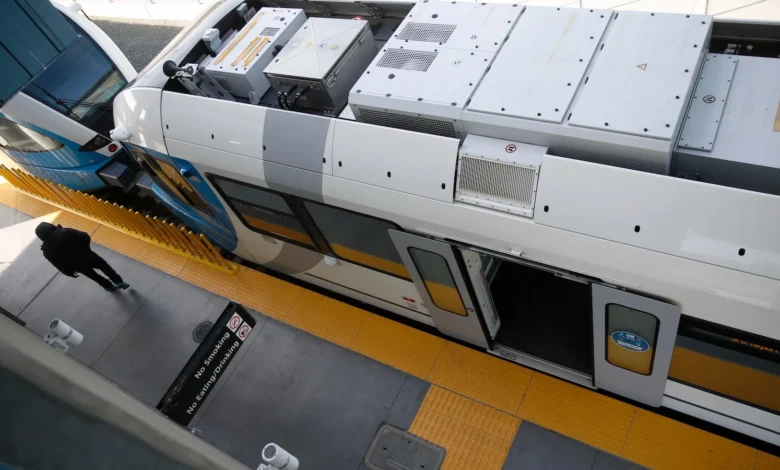
In an electoral cycle heavily defined by voter anxiety over the cost of living and household economics, communities across the United States have delivered a resounding mandate for public infrastructure. Rather than viewing public transportation as an expendable luxury or a competing budget priority, American voters overwhelmingly chose to tax themselves to preserve, rescue, and expand public transit networks.
The outcome of the recent mid-cycle elections underscores a profound shift in how the public perceives mobility. Far from being isolated instances of local municipal spending, these ballot measures point to a broader, nationwide recognition that reliable, accessible mass transit is a critical mechanism for household financial relief. By providing viable alternatives to costly automobile ownership, public transit is increasingly viewed by voters not as a drain on resources, but as a direct solution to the ongoing affordability crisis.
A Comprehensive Overview of the 2026 Ballot Box Victories
Across the United States, voters considered 27 distinct ballot measures dedicated to supporting public transportation infrastructure. In a striking demonstration of bipartisan approval at the local level, 22 of those measures successfully passed on November 3, unlocking approximately $27.4 billion in direct funding. This financial injection arrives at a critical juncture, serving as a much-needed lifeline for transit agencies teetering on the brink of fiscal catastrophe while simultaneously funding long-term expansion and construction projects.
The geography of these victories is as diverse as the funding mechanisms themselves. In the San Francisco Bay Area, voters successfully staved off a catastrophic fiscal cliff, approving measures that prevent sweeping service reductions across the Bay Area Rapid Transit (BART) system and its interconnected regional partners. Out west in Washington state, residents in Seattle and neighboring Pierce County decisively backed expanded bus service and network enhancements. Meanwhile, voters in Colorado threw their weight behind an ambitious new regional rail initiative designed to bridge major population centers.
These localized successes do not occur in a vacuum. They build upon a resilient trend established during the 2024 general election cycle—often characterized as a "red wave"—in which 19 out of 25 transit-supporting measures passed, securing roughly $25 billion. The subsequent success of similar measures during this latest cycle demonstrates that the appetite for robust public transit transcends traditional partisan divides, driven instead by pragmatic local needs.
Financial Realities: Mobility as an Economic Relief Valve
To understand why voters are willingly approving tax increases during a period of intense economic scrutiny, transportation economists point to the sheer cost of car dependency. According to data compiled by the American Public Transportation Association (APTA), a household that successfully replaces car ownership with public transit can save upwards of $14,000 annually.
In the Pacific Northwest, where cost-of-living pressures have strained working-class families, local leaders have framed transit expansion explicitly as an economic development and anti-poverty measure. Kirk Hovenkotter, executive director of the Transportation Choices Coalition, noted the stark financial reality facing residents in Washington state.
"The average cost of car ownership in Washington state is about $12,000," Hovenkotter explained. "The fastest way we can put $12,000 back in someone’s pocket is making it easier for them to live without a car or with one fewer car."
This sentiment is echoed by policy analysts who study urban mobility trends. Sohail Husain, a policy analyst at the Eno Center for Transportation, highlighted the psychological and economic shift among modern voters.
"It’s an indication that the public is willing to pay for these public transit improvements," Husain said. "That’s very telling—especially in a world like today where people are concerned about affordability. I think people are still also concerned about mobility and having options to move."
State-Level Shifts and Legislative Prospects
The wave of localized transit wins intersects with a shifting landscape at the state legislative level. Recent election cycles have redrawn political boundaries across numerous statehouses, creating complex new dynamics for transportation funding, project delivery, and regulatory oversight.
Pennsylvania: A Once-in-a-Generation Opportunity
In Pennsylvania, public transit advocates are celebrating a dramatic political realignment that places Democrats in control of both chambers of the state legislature. This legislative shift arrives on the heels of a prolonged fiscal crisis at the Southeastern Pennsylvania Transportation Authority (Pennsylvania’s primary mass transit operator serving the greater Philadelphia region).
Last year, SEPTA faced the grim prospect of enacting devastating 45 percent service cuts as structural deficits mounted. Emergency intervention by Governor Josh Shapiro averted total disaster by directing the state Department of Transportation to permit SEPTA to shift nearly $400 million from its capital budget to its operational ledger, supplemented by an additional $220 million in state allocations.
With legislative control now securely in Democratic hands, transit advocates argue that the agency can finally move past emergency triage and focus on long-term modernization. Stephen Bronskill of Transit Forward Philadelphia emphasized the transformative potential of the current moment. He pointed to critical backlog projects, including trolley modernization, the replacement of aging rail fleets dating back to the 1970s, increased regional rail frequency, and comprehensive station accessibility upgrades.
"This is a once-in-a-generation moment to invest in public transit—safe, reliable, accessible transit that Philly needs, but all of Pennsylvania deserves," Bronskill stated.
Texas: Navigating Bipartisan Realities
In Texas, the political calculus remains more complex. While Republicans retain a firm grip on the state Senate, advocates see cautious room for legislative progress. Jay Blazek Crossley, executive director of the urban planning nonprofit Farm&City, has spent over a decade advocating for safer, less polluting transportation alternatives in a state historically dominated by highway expansion.
State-level funding for public transit in Texas has traditionally accounted for a minuscule fraction of the state transportation budget—hovering at a meager 0.72 percent. Historically, Republican lawmakers have prioritized highway construction aimed at vehicular throughput while frequently pushing back against municipal mass transit initiatives. However, Crossley believes the mounting pressure of traffic congestion and urban growth may soften legislative resistance.
"At the very least, the state, I believe, will get out of the way on things like building good light rail and transit," Crossley noted.
Broader infrastructure ambitions are also gaining traction. State Representative John Bucy III has reintroduced legislation directing the Texas Department of Transportation to pursue a public-private partnership aimed at establishing a high-speed rail corridor connecting Dallas and San Antonio. The proposal targets the chronically congested Interstate 35 corridor, seeking to appeal to lawmakers whose constituents grapple daily with crippling delays.
"I think the voters spoke loud and clear that they want a Texas government that is going to work on kitchen table issues," Bucy said. "I think that’s healthcare, education. It’s also mobility and transit, and how do we get around this big, vast state?"
Georgia: Executive Vision Meets Legislative Friction
Similar cross-currents are evident in Georgia, where voters flipped the state House and elected a Democratic governor, while the state Senate remains under Republican control. This institutional division poses an immediate hurdle for Governor-elect Keisha Lance Bottoms, who has campaigned heavily on establishing dedicated state funding streams for the Metropolitan Atlanta Rapid Transit Authority (MARTA) and other municipal systems across the state. Historically, MARTA and its regional peers have relied almost exclusively on local sales taxes and federal grants, leaving them vulnerable to economic downturns.
Federal Policy Implications and Congressional Battles
Beyond state capitals, the outcomes of the federal elections carry immense consequences for national transportation policy. Congress faces a looming deadline to reauthorize major transportation infrastructure legislation, setting the stage for high-stakes legislative battles in Washington.
Earlier in the legislative calendar, the BUILD America 250 Act advanced out of a key House committee with bipartisan backing. However, the initial draft alarmed public transit advocates, who warned that the legislation prioritized highway and automobile infrastructure at the expense of passenger rail and urban mass transit, potentially devastating systems in both urban cores and rural communities.
With Democrats securing control of Congress, the trajectory of the reauthorization bill is expected to shift significantly. Representative Jerry Nadler of New York, who served as the sole Democrat on the committee to oppose advancing the original version of the bill, signaled that major changes are forthcoming.
"Unlike the current Republican proposal, next year’s bill should not prioritize one mode of transportation at the expense of others," Nadler said in a statement. "This bill must make robust investments in rail and public transit, to connect communities, create good-paying jobs, lower transportation costs for families, and reduce the cost of moving goods across the country."
Despite the change in congressional leadership, legislative friction and procedural hurdles mean a complete rewrite will take time. Rebecca Higgins, vice president of policy at the Eno Center for Transportation, noted that lawmakers are operating under a tight timeline, currently relying on a short-term funding extension to keep federal transportation programs operational. Furthermore, lawmakers will likely face pressure to accommodate newly elected members eager to shape federal investment priorities. A central point of contention will be the fate of dedicated intercity passenger rail funding, which was heavily emphasized in the earlier Infrastructure Investment and Jobs Act but conspicuously omitted from the initial text of the BUILD America 250 Act.
Local Investments Deliver Immediate Impact
While policy debates play out in statehouses and on Capitol Hill, the most immediate and tangible impacts of the recent election cycle will be felt at the local level, where voters directly injected capital into their regional economies.
- San Francisco Bay Area: A newly approved 14-year regional sales tax is projected to generate approximately $1 billion annually, securing the financial solvency of BART and connecting regional networks that faced imminent, drastic service cuts.
- Colorado: Voters authorized a 0.333 percent sales tax dedicated to funding the construction, operation, and ongoing maintenance of a new intercity passenger rail line linking Pueblo, Colorado Springs, Denver, and Fort Collins.
- Seattle and Pierce County: Seattle residents voted to double an existing sales tax over the coming decade, unlocking an additional $138 million per year designated primarily for expanded local transit operations. Adjacent Pierce County approved its first transit tax increase since 2002, funding a major overhaul and expansion of bus services in one of the state’s fastest-growing regions.
Conclusion: A Definitive Mandate for Mobility
The overwhelming approval of billions of dollars in transit funding across diverse political landscapes reveals a fundamental evolution in voter priorities. Rather than being perceived as a luxury commodity competing against essential household expenditures, public transit is increasingly recognized by the American electorate as an indispensable tool for economic survival and regional mobility. As local agencies begin deploying these newly secured funds, and as state and federal lawmakers confront a revitalized mandate for infrastructure investment, the results of this election cycle may permanently alter how millions of Americans navigate their daily lives.
Related posts: