Rep. Ayanna Pressley Pressures Democratic Leadership to Adopt Far-Left Agenda Including Medicare for All and Abolishing ICE

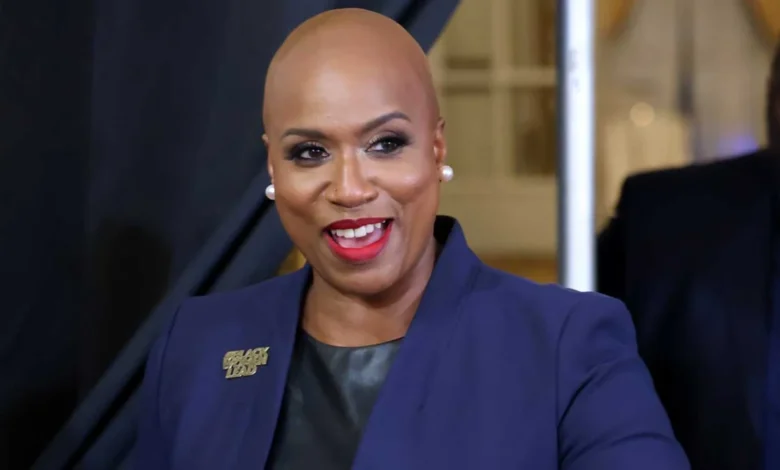
WASHINGTON — Democratic Representative Ayanna Pressley of Massachusetts has issued a sharp and public challenge to her party’s leadership in Congress, urging them to aggressively leverage their legislative majorities to enact a sweeping, far-left policy agenda. Speaking to
a coalition of progressive supporters and addressing her colleagues in the House of Representatives, Pressley demanded that Democrats abandon incrementalism and use their political leverage to pass major systemic overhauls, including single-payer healthcare, federal reparations for Black Americans, expanded abortion access, and the complete dismantling of U.S. Immigration and Customs Enforcement (ICE).
The remarks underscore a deepening ideological tension within the Democratic Party as progressive lawmakers push leadership to embrace transformative legislative proposals. While the party’s moderate and establishment wings often advocate for pragmatic, consensus-driven governance, progressive figures like Pressley argue that electoral mandates require bold, uncompromised structural reform.
A Direct Call to Action for Democratic Leadership
During her address, Pressley explicitly called out her congressional colleagues, emphasizing that holding a majority in Washington is meaningless unless it is actively used to advance progressive priorities.

"Alright, now as I close I have a message for my colleagues in the House who are likely watching. Democrats, when we have the power, you have to use it. Democrats, can you hear me now? When we have the power we have to use it," Pressley declared. "Now, please don’t tell me about a majority, show me a majority. Show me a people-powered majority with a mandate for justice, with a mandate for compassion, with a mandate for progress."
Pressley elaborated on her specific legislative demands, framing them as essential measures of justice rather than optional policy debates. She challenged party leadership to move beyond rhetorical support and deliver concrete legislative action.
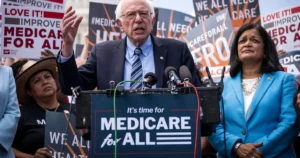
"Democrats, don’t just talk about health care justice, pass Medicare for All. Democrats, don’t just talk about abortion justice, pass the EACH Act, and repeal the Hyde Amendment. Democrats, don’t just talk about black lives mattering, enact reparations now. Democrats, don’t just talk about ending ICE’s terror, take every last dollar from them and abolish ICE," she stated.
The proposals outlined by Pressley represent some of the most progressive initiatives in contemporary American politics. Medicare for All would replace the current multi-payer healthcare system with a single government-run health insurance program. The EACH Act aims to lift federal abortion coverage bans, such as the Hyde Amendment, which restricts the use of federal funds for abortion services. The demand for federal reparations touches on long-standing discussions regarding historical accountability and economic restitution for the descendants of enslaved people, while the call to abolish ICE reflects persistent progressive opposition to current federal immigration enforcement frameworks.
The Rise of "The Squad" and Progressive Influence in Congress
Rep. Pressley has been a prominent national figure since her election to the House of Representatives in late 2018, when she assumed office in January 2019 representing Massachusetts’s 7th Congressional District. She is widely recognized as a member of "The Squad," an informal group of progressive minority congresswomen that also includes Representatives Alexandria Ocasio-Cortez of New York, Ilhan Omar of Minnesota, and Rashida Tlaib of Michigan.

Over the years, The Squad has wielded significant influence within the progressive wing of the Democratic Party, using their platforms to shape national conversations around economic equality, criminal justice reform, climate policy, and civil rights. Despite facing frequent criticism and pushback from both Republicans and moderate Democrats, Pressley and her allies have successfully fundraised and mobilized grassroots support, cementing their status as influential powerbrokers within the broader progressive movement.
Following her recent remarks, Pressley took to social media to reiterate her message regarding political representation and the role of women of color in governance. Writing on the platform X (formerly Twitter), she addressed broader cultural and political battles, particularly regarding diversity, equity, and inclusion (DEI) initiatives.
"The fascist occupant of the White House tried his hardest to end DEI and has pushed Black women out of the workforce. Now, Black women are flexing their power and poised to lead at every level of government. And we’re bringing friends," Pressley wrote.
Political Landscape and Legislative Realities
Pressley’s aggressive posture comes at a complex juncture in American federal politics. Following the outcomes of the midterm elections, the political balance of power in Washington has shifted, presenting unique challenges and constraints for lawmakers on both sides of the aisle.
While Democrats secured significant victories in various legislative races—resulting in shifts in congressional majorities—the broader federal landscape remains divided. The administration of President Donald Trump retains executive authority, including the crucial power of the presidential veto. Consequently, any sweeping progressive legislation passed by a Democratic-controlled Congress would face a nearly insurmountable hurdle at the executive level, as the president could unilaterally block bills from becoming law.

Political analysts note that Pressley’s strategy is designed less around immediate statutory enactment and more toward establishing a clear ideological benchmark for the Democratic Party’s future. By forcing debates on Medicare for All, reparations, and the future of immigration enforcement, progressives seek to pull the party’s platform further to the left and energize their core base of voters ahead of upcoming election cycles.
Broader Implications for the Democratic Party
The public division between progressive activists and establishment Democrats highlights a persistent strategic debate within the party. Moderate Democrats often caution that embracing polarizing, far-left policy positions can alienate swing voters in competitive districts, potentially jeopardizing the party’s ability to maintain broad electoral coalitions. Conversely, progressives argue that a failure to offer bold, transformative solutions demobilizes the electorate and undermines the moral clarity of the party’s platform.
As Capitol Hill navigates the remainder of the legislative calendar, the demands articulated by Pressley are expected to reverberate through internal party caucuses. Whether Democratic leadership will heed her call to pivot toward these maximalist progressive goals remains to be seen, but the debate guarantees that ideological friction within the party will remain a defining feature of modern American politics.
Neither the White House nor the Republican National Committee immediately responded to requests for comment regarding Rep. Pressley’s statements.