Caught in the Dust: The Decades-Long Battle for Black Lung Benefits in the Shadow of Regulatory Stagnation

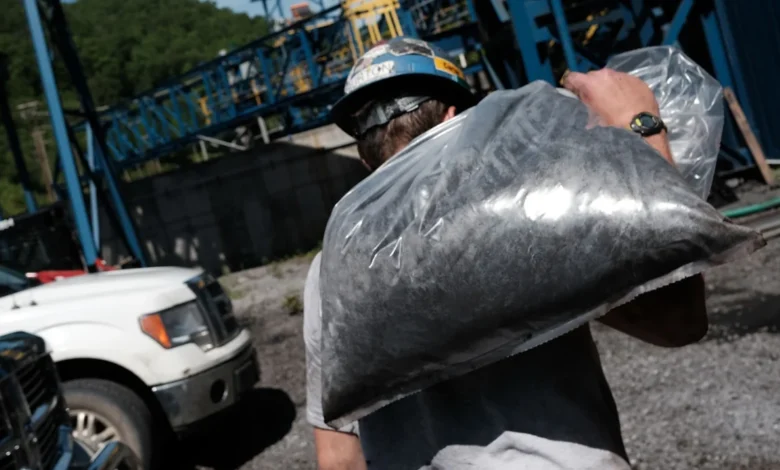
For 38 years, Josh Armes navigated the subterranean passages of West Virginia and Virginia, extracting the energy that powered the American economy. Today, at 74, the Grundy, Virginia, resident finds himself in a different kind of darkness: an interminable legal limbo. Diagnosed with coal workers’ pneumoconiosis—the irreversible and debilitating condition commonly known as black lung disease—Armes is tethered to an oxygen tank, his physical autonomy stripped away by the very dust he inhaled for nearly four decades. His struggle, however, is not merely biological; it is bureaucratic. Since 2014, when a coal operator initiated an appeal against the federal benefits he had been receiving, Armes and his family have been locked in a grueling, twelve-year contest to secure the compensation promised to disabled miners.
The case of the Armes family is emblematic of a systemic crisis within the federal black lung benefits program. Established in 1969, the program was designed as a social contract: in exchange for the health risks inherent in coal extraction, the industry and the government would provide financial and medical support to those who fell ill. Yet, as the prevalence of black lung disease climbs to levels not seen in nearly half a century, the mechanism meant to offer relief has become a gauntlet of litigation, medical examinations, and exhaustion.
A Surge in Suffering: The Resurgence of an Occupational Plague
The resurgence of black lung disease is a public health emergency, particularly in Central Appalachia. Recent data published in the American Journal of Respiratory and Critical Care Medicine indicates that 32.5 percent of veteran underground coal miners in the region are currently suffering from the disease, a rate unprecedented since 1978. Experts attribute this spike to the evolution of mining techniques; as coal seams become thinner, miners are increasingly forced to cut through silica-rich rock layers. When this rock is pulverized, it releases crystalline silica dust—a substance significantly more toxic and fibrogenic than coal dust alone.
Between 2020 and 2023, more than 1,700 miners in the United States succumbed to black lung-related complications. Despite these mounting death tolls, the regulatory response has been characterized by hesitation and legal maneuvering. In April 2024, the Mine Safety and Health Administration (MSHA) introduced a federal rule aimed at curbing exposure to silica dust through mandatory engineering and ventilation controls. However, the rule has been effectively neutralized. Following a push by Congressional Republicans to block funding for the enforcement of these standards in June 2024, the current administration has placed the rule on an indefinite delay, citing pending judicial reviews and a request for an abeyance in court.
The Anatomy of a Bureaucratic Labyrinth
The Government Accountability Office (GAO) provided a granular look at the systemic failures of the benefits program in a report released in May 2026. The data paints a bleak picture of the hurdles facing miners. Between 2013 and 2024, 40 percent of all approved claims by the Department of Labor were contested, with the vast majority of these appeals initiated by coal operators.
For the average claimant, the process is a test of attrition. The GAO report identified that the median length of an appealed claim is three years or more, with some cases dragging on for over a decade. During these protracted periods, the burden of proof rests heavily on the individual miner, who must navigate a complex landscape of medical diagnostic requirements, legal representation, and financial strain.
"They can appeal it, get a different judge, and it’s stripped away from you," says Crystal Armes, describing the precarious nature of her father’s benefits. "They fight you at every single step of the way. It’s a game of waiting for them to die or waiting for them to give up."
This sentiment is echoed in the findings of the GAO, which noted that miners across various groups frequently expressed the belief that mine operators leverage the lengthy appeals process to evade payment obligations. Between January 2013 and August 2024, 390 miners who had been granted initial approval for benefits saw their cases overturned on appeal, leaving many in the position of owing thousands of dollars in back payments to the government—an outcome that often forces families into financial ruin.
Legislative and Institutional Friction
The failure to provide adequate support has triggered a bipartisan, though largely stalled, legislative response. Democratic senators Mark Warner, John Hickenlooper, Tim Kaine, and John Fetterman have introduced multiple pieces of legislation aimed at closing the loopholes that allow companies to stall benefits for years. Their efforts seek to simplify the medical evidence requirements and place constraints on the ability of operators to appeal after an initial award, but such measures face significant headwinds in a politically polarized Congress.
The United Mine Workers of America (UMWA) has been the most vocal critic of the current regulatory freeze. Brian Sanson, president of UMWA International, has argued that the delay in enforcing the silica rule is a direct violation of the miners’ right to a safe workplace. "Every day that federal regulators drag their feet and sit on this rule, another working father, mother, husband, wife, sister or brother contracts an incurable, fatal disease," Sanson stated in a recent press release. "A company’s profit margin cannot take precedence over a miner’s right to draw a breath."
Official Stance and Administrative Justification
The federal government’s response to these criticisms has remained largely procedural. When questioned regarding the indefinite pause on the silica rule, the White House directed inquiries to the Department of Labor. A spokesperson for the MSHA stated via email that, "Until pending litigation and limited rulemaking on respirable crystalline silica are resolved, MSHA continues to vigorously enforce the permissible exposure limit of 100 micrograms per cubic meter."
Critics argue that this limit, which has remained largely unchanged for years, is insufficient given the modern composition of coal dust. Rebecca Shelton, director of policy for the Appalachian Citizens’ Law Center, characterized the agency’s reliance on legal delays as a moral failure. "If the administration actually cared about protecting coal miners, we’d have a strong, enforceable silica rule in place right now," Shelton noted. "Instead, they are hiding behind a ridiculous legal process to delay action while miners get sick and die."
Broader Implications for the Future of Mining
The implications of this crisis extend far beyond the individual cases of miners like Josh Armes. The lack of adequate protection and the erosion of the benefits system threaten to create a generational workforce crisis in the coal industry. As the prevalence of black lung disease becomes common knowledge in mining communities, recruitment of younger workers becomes increasingly difficult. Furthermore, the externalization of the human cost of mining—whereby the medical expenses of retirees are shifted from the coal companies to the public or the miners’ own families—distorts the true economic cost of energy production.
As the legal battles continue, the reality on the ground remains unchanged. For the thousands of families in Appalachia, the "cost of doing business" is measured in portable oxygen tanks, inhalers, and the slow, agonizing decline of loved ones. The case of the Armes family serves as a grim reminder that until the legal and regulatory framework is aligned with the realities of modern mining hazards, the promise of the 1969 black lung program will remain, for many, an unfulfilled vow.
As of late 2026, there are approximately 22,500 beneficiaries in the federal black lung program, including miners, their dependents, and survivors. While these figures represent a significant federal commitment, they also reflect the sheer scale of the health crisis that the industry and the government are struggling to contain. Without a shift in policy that prioritizes preventative safety over the interests of operators in the appeals process, the trajectory of black lung disease in the United States suggests that the coming decade will be as fatal, if not more so, than the last.