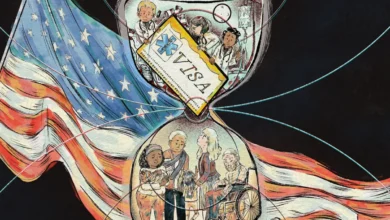
When Insurance Fails the Healers: Inside the Rising Crisis of Uninsured Healthcare Workers Across America


BOISE, Idaho — For Joshua and Ashley Durham, managing a family medicine practice in Idaho has always meant navigating the complex architecture of American health care. But entering late 2023, the couple encountered a reality they had never faced in their professional lives: operating a medical clinic while entirely devoid of health insurance.
When they launched their independent practice—with Joshua serving as the primary care physician and Ashley managing clinical billing—they initially purchased coverage for themselves and their two children via the Affordable Care Act (ACA) marketplace. However, when confronting renewal rates for the subsequent policy year, the financial landscape shifted dramatically. Monthly premiums for an equivalent plan surged by several hundred dollars, mounting to nearly $1,600.
Faced with an unsustainable monthly overhead, the family made the calculated, high-stakes decision to forgo commercial insurance entirely. Instead, they opted to self-insure, leaning on a modest $50,000 health savings account (HSA) they had meticulously accumulated over several years.
"It’s nerve-racking," said 47-year-old Joshua Durham. "It just takes, you know, one little accident, and then you got a big fat bill."
The plight of the Durhams highlights a jarring, counterintuitive trend unfolding nationwide: even those dedicated to healing others are increasingly priced out of the very system they serve. While healthcare industry workers have historically enjoyed higher rates of employer-sponsored coverage than employees in other sectors, soaring costs, expiring federal subsidies, and legislative shifts are rewriting the economics of personal health security.
The Shrinking Safety Net: Data and Demographics
Statistically, medical professionals remain far better insulated than the general public, yet cracks in the foundation are widening. Nationwide, approximately 7% of all healthcare workers were uninsured in 2024, compared with 11% of all non-elderly adults, according to a KFF analysis of the most recent American Community Survey data. Among physicians specifically, the uninsured rate has traditionally hovered near a negligible 2%.
Nevertheless, cumulative premium inflation is taking a heavy toll. Employers across the board are grappling with escalating medical costs, with corporate benefit surveys projecting that health plan expenses will jump an additional 8.2% heading into 2027. Small-business owners and independent practitioners face the sharpest edge of this escalation, as they lack the bargaining power and group risk-pooling advantages of large hospital networks.
The fragility of the small-business healthcare market was further exposed by legislative developments in Washington. Last year, a Republican-led Congress opted not to renew enhanced Affordable Care Act marketplace tax credits originally enacted during the height of the COVID-19 pandemic. While traditional, income-based subsidies remain intact for lower-income populations, the expiration of the pandemic-era enhancements removed a critical financial buffer for middle-class consumers, particularly those employed by small enterprises or operating as self-employed professionals.
According to federal data, nearly half of ACA marketplace enrollees in 2024 worked for small businesses or were self-employed, with chiropractic offices, dental practices, and independent clinics representing common occupations.
Jack Dillon, executive director of the Association for Independent Medicine—an organization representing roughly 4,000 physician-led practices—notes that premium hikes have crossed the threshold of viability for small-business employers and their staffs.

"The cost has become so astronomical," Dillon said. "You’re looking at it and saying, ‘What’s the value?’"
Dillon warns that as traditional group health insurance becomes economically prohibitive, independent healthcare employers may increasingly abandon standard coverage models altogether, opting instead to pivot toward higher hourly wages or bare-minimum catastrophic plans that leave workers exposed to high out-of-pocket liabilities.
Legislative Catalysts and Economic Pressures
The erosion of the ACA marketplace subsidies coincides with broader fiscal restructuring at the federal level. According to projections from the Congressional Budget Office (CBO), the number of uninsured individuals in the United States is expected to swell by roughly 15 million over the span of a decade. This projected surge is driven primarily by the expiration of the expanded marketplace subsidies alongside an estimated $1.1 trillion in federal healthcare spending cuts stemming from major budget reconciliation legislation signed by President Donald Trump, colloquially referred to as the One Big Beautiful Bill Act.
This macro-level policy shift sets off a cascading economic reaction within the insurance risk pool. As premiums rise, healthier individuals—those statistically least likely to require expensive medical interventions—are the most inclined to opt out of purchasing coverage. This flight of healthy lives leaves insurance pools concentrated with sicker, higher-utilization enrollees. To offset the resulting financial imbalance, private insurers are forced to raise prices further on the remaining policyholders, compounding an unsustainable cycle of premium inflation.
For families like the Durhams, this theoretical cycle manifests as immediate, kitchen-table economics. While Joshua and Ashley run their own clinic, they employ three additional staff members. Two of those employees secure health insurance through their spouses, while the Durhams subsidize $420 monthly toward their physician assistant’s premium costs. For themselves, however, the math simply stopped working.
The Human Cost: Navigating Chronic Illness and Compromised Care
The dilemma extends far beyond independent practice owners to healthcare workers embedded within larger health systems. Samantha LeGault, a nurse practitioner at an outpatient health clinic in Boise, Idaho, has experienced firsthand the compounding pressures of the insurance market.
To cover herself, her husband, and four of their children, LeGault’s employer-sponsored health plan premiums skyrocketed from $700 to $1,500 a month. Because LeGault lives with Crohn’s disease—a chronic inflammatory bowel condition—and two of her daughters manage concurrent medical complexities, her family has no viable option but to maintain coverage.
To absorb the doubling of her monthly health insurance expenses, LeGault has had to systematically dismantle other pillars of her family’s financial stability. She elected to drop dental insurance entirely, prioritizing routine dental care for her children while forfeiting it for herself. She has struggled to maintain retirement contributions and made the painful decision to transfer her children out of a private school they enjoyed into the public school system. Today, approximately one-fifth of her total household income is consumed exclusively by monthly medical premium payments.
"I know how the clinics work, that I am an expensive patient," LeGault reflected. "At the end of the day, healthcare is a business in the United States."
Similar compromises are playing out among retirees on the precipice of Medicare eligibility. Jill Kordick, a 64-year-old former healthcare executive residing in Norwalk, Iowa, spent her career witnessing firsthand the financial devastation that unexpected hospitalizations could inflict upon patients. Consequently, she insists she will not go uninsured—even for the fleeting 16-month window standing between her current age and her Medicare eligibility at 65.
Last year, bolstered by enhanced ACA tax credits, Kordick secured coverage for $75 a month. Following the expiration of those subsidies, her monthly premium leaped to $800. Coupled with a daunting $10,000 annual deductible, the financial strain has forced microscopic adjustments to her daily life: she routinely audits her grocery cart to return nonessential items, and she regulates her home’s thermostat to 80 degrees throughout the summer months to mitigate electrical cooling costs.

"It’s disheartening that it’s as broken and fragmented as it is," Kordick said, reflecting on a lifetime spent working inside an industry where she now finds herself struggling to afford basic maintenance of her own health.
Ethical Dilemmas and Alternative Barter Economies
The crisis has also forced medical professionals to confront thorny ethical and professional boundaries regarding self-treatment and alternative care models.
As a primary care physician, Joshua Durham noted that he possesses the clinical capability to diagnose and treat routine health issues for himself and his family members, though he readily acknowledges that professional norms strongly discourage self-prescribing and self-treatment. The American Medical Association (AMA) code of ethics advises physicians against treating themselves or immediate family members, making narrow exceptions exclusively for emergency interventions or short-term, minor ailments. Ashley Durham, acting as the practice’s administrator and a licensed pharmacist, has occasionally filled prescriptions for her household.
Arthur Caplan, a prominent bioethicist and professor emeritus at the Grossman School of Medicine at New York University, suggests that as systemic barriers to basic clinical access multiply, professional medical bodies may need to reevaluate these strict ethical boundaries.
"As more people are turning toward relatives because they can’t access or easily see a regular doctor, it may make sense to revisit that aspect of the code of ethics," Caplan observed.
For practitioners operating outside of major health systems, informal bartering and localized compassion have reemerged as survival mechanisms reminiscent of historical eras. The Durhams routinely exercise leniency with their own patients who lack coverage, leveraging the autonomy of their independent practice. In one instance, Ashley Durham wrote off $1,160 in clinical bills for an uninsured single father and his son rather than dispatching the debt to a collections agency.
"It’s hard, because as a human I want to help them out," Ashley Durham said. "At the same time, we need revenue for our office."
Joshua Durham’s aversion to debt and high medical costs is rooted in his upbringing in south-central Idaho, where he watched his carpenter father trade labor—such as constructing a home for a surgeon—to pay off family medical operations. Today, Joshua occasionally replicates that transactional barter economy, trading primary care services with an uninsured local optometrist in exchange for complimentary eye examinations.
Despite his daily exposure to patients, Joshua admits to a lingering, background anxiety regarding catastrophic health events. "Do I have pancreatic cancer today?" he asks rhetorically, capturing the precarious psychological toll carried by millions of Americans living without a safety net.
Thus far, the gamble has held. Over the course of the year, the Durhams have drawn approximately $9,000 from their HSA to cover direct medical outlays, including mental health consultations, contact lenses, and specialized physical therapy for Joshua’s thoracic outlet syndrome—a painful condition affecting his neck and shoulder. While these direct expenditures exceeded their initial projections, the total remains notably lower than the cumulative cost of maintaining their commercial insurance premiums.
For now, the Durhams consider their calculated risk a financial success. Yet their story remains a sobering symptom of a wider systemic failure: a landscape where seasoned medical professionals find themselves rationing care, draining retirement accounts, and opting out of the foundational safety net that defines modern medicine.