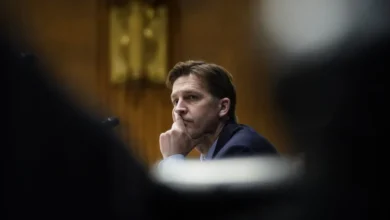
Chris Klomp Confirmation Hearings Reveal Extensive Shadow Authority Within HHS Leadership


WASHINGTON — The nomination of Chris Klomp as deputy secretary of the Department of Health and Human Services (HHS) has moved into a critical phase, with two consecutive days of high-stakes testimony before Senate committees laying bare the significant, if unconventional, role he has already carved out within the Trump administration. As the intended second-in-command to Secretary Robert F. Kennedy Jr., Klomp is not merely a prospective appointee awaiting confirmation; he is an incumbent power broker who has spent the opening months of the administration operating as the functional architect of the Department’s “Make America Healthy Again” (MAHA) agenda.
The hearings before the Senate Finance Committee and the Senate Committee on Health, Education, Labor, and Pensions (HELP) served as a rare window into the internal mechanics of a department currently undergoing a radical strategic shift. While nominees typically face scrutiny for their past records, Klomp faces a unique challenge: justifying his current, significant influence while convincing senators that his transition into an official, confirmed role will provide necessary stability rather than an unchecked consolidation of power.
The Architecture of an Unofficial Deputy
For the past several months, Klomp has functioned as the administration’s primary operative for executing the core tenets of the MAHA initiative. His influence spans the three most critical pillars of the HHS mandate: fiscal negotiation, high-level personnel recruitment, and executive communication.
Observers of the current administration note that Klomp’s role is atypical for an unconfirmed nominee. Traditionally, a deputy secretary candidate remains in a consultative or advisory capacity until the Senate provides its "advice and consent." However, the urgency of the MAHA agenda—which seeks to fundamentally overhaul federal health priorities, including vaccine policy, nutrition guidelines, and the regulatory relationship with the pharmaceutical industry—has necessitated a more aggressive leadership style.
Klomp has been the lead negotiator in a series of high-pressure discussions with major pharmaceutical companies. These negotiations have centered on drug pricing, a perennial political hurdle that the administration has sought to clear by leveraging both public pressure and the threat of regulatory scrutiny. By acting as the bridge between HHS and the White House, Klomp has ensured that the administration’s health goals remain synchronized with the broader populist objectives set forth by the Oval Office.
Chronology of Influence: From Health Tech to the HHS Suite
To understand the scope of Klomp’s influence, one must look at his rapid ascent from the private sector to the federal bureaucracy. His career in health technology—focused on data integration and patient outcomes—provided the framework for his current administrative philosophy: that the department should be run with the efficiency and agility of a high-growth tech enterprise.
- Early 2025: Klomp is identified as a primary architect for the "Make America Healthy Again" health policy framework.
- February 2025: Following the formal nomination of Robert F. Kennedy Jr. as HHS Secretary, Klomp is tapped to serve as a senior advisor with a focus on operational restructuring.
- March – April 2025: Klomp leads the search committee for key roles within the Centers for Disease Control and Prevention (CDC) and the Food and Drug Administration (FDA), favoring candidates with backgrounds in alternative medicine and industry disruption.
- April 28-29, 2025: Klomp appears before the Senate Finance Committee and the HELP Committee for confirmation hearings, where his existing authority is the primary topic of debate.
During the testimony on Tuesday, Klomp’s defense of his role was pragmatic. "Part of my responsibility is to enable the smooth operations of the department," he told members of the Finance Committee. "I’m responsible for personnel, among other things. My job is to make sure that we have everything." This statement was interpreted by some senators as a candid admission of his centrality, while others viewed it as an acknowledgement of the vacuum in leadership that he has been tasked to fill.
Supporting Data and the MAHA Mandate
The MAHA agenda, while popular among the administration’s base, faces significant institutional friction. HHS is a sprawling bureaucracy with an annual budget exceeding $1.7 trillion. Implementing structural changes requires not just policy vision, but a firm grip on the levers of civil service management.
Data from the first quarter of the fiscal year suggests that the department is moving toward a decentralized model of project management. Under Klomp’s guidance, the department has increased its reliance on private-sector partnerships for data processing and logistics, a shift that proponents argue will save taxpayers billions but which critics fear may lead to a loss of federal oversight.

Furthermore, the pharmaceutical negotiations led by Klomp have resulted in a series of non-binding memoranda of understanding (MOUs) with several major manufacturers, aiming to reduce the out-of-pocket costs for a specific list of essential medications. While these agreements are lauded as wins by the administration, industry analysts remain cautious about the long-term sustainability of such arrangements without legislative backing from Congress.
Official Reactions and Legislative Tension
The Senate’s reaction to Klomp’s confirmation has been bifurcated along ideological lines. Supporters emphasize his success in "shaking up" a historically lethargic agency. "We need someone who understands the intersection of technology and policy to navigate the complexities of modern medicine," a ranking member of the HELP committee noted in private.
However, the opposition has raised valid concerns regarding the lack of transparency. Senators have questioned the legality of an unconfirmed nominee holding such significant sway over personnel decisions—a power usually reserved for Senate-confirmed officials. "The concern is not just about Mr. Klomp’s qualifications," one senator remarked during the hearing. "It is about the precedent we set when we allow the executive branch to bypass the constitutional requirement of advice and consent by having a ‘deputy in all but name’ run the show for months on end."
Legal scholars have noted that while the Federal Vacancies Reform Act restricts how long a person can serve in an acting capacity, it does not necessarily prohibit a nominee from performing duties while awaiting confirmation. However, the intensity of the scrutiny suggests that Klomp’s confirmation may become a proxy battle for the broader conflict between the executive branch and the legislative oversight committees.
Implications for the Future of HHS
The implications of Klomp’s confirmation extend far beyond the organizational chart of the Department of Health and Human Services. If confirmed, Klomp will be the primary operator tasked with reconciling the ambitious, and often controversial, goals of Secretary Kennedy with the rigorous legal and regulatory requirements of the federal government.
The "Make America Healthy Again" initiative is poised to undergo a series of stress tests in the coming year, particularly as the administration seeks to finalize new nutritional standards and vaccine reporting requirements. Klomp’s ability to manage the internal culture of HHS—a workforce accustomed to traditional scientific consensus—will be the ultimate measure of his success.
Furthermore, the relationship between Klomp and the pharmaceutical industry will remain a point of intense observation. By positioning himself as both a negotiator and an administrator, Klomp has placed himself at the center of a complex web of interests. Whether he can maintain the trust of the administration’s populist base while navigating the demands of the pharmaceutical sector is a question that will define his tenure.
As the confirmation process concludes, the Senate must decide whether the "smooth operations" Klomp promises are sufficient to justify the extraordinary authority he has already assumed. The final vote will likely be a bellwether for the administration’s ability to maintain its momentum in the face of institutional resistance, marking a pivotal moment in the governance of the nation’s health policy.
For now, the hearings have achieved one clear objective: they have stripped away the ambiguity surrounding the deputy secretary’s office. Chris Klomp is no longer a peripheral figure in the administration’s plans; he is its engine. Whether that engine is allowed to run at full capacity, or whether the Senate applies the brakes, remains the defining political mystery of the current session.