President Trump Cancels Nearly 1 Billion Dollars in Congressional Spending Using Contested Pocket Rescission Power

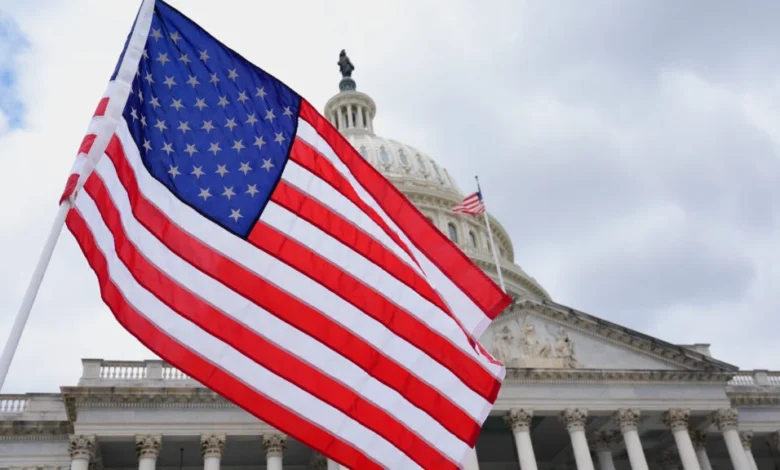
In a move that has reignited a fierce constitutional debate over the balance of power in Washington, the Trump administration announced on Friday the cancellation of nearly $1 billion in congressionally approved spending. The Office of Management and Budget (OMB) characterized the maneuver as an essential effort to excise "the most harmful government spending," specifically targeting programs related to immigrant services, minority advocacy, and international education initiatives. The action, which utilizes a controversial executive mechanism known as a "pocket rescission," has drawn sharp rebukes from senior lawmakers on both sides of the aisle, setting the stage for a potential legal and legislative showdown.
The Mechanism of the Pocket Rescission
At the heart of the controversy is the administration’s use of the Impoundment Control Act of 1974. Under federal law, if a president wishes to rescind or withhold appropriated funds, they are required to submit a formal request to Congress, which then has a 45-day window to review and potentially reject the proposal. By announcing these cuts with only five days remaining in the federal fiscal year—and with the House of Representatives currently in recess until after the November elections—the White House has effectively prevented the legislative branch from exercising its statutory oversight role.
The Government Accountability Office (GAO), the non-partisan watchdog arm of Congress, has historically maintained that "pocket rescissions" are illegal because they bypass the constitutionally mandated process for rescinding funds. The last time such a maneuver was attempted in this fashion was in 1977 under the Carter administration, a move that faced significant pushback. The current administration argues that the action is a legally permissible tool, asserting that because the funds were identified for cancellation prior to the expiration of the fiscal year, they are operating within the spirit of executive budgetary authority.
Scope and Nature of the Targeted Funding
The $1 billion in rescissions covers a broad spectrum of federal programs, primarily housed within the Department of Health and Human Services (HHS), the Department of Education, and the Department of Justice. The administration justified the cuts by citing a significant decline in illegal border crossings, which they argue renders current funding for refugee and unaccompanied minor services redundant.
Beyond immigration-related services, the administration targeted several initiatives labeled as "blatantly ideological." These include:
- Department of Education: Funding for specific migrant student support programs.
- Department of Justice: A specialized office tasked with reducing racial tensions and promoting community reconciliation.
- Department of Housing and Urban Development: Housing counseling services designed to assist low-income families.
- International Education: Approximately $70 million earmarked for programs the administration described as "woke," a term frequently used by executive officials to characterize social equity and progressive educational initiatives.
- Minority Entrepreneurship: Roughly $10 million withheld from business development programs aimed at minority-owned enterprises.
- Foreign Debt Relief: $9 million in debt relief for nations whose fiscal policies are linked to international climate change initiatives.
The White House press office highlighted that several organizations impacted by these cuts are led by individuals with ties to the Obama administration, framing the rescissions as an effort to dismantle entrenched bureaucratic influence.
Legislative Backlash and Constitutional Concerns
The reaction from Capitol Hill was immediate and polarized. Senator Susan Collins of Maine, the chair of the Senate Appropriations Committee, issued a scathing statement condemning the administration’s lack of consultation. "Not only is the delay itself an impoundment that was not reported to Congress, but also it is a usurpation of Congress’s appropriations powers," Collins stated. "OMB is an agency of the executive branch. It does not get to decide which programs are worth funding."
Senator Collins, currently navigating a high-stakes reelection campaign, signaled that she intends to work with her colleagues to challenge the administration’s authority. Her position underscores the broader institutional tension between the executive branch’s desire for fiscal agility and the legislative branch’s constitutional "power of the purse."
Senator Patty Murray, the ranking Democrat on the Senate Appropriations Committee, went further, labeling the action "theft from the American people." Murray argued that the funds were delivered through a bipartisan process and were specifically intended to provide essential services to vulnerable populations. She expressed frustration that previous attempts to include "anti-impoundment" language in spending bills were rebuffed by her Republican counterparts, leaving the door open for the administration to act unilaterally.
Chronology of Executive Budgetary Maneuvers
The current situation is not the first time the Trump administration has challenged the limits of executive power regarding the federal budget. A timeline of significant fiscal actions includes:
- September 2025: The administration issued a pocket rescission for the first time in nearly 50 years, blocking $4.9 billion in congressionally approved foreign aid. The Supreme Court subsequently declined to intervene, noting that the president’s authority over foreign policy granted the executive branch broader latitude in that specific domain.
- Fiscal Year 2026: The administration accelerated the use of executive orders to bypass legislative gridlock, including the firing of career federal employees and the imposition of historic tariff increases.
- September 2026: The current announcement of $1 billion in domestic spending cuts, marking the first time the "pocket rescission" strategy has been applied to domestic policy rather than foreign aid.
Broader Implications and Institutional Impact
The decision to target domestic programs with a pocket rescission signals a strategic shift in the administration’s approach to governance. By moving away from foreign aid—where executive privilege is traditionally strongest—and toward domestic social services, the administration is forcing a direct confrontation with the legislative branch over its constitutional authority.
Legal analysts note that the Supreme Court’s previous refusal to block the foreign aid rescissions may have emboldened the White House. However, legal scholars suggest that domestic spending is governed by more rigid statutes that explicitly protect the congressional role in budget management. If Congress fails to act or if the courts decline to intervene, this could result in a permanent shift in the balance of power, effectively granting the president the unilateral authority to veto individual line items in budget bills after they have already been signed into law.
Furthermore, the impact of these cuts on the affected communities is expected to be significant. Organizations providing housing counseling and support for migrant students rely on these funds to maintain operations. The abrupt termination of these grants without a transition period creates a vacuum that private charities or state-level governments may struggle to fill.
As the federal government approaches the start of the new fiscal year, the political climate remains volatile. With the House of Representatives out of session, the administration appears to be betting that the time required to mobilize a legal challenge will exceed the period in which the funds would have been dispersed. Whether the legislative branch can successfully reassert its authority—or whether this action sets a new precedent for executive control—remains one of the most critical questions facing the U.S. political system. The ongoing conflict between the White House and the Appropriations committees serves as a stark reminder of the fragile nature of the separation of powers when fiscal policy and political ideology intersect.