The geopolitical landscape of lunar exploration has undergone a seismic shift, evolving from a symbolic pursuit of national prestige into an intense, strategic competition for the Moon’s most valuable real estate. NASA Administrator Jared Isaacman, speaking at the Air & Space Forces Association’s Air, Space & Cyber Conference in Washington, D.C., last week, signaled a definitive change in the agency’s approach to international cooperation. As global powers eye the lunar south pole—a region essential for long-term habitation and resource extraction—NASA is moving away from broad, performative alliances toward a policy of "meaningful contribution" to secure American interests in deep space.
The strategic pivot reflects the reality that the Moon is not an infinite expanse of opportunity. While the lunar surface has a total area roughly equivalent to that of the African continent, the "habitable" or resource-rich zones are surprisingly localized. The south pole, in particular, is the primary objective for every major space-faring nation. This region contains deep, permanently shadowed craters that act as cold traps for substantial deposits of water ice. This ice is the "gold" of the 21st-century space economy; it can be processed into liquid hydrogen and oxygen for rocket fuel, as well as purified for life support systems, making it the essential foundation for any permanent lunar base and a necessary refueling station for future human missions to Mars.
The Real Estate Crisis on the Lunar Surface
Isaacman’s remarks highlighted the finite nature of these strategic sites. He drew a sharp comparison between the vastness of the lunar surface and the high-value "parking spots" at the south pole. Just as a city’s central district has limited real estate, the lunar south pole has a restricted number of crater ridges that provide the ideal combination of proximity to water ice and exposure to near-continuous sunlight, which is critical for solar power generation.
The urgency of this race is compounded by the activities of China, which has accelerated its lunar program in close coordination with Russia. The prospect of Chinese infrastructure, including potential nuclear power reactors, positioned in these critical areas has created a "first-come, first-served" dynamic that worries U.S. policymakers. If China successfully establishes a long-term presence at these key locations, it could theoretically deny access to other nations, effectively creating a "no-go" zone for American explorers and their partners.
A History of Partnership and the Shift to Pragmatism
Historically, NASA has utilized international partnerships to bolster its mission capabilities and project soft power. The International Space Station (ISS) remains the gold standard of such cooperation, involving a complex web of agencies including Russia’s Roscosmos, the European Space Agency (ESA), the Japan Aerospace Exploration Agency (JAXA), and the Canadian Space Agency (CSA). However, Isaacman noted that while these partnerships have been successful in low-Earth orbit, the constraints of the new lunar race demand a more streamlined and results-oriented strategy.
"There was absolutely a time where we were trying to make everyone happy," Isaacman stated during the conference. He acknowledged that while international involvement has been a hallmark of NASA’s history, the desire to include as many nations as possible for the sake of a "good press release" often became a bureaucratic bottleneck, slowing down the pace of development. The current administration, under directives from the White House, has mandated that all new international agreements must be "good deals"—meaning they must provide tangible, high-value assets or services that directly accelerate NASA’s primary mission objectives.
Current Strategic Alliances: Italy and Japan
The new policy is already yielding results through targeted, bilateral agreements that bypass the sometimes cumbersome multilateral processes. Two prominent examples highlighted by Isaacman are the recent partnerships with Italy and Japan.

In March, the U.S. and Italy solidified an agreement for the development of lunar habitation modules. Italy has committed over $5 billion to this project, which is expected to result in the deployment of one of the first permanent, human-rated living quarters on the lunar surface. As a return on this investment, two Italian astronauts are slated to participate in lunar surface missions. This model—where a nation provides a critical, high-cost, high-tech component in exchange for mission seats—is the blueprint for the future of Artemis-era cooperation.
Similarly, the partnership with Japan, formalized in 2024, centers on the development of a pressurized lunar rover. This vehicle will provide the mobility required for astronauts to explore regions beyond their landing sites, a capability essential for maximizing the utility of a lunar base. By funding this multi-billion-dollar project, Japan has secured two seats for its own astronauts, ensuring their role in the long-term exploration of the lunar south pole.
The Challenges of Multilateralism and the ESA/Canada Dynamic
Not all traditional partners have found it easy to pivot to this new, more demanding framework. The European Space Agency (ESA) and the Canadian Space Agency (CSA) are currently navigating the complexities of their roles in the evolving lunar program. The decision in March to cancel the Gateway station—a project that was supposed to serve as a hub for international participation—has left many of these partners scrambling to redefine their contributions.
The cancellation of Gateway was driven by a strategic reorientation toward a permanent surface presence, compounded by technical setbacks, including the discovery of corrosion in the project’s primary pressurized modules. For partners like Canada, who had invested significantly in robotics hardware designed for microgravity environments, the shift to surface-based, partial-gravity operations requires a total redesign of their proposed technology.
Furthermore, the geopolitical climate adds additional layers of complexity. Ongoing trade tensions between the United States and Canada have introduced friction into bilateral space negotiations, complicating what might otherwise be straightforward engineering collaborations.
Evaluating "Meaningful Contributions"
The litmus test for any potential partnership, according to Isaacman, is whether it provides capabilities that the U.S. cannot, or does not, already possess. NASA is no longer interested in redundant systems. This was illustrated by a recent, albeit unnamed, partner’s offer to provide a robotic cargo lander for a mid-2030s mission. Isaacman’s response was blunt: given that China is already executing missions in the same window, a lander arriving in the mid-2030s is "too little, too late."
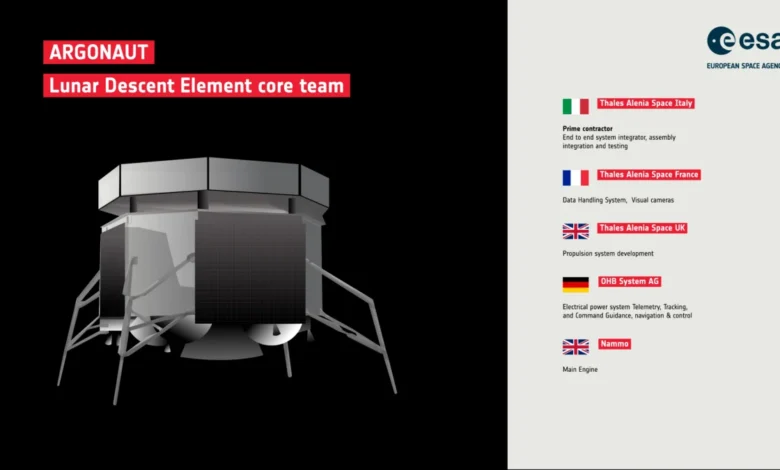
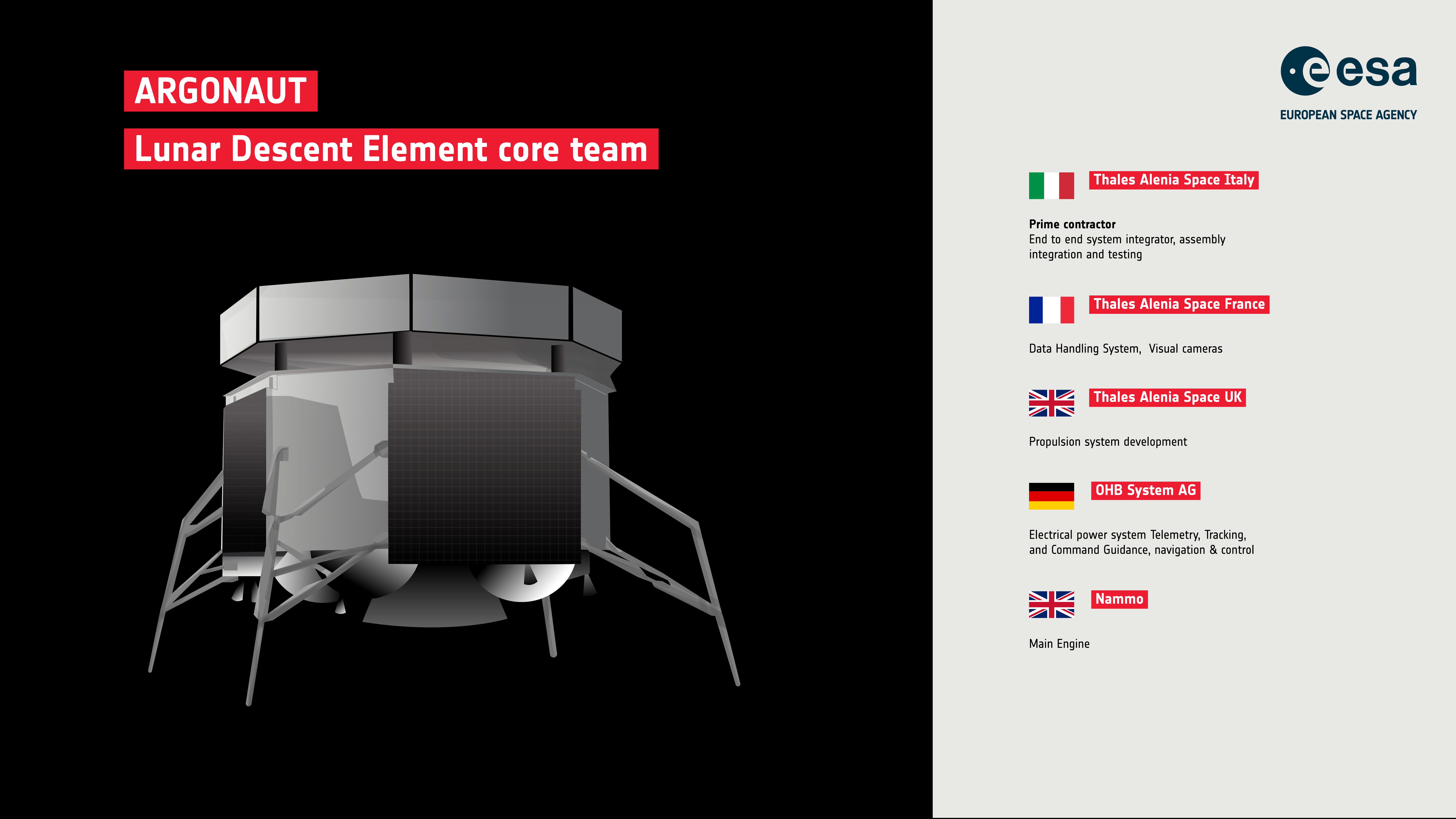
This critique is widely believed to be directed at the European Space Agency’s "Argonaut" lander program. While the Argonaut is an impressive feat of engineering, it is designed to deliver approximately 1.5 metric tons of cargo—a payload capacity that falls significantly short of the capabilities offered by U.S.-based private contractors like Blue Origin and SpaceX. With the private sector already developing heavy-lift landers like the Blue Moon Mark 2 and Starship, NASA is increasingly prioritizing private-sector efficiency over the duplication of efforts by international government agencies.
The Road Ahead: Implications for Space Policy
The shift toward a more transactional and strategic approach to space exploration marks the end of an era defined by broad, consensus-based international cooperation. While this approach promises greater speed and efficiency in the race to the lunar south pole, it also carries inherent risks. By focusing on "good deals" and bilateral agreements, NASA risks alienating smaller partners who may feel excluded from the high-stakes lunar economy.

Furthermore, the aggressive pace of the U.S.-China lunar competition raises questions about the future of international law in space. The 1967 Outer Space Treaty, which prohibits national appropriation of celestial bodies, is being tested as nations carve out "zones of safety" around their lunar bases. As NASA continues to prioritize speed and strategic advantage, the international community will be watching to see how the agency balances its mission-driven pragmatism with the need to maintain a cooperative and peaceful framework for space exploration.
For now, the mandate from the White House is clear: the race to the Moon is a priority, and in the high-stakes environment of the 21st century, every partnership must earn its place on the manifest. The game has changed, and the agency is prepared to play by the new, more rigorous rules of the lunar frontier.
Related posts: