Waymo Initiates Autonomous Vehicle Testing in London, Paving the Way for a 2026 Commercial Robotaxi Service Launch

London’s bustling streets have become the latest proving ground for Waymo, Alphabet’s pioneering autonomous driving subsidiary, as it officially commenced public road testing of its self-driving vehicles in the UK capital. This significant move marks a crucial step toward Waymo’s stated ambition to launch a commercial robotaxi service in London by 2026, setting the stage for a transformative shift in urban mobility within one of the world’s most complex and iconic cities.
A Strategic Entry into Europe’s Premier Capital
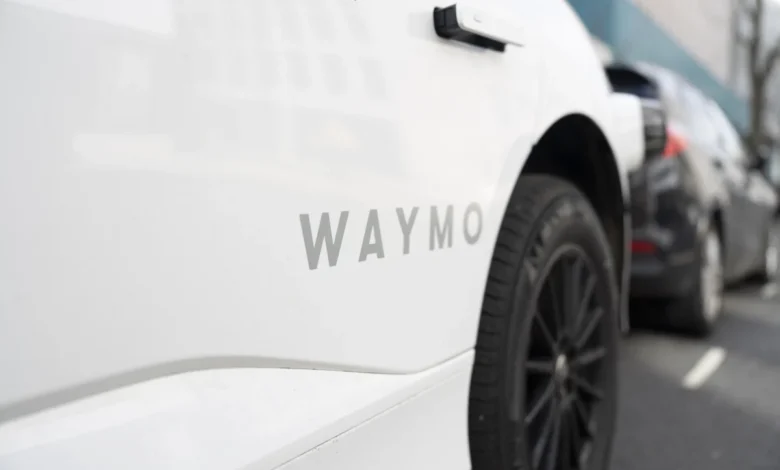
The current phase of Waymo’s London operations involves a fleet of approximately 100 all-electric Jaguar I-Pace vehicles, each meticulously equipped with Waymo’s sophisticated self-driving system. Crucially, during this initial autonomous testing phase, a highly trained human safety operator remains behind the wheel of every vehicle, ready to intervene if necessary. These tests are concentrated across a substantial 100-square-mile area of the city, encompassing a diverse range of urban environments, from intricate historical lanes to modern, multi-lane thoroughfares. This measured approach underscores Waymo’s commitment to safety and thorough validation before any fully driverless operations commence.
This recent development is the culmination of months of meticulous preparation and strategic planning. Waymo had publicly announced its intention to begin driving on London’s public roads in October of the previous year. Prior to the commencement of autonomous testing, Waymo employees meticulously drove vehicles manually across the target area, a vital process for mapping the city’s intricate road network, identifying landmarks, traffic patterns, and unique local driving nuances essential for the AI’s understanding and navigation. This foundational data collection is paramount for training and refining the autonomous driving system to operate safely and efficiently in London’s distinctive environment.
Waymo’s Global Trajectory and UK Investment
Waymo, originally spun out of Google’s self-driving car project, has been at the forefront of autonomous vehicle technology for over a decade. Its journey began with the Google Self-Driving Car Project in 2009, evolving into Waymo in 2016. The company boasts extensive experience in commercial robotaxi operations across multiple U.S. cities, including Phoenix, the San Francisco Bay Area, Los Angeles, Austin, and Atlanta. With a global fleet exceeding 3,000 robotaxis, a figure supported by recent filings with the National Highway Traffic Safety Administration, Waymo has accumulated billions of autonomous miles on public roads and even more in simulation.
The decision to expand into London is not an isolated venture but part of a broader internationalization strategy. Waymo is also actively testing in Tokyo, signaling a concerted effort to establish a global footprint. The UK, however, holds particular significance for Waymo, not least due to existing ties. In 2019, Waymo acquired Latent Logic, a UK startup that emerged from Oxford University’s esteemed computer science department. Latent Logic specialized in using imitation learning, a form of machine learning, to enhance the realism and efficacy of self-driving car simulations. This acquisition led to the establishment of a dedicated engineering hub for Waymo in Oxford, demonstrating an early commitment to leveraging British technological expertise and contributing to the local tech ecosystem.
Waymo’s investment in the UK extends beyond its Oxford hub. As part of its London expansion, the company has committed to hiring locally, creating new jobs in the burgeoning autonomous vehicle sector. Furthermore, it is in the process of establishing multiple AV service centers across London, which will be crucial for the maintenance, charging, and operational support of its electric robotaxi fleet. These centers represent tangible infrastructure investments that underpin the long-term viability and scalability of the service. Collaborating closely with emergency services is another critical aspect of Waymo’s preparatory work, ensuring seamless integration and responsiveness in critical situations, a fundamental building block for expanding its business into Europe.
Navigating London’s Unique Challenges
London presents a formidable challenge for autonomous driving technology, offering a level of complexity arguably unmatched in any of Waymo’s current operational territories. The city’s road network is a labyrinth of ancient streets, narrow lanes, roundabouts, and highly variable traffic conditions. Pedestrian density is exceptionally high, and cyclists are ubiquitous, often navigating in close proximity to vehicles. The infamous London weather, with its frequent rain and variable light conditions, adds another layer of complexity for sensor performance and perception systems.
Waymo co-CEO Dmitri Dolgov acknowledged these nuances in a recent LinkedIn post announcing the testing: "Core driving AI generalizing very well. Autonomous testing now underway with specialists behind the wheel as we master local nuances and validate performance on UK roads – a key step toward rider-only deployment." This statement highlights the advanced state of Waymo’s AI, capable of adapting its core algorithms to diverse environments, while simultaneously emphasizing the critical importance of local validation. The process of "mastering local nuances" involves not just technical adaptation but also an understanding of local driving etiquette, road signage specific to the UK, and dynamic urban events that are unique to London.
Regulatory Framework and Public Trust
The successful launch of a fully driverless robotaxi service in London hinges significantly on the UK government finalizing its trial program regulations for autonomous operations. While the UK has expressed a strong desire to be a global leader in autonomous vehicle technology, creating a clear, comprehensive, and robust regulatory framework is paramount. Waymo has affirmed its commitment to working closely with regulators to ensure its service not only meets but potentially exceeds safety standards, aiming to "reach as many Londoners as possible."
The UK government has been actively exploring legislation to support the deployment of self-driving vehicles, including a framework for allocating liability in the event of an accident involving an autonomous vehicle. This proactive approach is vital for building public confidence and providing legal clarity for operators like Waymo. However, the pace of regulatory finalization can influence deployment timelines. Waymo’s strategy typically involves a phased rollout: initial testing with safety drivers, followed by driverless testing, then an internal employee program, and finally, a public launch. Each phase requires careful regulatory oversight and public acceptance.
Building public trust is as critical as technological readiness. The introduction of autonomous vehicles often elicits a mixed response from the public, ranging from excitement about convenience and safety improvements to concerns about job displacement and the safety implications of machines making driving decisions. Waymo’s meticulous testing process, transparent communication, and collaboration with local authorities and emergency services are all designed to foster confidence and demonstrate the safety benefits of its technology.
Economic Impact and Competitive Landscape
Waymo’s entry into London promises significant economic implications for the city and the broader UK. The creation of local jobs, from engineering and operations to maintenance and customer support, will boost the burgeoning tech sector. The investment in service centers and charging infrastructure for the electric fleet will also contribute to London’s green initiatives and smart city development. Over the long term, a successful robotaxi service could potentially reduce traffic congestion, enhance accessibility for various demographics, and offer a new, efficient transportation option.
However, Waymo will not be alone in its pursuit of the London robotaxi market. The UK-based autonomous vehicle technology startup Wayve, in partnership with Uber, has also announced plans to launch a fully driverless robotaxi service in London. This local competition adds an interesting dynamic, as Wayve leverages its expertise in "end-to-end" deep learning for autonomous driving, a different approach from Waymo’s more traditional modular system. The Wayve-Uber alliance, alongside Nissan, is also looking to launch a pilot program in Tokyo by late 2026, indicating a global rivalry for dominance in key urban centers.
This competitive environment is likely to spur innovation and potentially accelerate the development and deployment of autonomous services. For consumers, competition could lead to more choices, better service, and competitive pricing. Waymo’s extensive experience, vast data repository, and backing from Alphabet provide a significant advantage, but local players like Wayve, with their intimate understanding of UK roads and regulatory landscape, could prove to be agile competitors.
The Road Ahead: Challenges and Opportunities
The journey to full commercial deployment in London is fraught with both immense opportunities and considerable challenges. Technologically, Waymo must perfect its AI’s ability to navigate London’s highly dynamic and often unpredictable urban environment. This includes handling diverse road users, unexpected road closures, complex multi-modal junctions, and the unique behaviors of London drivers and pedestrians.
Operationally, scaling the service to meet demand while maintaining high safety standards will be a continuous effort. Public acceptance, as noted, will be key, and any significant incident, however minor, could set back public confidence and regulatory progress. Furthermore, the economic model for robotaxi services is still evolving, and achieving profitability in a high-cost city like London will require careful management and strategic pricing.
Waymo’s decision to bring its robotaxi service to London is more than just a commercial expansion; it’s a test of its technology’s global adaptability and a significant step towards realizing the vision of widespread autonomous urban mobility. As the testing progresses and the regulatory framework solidifies, Londoners will watch closely to see how these silent, electric vehicles reshape the future of transportation in their historic city. The coming years will undoubtedly define a new era of urban travel, with Waymo positioned at the forefront of this exciting technological frontier.