Utah Voters Overwhelmingly Support Restoring Original Boundaries to Bears Ears and Grand Staircase-Escalante National Monuments

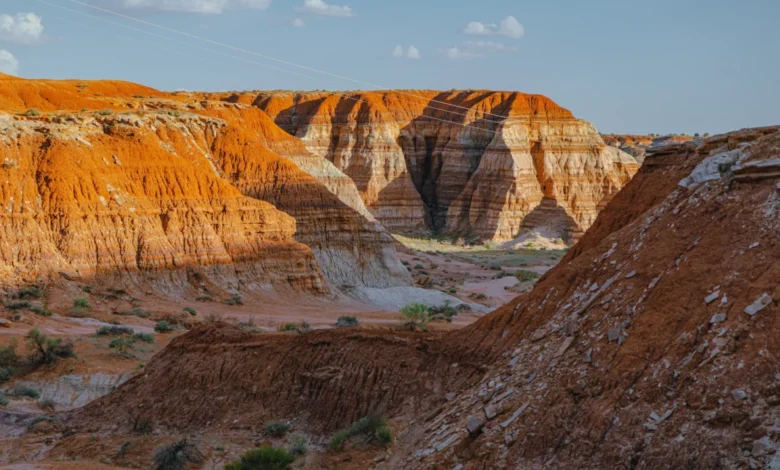
A significant majority of Utah voters are signaling strong opposition to the recent federal administration’s decision to drastically reduce the size of the Bears Ears and Grand Staircase-Escalante national monuments. According to comprehensive new polling conducted by New Bridge Strategy and commissioned by the Grand Canyon Trust, two-thirds of Utahns favor returning these protected landscapes to their full original boundaries. This public sentiment arrives as a wave of high-profile litigation from conservation groups and corporate entities like Patagonia begins to gain momentum, challenging the executive authority used to dismantle protections for millions of acres of public land.
The polling data paints a clear picture of local priorities: 69 percent of residents oppose the termination of the Bears Ears Inter-Tribal Coalition, while 82 percent believe that Indigenous tribal voices are essential to the management of these culturally significant sites. Furthermore, 81 percent of those surveyed expressed explicit opposition to the sale of public lands to private interests, a stance that creates a notable friction point with certain Utah Republican factions who have long advocated for the privatization or transfer of federal holdings.
A Chronology of Conflict: The Shrinking of the Monuments
The current tension is the latest chapter in a long-standing struggle over land use in the American West. The conflict centers on two massive tracts of land in southern Utah that once encompassed over 3 million acres of rugged terrain, archaeological treasures, and ecologically sensitive corridors.
- 1906: The Antiquities Act is signed into law by President Theodore Roosevelt, granting the executive branch the authority to designate federal lands as national monuments to protect objects of historic or scientific interest.
- 1996: President Bill Clinton designates the Grand Staircase-Escalante National Monument, covering approximately 1.7 million acres.
- 2016: President Barack Obama designates the Bears Ears National Monument, acting on the urgent petition of a coalition of five Native American tribes seeking to protect ancestral lands from looting and industrial encroachment.
- 2017: President Donald Trump signs executive orders reducing the size of both monuments, cutting Bears Ears by 85 percent and Grand Staircase-Escalante by nearly half.
- 2021: Following years of legal battles, the Biden administration issues a proclamation restoring the monuments to their original boundaries, effectively ending the previous litigation.
- 2026 (July): The Trump administration, having returned to office, issues new executive orders once again shrinking the combined monuments to approximately 302,600 acres, citing the need to prioritize mining and resource development.
- 2026 (September): Conservation groups and private sector allies, including Patagonia, move to reactivate dormant lawsuits in federal court to challenge the legality of the second downsizing.
The Legal Impasse: Executive Power and the Antiquities Act
The central legal debate concerns the interpretation of the Antiquities Act. The statute is explicit in granting a president the power to create a monument, but it is silent regarding the power to abolish or shrink one. For over a century, the prevailing legal consensus among constitutional scholars was that the power to rescind a monument resided solely with Congress.
However, the Department of Justice issued a formal memorandum in 2025 asserting that the executive branch maintains the authority to modify monument boundaries, including the power to reduce them significantly. This legal pivot provided the administrative scaffolding for the 2026 executive orders. Critics argue this interpretation is a radical departure from precedent that risks turning protected federal heritage into a political football, vulnerable to reversal every four to eight years.
"The Antiquities Act was designed to provide permanent protection to our nation’s most precious landscapes," says Tom Delehanty, a senior attorney with Earthjustice. "If a president can unilaterally strip protections for the sake of immediate resource extraction, the very concept of a ‘national monument’ becomes illusory."
Tribal Stewardship and the Loss of a Model
One of the most controversial aspects of the 2026 downsizing is the dissolution of the Bears Ears Inter-Tribal Coalition. Before its forced disbandment, the coalition served as a groundbreaking experiment in co-stewardship, where the federal government and Indigenous nations shared decision-making authority. This model was widely lauded by conservationists as a template for decolonizing land management.
"Utahns are currently speaking up, and they are saying that the decision made regarding Grand Staircase-Escalante and Bears Ears national monuments being shrunk down is wrong," said Autumn Gillard, cultural resource manager for the Paiute Indian Tribe of Utah. "Tribes should have been consulted, and the removal of our seat at the table is a regression that ignores the deep, historical, and spiritual connections we maintain with these lands."
The polling confirms that this sentiment is not limited to tribal members; it is a sentiment shared by the broader Utah public. The overwhelming support for tribal inclusion suggests that the state’s population has evolved in its view of land management, favoring collaborative governance over the traditional "top-down" approach preferred by the current administration.
Economic and Environmental Implications
The administration’s stated rationale for the downsizing centers on economic liberty and regional development. White House spokesperson Taylor Rogers argued that the previous designations "locked up" resources, hindering grazing, recreation, and, most importantly, mining. By reducing the monument boundaries, the administration aims to "allow for common sense land use."
However, the immediate reality on the ground has been marked by industrial activity. Mining interests have moved with significant speed to stake claims in the newly opened lands. Critics point out that these landscapes are home to "scores of archeological sites" and intact ecosystems that are highly sensitive to industrial development. The introduction of heavy machinery, roads, and mining infrastructure into these previously pristine regions poses an existential threat to their integrity.
"Having earth-moving equipment, flags staked, and a general industrial presence within these really beautiful, undeveloped landscapes is a tragedy," Delehanty noted. The fear among environmentalists is that the damage caused by mining exploration may be irreversible by the time the current litigation concludes.
Broader Western Sentiment and Future Outlook
The findings in the Utah poll are consistent with regional trends across the Western United States. The 16th annual Conservation in the West Poll from Colorado College revealed that 91 percent of voters in the Western region support maintaining existing national monument designations. This suggests that the current administration’s push for resource extraction on federal land is at odds with the modern Western zeitgeist, which increasingly prioritizes conservation, outdoor recreation, and cultural preservation.
As the legal battle moves into the discovery phase, the plaintiffs face a daunting challenge: convincing the courts to strike down an executive order that the Department of Justice has already defended with a novel legal theory. Yet, the social pressure—underscored by the recent polling—adds a layer of complexity for the federal government. Whether the courts ultimately view the Antiquities Act as an absolute tool for creation or a flexible instrument for administrative adjustment will likely determine the fate of these lands for decades to come.
For now, the landscapes of the Paria Rimrocks and the high desert of Bears Ears remain in a state of administrative limbo. With mining claims being filed and environmental lawsuits accelerating, the conflict has shifted from a mere policy disagreement to a high-stakes legal and cultural confrontation over what it means to be a steward of the American landscape.
Related posts: