
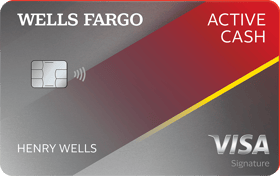
The modern consumer financial landscape is saturated with rewards credit cards, co-branded travel incentives, and rotating quarterly categories that demand active management. Yet, despite the complexity engineered into many contemporary card offerings, simplicity continues to resonate with cardholders seeking reliable, everyday value. Standing out significantly in this crowded market is the Wells Fargo Active Cash® Card, which has officially secured the designation of Best Credit Card for 2026 by financial experts due to its combination of a flat-rate cash rewards structure, a zero-dollar annual fee, and competitive introductory financing terms.
As inflation, changing interest rate environments, and evolving consumer spending habits shape household budgets, the demand for straightforward financial products has intensified. Industry analysts note that cardholders are increasingly auditing their wallets to eliminate cards carrying high annual fees or complicated bonus categories that require manual activation. The Wells Fargo Active Cash® Card has captured significant market share by addressing these exact consumer pain points, offering a streamlined value proposition that requires minimal administrative effort to maximize returns.
Core Product Features and Financial Mechanics
At the center of the Wells Fargo Active Cash® Card’s appeal is its straightforward earnings rate. Cardholders earn an unlimited 2% cash rewards rate on all eligible purchases, regardless of the merchant category. Unlike competing credit cards that offer higher percentages—such as 3% or 5%—only on specific purchases like groceries, gas, or dining while limiting baseline rewards to 1% on everything else, the Active Cash card applies its flat rate universally.
This structure removes the mental math traditionally associated with credit card optimization. Consumers do not need to track quarterly calendar updates, monitor monthly spending caps, or remember which card to use for distinct types of transactions. Every swipe, insert, or tap yields a predictable 2% return.
Furthermore, the card bridges a common gap in the flat-rate cash back sector by including a welcome offer. New cardholders can earn a $100 cash rewards bonus after spending $500 on purchases within the first three months of account opening. While some premium rewards cards offer larger upfront bonuses, those products frequently require substantially higher spending thresholds—often $3,000 to $5,000 within a compressed timeframe—and routinely enforce annual fees ranging from $95 to several hundred dollars. The Active Cash card requires a modest spend threshold that aligns easily with the everyday expenses of a typical household, all while maintaining a $0 annual fee.
Introductory APR and Financing Flexibility

Beyond its rewards program, the Wells Fargo Active Cash® Card functions as a practical tool for debt management and short-term financing through its introductory Annual Percentage Rate (APR) offerings. New accounts receive a 0% intro APR for 12 months from account opening on both purchases and qualifying balance transfers.
This dual-action introductory period provides strategic utility for cardholders navigating large upcoming purchases or attempting to consolidate existing high-interest credit card debt. By pausing interest accumulation for a full year, consumers can pay down principal balances more efficiently without incurring compounding finance charges. Once the 12-month promotional window closes, a variable regular APR of 18.49%, 24.49%, or 28.49% applies, depending on the cardholder’s creditworthiness and prevailing market benchmarks.
Financial advisors consistently emphasize that introductory 0% APR offers should be approached with disciplined repayment strategies. Consumers utilizing balance transfer features must also account for standard balance transfer fees, typically calculated as a percentage of the transferred amount, though the savings realized by avoiding standard interest rates generally outweigh these upfront costs for disciplined planners.
Additional Consumer Protections and Benefits
Beyond rewards and introductory financing, modern credit cards are increasingly evaluated based on their embedded ancillary benefits. The Wells Fargo Active Cash® Card delivers notable value in this category by including built-in cellular telephone protection.
Cardholders who charge their monthly mobile phone bill directly to the card are eligible for up to $600 of protection against damage or theft, subject to a $25 deductible per claim. Given that modern smartphones frequently retail for hundreds or even thousands of dollars, this coverage offers tangible insurance value that rivals standalone protection plans sold by mobile carriers. This feature eliminates the need for separate device insurance policies, providing an immediate cost-saving mechanism for consumers who centralize their billing.
Credit Score Requirements and Market Accessibility
Securing approval for the Wells Fargo Active Cash® Card generally requires a good to excellent credit score, which credit bureaus and financial institutions typically define as ranging from 670 to 850. While meeting this score range does not guarantee absolute approval—as issuers evaluate comprehensive financial profiles including debt-to-income ratios, employment status, and overall credit history—it serves as the baseline benchmark for prospective applicants.
For consumers falling below this threshold, building or repairing credit is a necessary preliminary step before targeting premium cash-back products. Financial institutions offer secured credit cards and credit-builder loans designed to help individuals establish positive payment histories, eventually positioning them to qualify for unsecured rewards cards like the Active Cash.
Comparative Industry Analysis
To understand why the Wells Fargo Active Cash® Card occupies a dominant position in the 2026 financial landscape, it is helpful to examine how it compares against competing flat-rate products from other major issuers.
For instance, the Capital One Quicksilver Cash Rewards Credit Card offers an introductory rewards rate paired with a strong welcome bonus and extended introductory financing terms, though its baseline flat cash-back rate sits at 1.5% rather than 2%. While the Quicksilver card may appeal to travelers due to its integration with travel booking ecosystems and redemption flexibility, the Active Cash card appeals more directly to consumers prioritizing maximum cash return on everyday retail and service spending.
Similarly, the Citi Double Cash® Card provides an effective 2% return on all purchases, broken down into 1% at the time of purchase and an additional 1% upon paying off the bill. While the end result matches the 2% total of the Wells Fargo card, the mechanics differ slightly, and the Citi card historically features distinct introductory offer structures and welcome bonus qualifications.
The presence of multiple competitive 2% flat-rate options underscores a broader industry trend: consumers increasingly reject products that dilute baseline earnings. Issuers are forced to compete aggressively on auxiliary benefits, user interface quality, redemption flexibility, and introductory terms to capture market share.
Strategic Implications for Consumer Spending
The rise of high-value, no-annual-fee cash rewards cards reflects a broader maturation of the consumer credit market. Historically, the most lucrative rewards programs were locked behind premium travel cards that charged substantial annual fees, effectively requiring frequent flyers and high-spending business travelers to extract maximum value.

Products like the Wells Fargo Active Cash® Card democratize access to high-tier rewards, making them equally accessible to average households whose primary expenditures center on groceries, utilities, insurance payments, and routine services rather than airline tickets and luxury hotel stays. This shift aligns with broader economic pressures where households scrutinize fixed expenses and seek frictionless ways to optimize their purchasing power.
Furthermore, financial literacy advocates frequently contrast the security and benefits of rewards credit cards against traditional debit cards. While debit cards draw directly from checking accounts without offering rewards, they also provide significantly narrower legal protections against unauthorized transactions and fraud under federal regulations compared to credit cards. Using a cash-back credit card responsibly—paying the balance in full each month to avoid interest charges—allows consumers to capture a 2% discount on all living expenses while maintaining robust fraud monitoring and consumer protections.
Conclusion and Outlook for 2026
As the financial sector progresses through 2026, the criteria defining a superior credit card continue to center on transparency, tangible value, and adaptability to everyday life. The Wells Fargo Active Cash® Card addresses these demands by combining an unlimited 2% cash rewards structure with a welcoming sign-up bonus, a full year of 0% introductory financing on purchases and balance transfers, and a zero-dollar annual fee.
For consumers looking to streamline their wallet, eliminate unnecessary fees, and ensure every dollar spent returns a reliable dividend, the card remains a benchmark offering. As always, financial experts advise consumers to assess their individual spending habits, credit scores, and debt management strategies before applying for any new credit product, ensuring that rewards serve as an enhancement to sound financial health rather than an incentive for unnecessary debt accumulation.
Related posts: