Cody Fern Reflects on the Chaos of House of Cards Final Season Amid Kevin Spacey Fallout

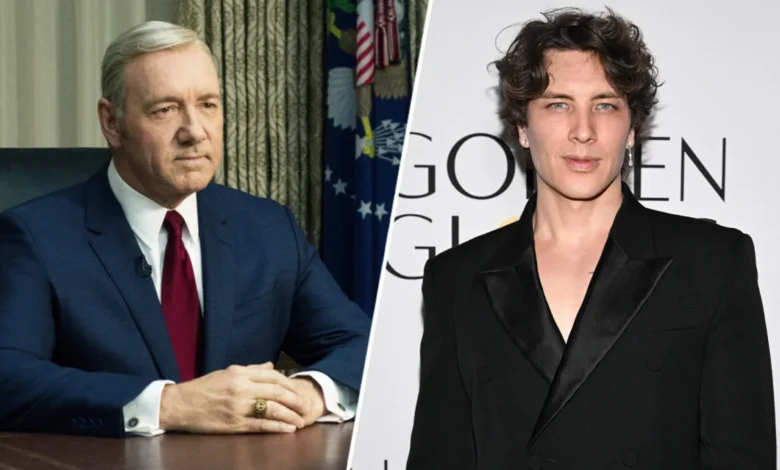
Nearly eight years after stepping onto the set of Netflix’s groundbreaking political drama House of Cards, Australian actor Cody Fern is opening up about the surreal experience of working on the show’s turbulent sixth and final season. Speaking candidly during the promotion of his feature directorial debut, Closing Night, at the Toronto International Film Festival (TIFF), Fern provided a retrospective look at the seismic disruption that forever altered the trajectory of the series—an event he colloquially described as a "nuclear bomb."
For Fern, the opportunity to join the cast of House of Cards in 2017 represented a major career milestone. He had been cast as the primary antagonist of the upcoming sixth season, a character he has since described as being modeled after Jared Kushner, embodying a chillingly modern brand of corporate-political ruthlessness. At the time, the production was operating under its usual high-stakes, prestige television paradigm, anchored by its two-time Academy Award-winning lead and executive producer, Kevin Spacey, who played the cunning and ruthless President Francis J. Underwood.
However, the momentum of the production came to an abrupt and historic halt in October 2017. As Fern recalled in a recent interview with Entertainment Weekly, the cast and crew had been filming for a couple of months when the industry-shaking allegations against Spacey emerged into the public sphere. The resulting fallout forced Netflix and the show’s production company, Media Rights Capital (MRC), into uncharted territory, transforming what was supposed to be a routine career-launching gig into a masterclass in crisis management and professional resilience.
The Genesis of the Crisis
The chronology of the House of Cards shutdown and subsequent reimagining remains one of the most significant moments in modern television history. In late October 2017, actor Anthony Rapp publicly accused Kevin Spacey of making a sexual advance toward him in 1986, when Rapp was just 14 years old and Spacey was 26. The revelation triggered a massive wave of public scrutiny and prompted numerous other individuals to come forward with allegations of sexual misconduct against the actor.
Within days, the scandal expanded to touch the production of House of Cards directly. Reports surfaced alleging a toxic work environment on the set, with multiple crew members and former staff accusing Spacey of predatory behavior and sexual harassment. The mounting pressure forced an immediate reckoning from Netflix and MRC. On October 31, 2017, the companies announced that production on the sixth season would be suspended indefinitely to evaluate the situation and address the concerns raised by the crew.
The suspension sent shockwaves through the entertainment industry. House of Cards was not merely a successful series; it was the crown jewel of Netflix’s original content strategy. Launched in 2013, the David Fincher-directed drama had legitimized streaming platforms as legitimate contenders for traditional network prestige, paving the way for the modern streaming boom. Halting production on its final season carried massive financial implications, threatening the livelihoods of hundreds of cast and crew members who suddenly found themselves in professional limbo.
The Pivot: Robin Wright and the Resurrection of Season 6
Following weeks of intense internal deliberations, legal assessments, and creative re-evaluations, Netflix and MRC made the unprecedented decision to cut ties with Spacey entirely. On November 3, 2017, Netflix announced that Spacey would not be part of any future iterations of House of Cards. The character of Frank Underwood, the narrative engine of the entire series, would have to be written out.
The burden of carrying the final season fell squarely on the shoulders of Robin Wright, who played Claire Underwood, Frank’s equally ambitious and calculating wife. Wright, who had already directed several episodes of the series and held an executive producer credit, stepped up to lead the shortened, eight-episode final season. The writers’ room, led by showrunners Frank Pugliese and Melissa James Gibson, underwent a massive scrambling effort to completely rewrite the scripts, pivoting the narrative focus entirely onto Claire’s ascension to the presidency and her efforts to distance herself from her husband’s toxic legacy.
This dramatic pivot dramatically altered the professional reality for supporting cast members like Cody Fern. Reflecting on the transition, Fern noted that the production he returned to bore little resemblance to the one he initially joined.
"I was cast as the main villain of Season 6, playing a Jared Kushner type," Fern explained. "Oh yeah, we filmed for a couple of months, and then the nuclear bomb hit. Then I got to come back and work on Robin Wright’s season, and I was a wonderful wallflower. So I got to have the pre- and post-[Spacey] experience, and I’ve got some wild stories."
With the storyline shifted to focus on Claire Underwood’s political maneuvering against corporate antagonists—represented by the wealthy and influential Bill and Annette Shepherd, played by Greg Kinnear and Diane Lane—Fern’s role was recalibrated. Instead of anchoring the central antagonist arc as originally envisioned, his character was integrated into the broader tapestry of the new narrative landscape under Wright’s directorial and acting leadership.
Legal Context and Subsequent Developments
While the professional and creative repercussions for House of Cards were immediate and absolute, the legal proceedings surrounding Kevin Spacey unfolded over several years across multiple jurisdictions.
In October 2022, a federal jury in New York found Kevin Spacey not liable in the civil lawsuit brought by Anthony Rapp, who had sought $40 million in damages. The jury deliberated for less than two hours before concluding that Rapp had not proven his allegations of battery and intentional infliction of emotional distress.
Additionally, Spacey faced criminal charges in the United Kingdom following investigations by Scotland Yard into allegations spanning from 2001 to 2013. In July 2023, a London court cleared Spacey of all nine sexual offense charges brought against him by four men. Throughout all legal proceedings, Spacey maintained his innocence, denying all allegations of non-consensual behavior.
Despite his legal exoneration in these high-profile cases, the professional landscape for Spacey remains fundamentally altered. The swift termination from House of Cards set a precedent for how major media conglomerates respond to allegations of misconduct, signaling a new era of corporate risk aversion and accountability in Hollywood.
Broader Industry Implications and the Legacy of House of Cards Season 6
The ordeal faced by the cast and crew of House of Cards served as a watershed moment for the television industry, highlighting the delicate balance between maintaining a multi-million-dollar production and addressing workplace safety and ethical standards.
For actors like Cody Fern, the experience provided a unique vantage point into the fragility of Hollywood productions and the resilience required to navigate sudden, large-scale crises. At the time of the shutdown, Fern was a rising talent in the television landscape; shortly after the House of Cards dust settled, he went on to secure prominent roles in Ryan Murphy’s acclaimed anthology series, including American Horror Story: Apocalypse and American Crime Story: The Assassination of Gianni Versace, cementing his status as a versatile character actor.
When Season 6 finally premiered in November 2018, it was met with mixed reviews from critics and audiences alike. Many praised Robin Wright’s commanding performance and the production team’s Herculean effort to salvage a cohesive narrative from the ashes of the original plan. However, others noted that the absence of Frank Underwood left a palpable void, making the final chapter feel disjointed compared to the tightly wound political machinations of the earlier seasons.
Looking back from the vantage point of his directorial debut at TIFF, Fern’s reflections underscore the unpredictable nature of the entertainment industry. What began as a high-profile antagonist arc in a prestige drama transformed into an unexpected lesson in adaptability—one that demonstrated how a major television production could survive an unprecedented catastrophe through swift institutional decision-making and creative reinvention.
Related posts: