The Resurgence of Black Lung Disease and the Battle for Federal Benefits in the American Coal Industry

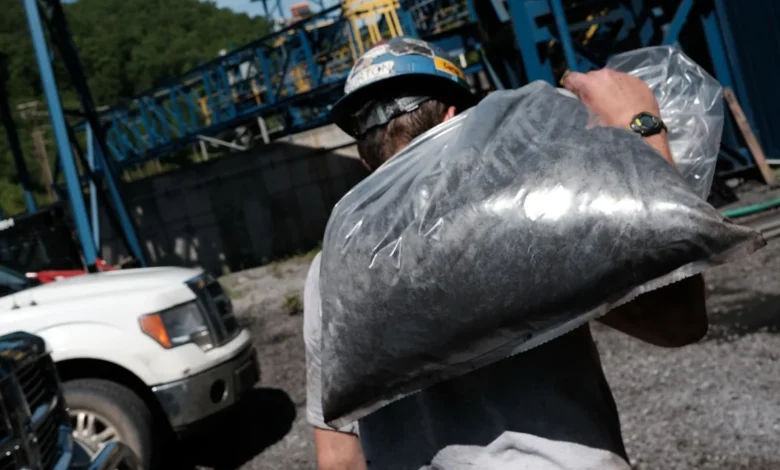
For 38 years, Josh Armes navigated the claustrophobic, dust-choked tunnels of coal mines across West Virginia and Virginia. He was a laborer in an industry that powered the American industrial revolution, working long shifts in the belly of the earth. Today, at 74, the Grundy, Virginia native is locked in a different kind of struggle: a decade-long legal battle against the very industry that left him with a terminal, irreversible condition. Diagnosed with coal workers’ pneumoconiosis—commonly known as black lung disease—Armes is tethered to an oxygen tank, his physical autonomy stripped away by the very air he breathed for nearly four decades.
His story is not an outlier; it is a symptom of a systemic crisis currently gripping the Appalachian coalfields. As black lung cases surge to their highest levels in nearly 50 years, thousands of miners and their families find themselves trapped in an agonizing, years-long bureaucratic limbo, fighting to secure federal benefits that were intended to be a safety net for those who sacrificed their health for the nation’s energy needs.
A Half-Century of Policy and Peril
The Federal Coal Mine Health and Safety Act of 1969 was designed to address the catastrophic health consequences of underground mining. It established the Black Lung Disability Trust Fund to provide medical coverage and financial compensation to disabled miners. For decades, the system functioned as a lifeline, but recent data suggests the program is failing those it was built to protect.
According to a May 2026 report by the Government Accountability Office (GAO), the efficacy of this program is being undermined by aggressive legal tactics employed by coal operators. Between 2013 and 2024, approximately 40 percent of all claims approved by the Department of Labor were challenged by mine operators. This creates a "war of attrition" that many miners, already struggling with diminished lung capacity, are not physically or financially equipped to win. The median duration for an appealed claim currently exceeds three years, with some cases dragging on for more than a decade.
The Changing Composition of Coal Dust
The resurgence of black lung is not merely a failure of policy but a reflection of changing mining practices. Researchers at the National Institute for Occupational Safety and Health (NIOSH) recently published findings in the American Journal of Respiratory and Critical Care Medicine indicating that 32.5 percent of veteran underground coal miners in central Appalachia are afflicted with the disease. This prevalence rate is the highest recorded since 1978.
The shift is largely attributed to the nature of modern mining. As high-quality coal seams are depleted, mining companies are increasingly cutting through silica-bearing rock to reach thinner veins of coal. When this rock is pulverized, it releases crystalline silica dust—a substance significantly more toxic than coal dust alone. Exposure to silica is linked to "accelerated" black lung, a rapidly progressing and more aggressive form of the disease that can lead to total lung failure in younger miners than in previous generations.
Chronology of a Regulatory Freeze
The legal and political landscape surrounding mine safety has become increasingly fraught over the past two years:
- April 2024: The Mine Safety and Health Administration (MSHA) finalizes a new silica dust rule, aimed at forcing mines to implement stricter engineering and ventilation controls.
- June 2024: Congressional Republicans successfully block the funding necessary to enforce the new silica rule, effectively paralyzing the agency’s ability to implement the safety standards.
- Early 2026: The incoming administration signals a shift in policy, with the MSHA requesting an abeyance on pending litigation, effectively putting the enforcement of any new silica protections on "indefinite delay."
- May 2026: The GAO releases its comprehensive report, requested by a coalition of Democratic senators, confirming that miners are facing unprecedented hurdles in accessing benefits, with thousands of claims tied up in appeals.
- September 2026: Emerging data confirms that black lung deaths among coal miners have exceeded 1,700 over the three-year period from 2020 to 2023, underscoring the lethal urgency of the ongoing regulatory inaction.
The Human Cost of Legal Maneuvering
For the Armes family, the process has been a relentless cycle of medical evaluations and legal filings. Crystal Armes, Josh’s daughter, describes the experience as an attempt to prove the obvious. Despite medical documentation confirming first- and second-stage black lung, the family’s benefits were challenged in 2014, three years after they were initially awarded.
"They can appeal it, get a different judge, and it’s stripped away from you," Crystal Armes stated. "They fight you at every single step of the way. They’ll send you from one doctor to another. It is very costly, and some people simply don’t have the means to navigate it."
The GAO report notes that this sentiment is widespread among beneficiaries. The document explicitly cites testimony from miners who believe that operators use the appeals process as a deliberate tactic, essentially "waiting for them to die" to avoid fulfilling their financial obligations. From 2013 to 2024, at least 390 miners who were initially granted benefits had those awards reversed on appeal, often leaving the families burdened with the debt of having to pay back the funds already disbursed.
Official Responses and the Regulatory Standoff
The political impasse remains stark. The United Mine Workers of America (UMWA) has been one of the most vocal critics of the current administration’s inaction. Brian Sanson, President of UMWA International, has repeatedly called for the unfreezing of the federal silica rule, arguing that the protection of human life must supersede corporate profit margins.
"Every day federal regulators drag their feet and sit on this rule, another working father, mother, husband, wife, sister, or brother contracts an incurable, fatal disease," Sanson said.
In contrast, the MSHA maintains that it remains committed to enforcement within the bounds of existing statutes. A spokesperson for the agency stated: "Until pending litigation and limited rulemaking on respirable crystalline silica are resolved, MSHA continues to vigorously enforce the permissible exposure limit of 100 micrograms per cubic meter."
Critics argue that this limit is woefully outdated and insufficient to protect miners from the high-silica environments common in today’s Appalachian mines. Rebecca Shelton of the Appalachian Citizens’ Law Center characterized the agency’s stance as a "ridiculous excuse" to avoid accountability. "If the administration actually cared about protecting coal miners from black lung, we’d have a strong silica rule in place right now. Instead, they are hiding behind a legal process to delay action while miners get sick and die."
Broader Implications for the Workforce
The crisis of black lung disease serves as a bellwether for the broader challenges facing the American working class in the extractive industries. As the industry faces economic pressure from market shifts and the energy transition, the squeeze on safety and benefits creates a compounding trauma for communities like those in southwestern Virginia.
The implications extend beyond the immediate financial burden on families. There is a profound erosion of trust in federal oversight. When a government program established to compensate for occupational injury becomes a battleground for corporate litigation, it signals a failure in the social contract. For the thousands of miners currently waiting for their appeals to resolve, the issue is not merely one of policy; it is a matter of basic survival.
As the legal battles continue, the physical reality for men like Josh Armes remains unchanged. He waits, reliant on his oxygen tank, hoping for a resolution that may come too late. His experience, and the experiences of thousands like him, highlight the chasm between the political rhetoric surrounding the "dignity of work" and the reality of an industry where the health of the laborer is often the first casualty of the bottom line. With the silica rule effectively stalled and the appeal system favoring well-resourced operators, the outlook for the next generation of miners remains as precarious as the ground beneath them.