Trump Administration Intervenes in xAI Environmental Lawsuit Defending Elon Musk’s Data Center Operations in Mississippi

The United States Department of Justice has formally intervened in a federal lawsuit against xAI, the artificial intelligence company founded by Elon Musk, requesting that the court dismiss a challenge brought by environmental and civil rights advocates. The legal action, originally filed by the NAACP, alleges that xAI’s massive data center operations in north Mississippi are violating the Clean Air Act by operating high-emission methane-gas turbines without the necessary environmental permits. In a significant move that highlights the growing intersection of technological infrastructure, national security, and environmental regulation, the Trump administration has asserted that the facility is a vital national asset whose operations must not be hindered by "citizen lawsuits."
The intervention marks a pivotal moment for xAI and its "Colossus" data center projects, which represent some of the most concentrated computing power on the planet. The Department of Justice (DOJ) filed a 33-page memorandum in a Mississippi federal court late Monday, arguing that the continued operation of the facility is "paramount" to the nation’s strategic interests. This defense comes as Musk’s industrial and technological influence reaches unprecedented heights, following a record-breaking initial public offering for his aerospace firm, SpaceX, and his emergence as the world’s first trillionaire.
The Legal Challenge: Allegations of Unpermitted Pollution
The roots of the current legal conflict trace back to April, when the NAACP, represented by Earthjustice and the Southern Environmental Law Center, filed a lawsuit against xAI and its subsidiary, MZX Tech. The plaintiffs allege that the company illegally installed and began operating 57 methane-gas turbines at its data center in Southaven, Mississippi. According to the filing, each turbine is roughly the size of a commercial bus and was brought online to provide the massive amounts of electricity required to power the servers used for training large-scale artificial intelligence models.
The central grievance of the lawsuit is the lack of air permits. Under the Clean Air Act, facilities capable of emitting significant quantities of pollutants are required to undergo a rigorous permitting process that includes public notice, environmental impact assessments, and the implementation of emission-control technologies. The NAACP claims that xAI bypassed these requirements entirely.
The environmental impact cited in the lawsuit is substantial. Advocates estimate that the Southaven facility has the capacity to emit more than 5,000 tons of nitrogen oxides (NOx) annually. Nitrogen oxides are a primary component of smog and are linked to a range of serious health issues, including aggravated asthma, increased susceptibility to respiratory infections, and cardiovascular disease. Furthermore, the suit alleges the turbines emit fine particulate matter and formaldehyde, a known carcinogen. The proximity of these emissions to residential neighborhoods in north Mississippi—particularly historically Black communities that have historically borne a disproportionate burden of industrial pollution—has made the facility a flashpoint for environmental justice advocates.
National Security and the "Department of War"
In its motion to dismiss, the Department of Justice shifted the focus from environmental compliance to national security. The government’s filing argues that the data center is not merely a commercial venture but a critical component of the nation’s defense infrastructure. The DOJ’s memorandum notes that the facility powers "Grok," an AI model that has been adapted for military use.
In a striking revelation included in the filing, the government disclosed that a military version of the Grok AI assisted U.S. forces in a recent conflict. According to the DOJ, the AI system was instrumental in processing data that allowed for the deployment of "over 2,000 munitions to 2,000 distinct targets within 96 hours" during operations against Iran. Adam Gustafson, a deputy assistant attorney general for the Justice Department’s environment and natural resources division, stated that the department would not permit private organizations to use environmental statutes to "undermine our national security."
The government’s legal strategy rests on a specific interpretation of the Clean Air Act. The DOJ contends that the executive branch has the authority to terminate "citizen lawsuits" when such litigation interferes with essential federal functions or national safety. By labeling the xAI data center as a project "critical to the economy and the Department of War," the administration is seeking to establish a precedent where high-priority technological development can be exempted from standard regulatory oversight during periods of perceived national necessity.
Technical Context: The Energy Hunger of AI
The controversy in Mississippi underscores a global challenge: the staggering energy requirements of the generative AI boom. Training a single state-of-the-art large language model (LLM) requires tens of thousands of specialized graphics processing units (GPUs), such as Nvidia’s H100 or H200 chips. These chips consume vast amounts of electricity, and the heat they generate requires intensive cooling systems, further driving up power demand.
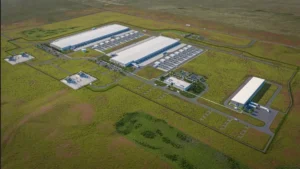
xAI’s "Colossus" clusters are among the largest in the world. The Southaven facility, known as Colossus 2, spans approximately 1 million square feet. Local utility grids are often unable to meet the sudden, massive demand of such facilities, leading companies like xAI to turn to "behind-the-meter" power generation. In this case, the 57 methane-gas turbines were intended to provide a dedicated, immediate power source to ensure the servers could run 24/7 without straining the local residential grid or facing outages.
However, environmental groups argue that the "national security" label is being used as a shield to bypass the costs and delays associated with clean energy transitions. "There is no moral or legal precedent for this," said Laura Thoms, director of enforcement for Earthjustice. "This isn’t about national security; it’s a desperate attempt to protect wealthy tech companies from obeying the laws meant to protect people from pollution."
Economic and Political Backdrop
The timing of the DOJ’s intervention coincides with a period of extraordinary financial growth for Elon Musk’s portfolio of companies. Just last week, SpaceX completed the largest initial public offering (IPO) in history, reaching a valuation exceeding $2 trillion. This financial milestone officially minted Musk as the world’s first trillionaire, further solidifying his role as a dominant figure in both the private sector and as a primary contractor for the U.S. government.
Furthermore, xAI has recently solidified its position in the tech ecosystem through multi-billion-dollar partnerships with other industry giants. The company has reportedly entered into agreements with Google and Anthropic to rent out portions of its data center capacity. These deals are valued at billions of dollars annually, highlighting the immense commercial pressure to keep the Mississippi turbines spinning, regardless of the permitting status.
The relationship between the Trump administration and Musk has also come under scrutiny. Critics suggest that the DOJ’s aggressive defense of xAI reflects a broader policy of deregulation and a close alignment between the executive branch and key industrial allies. For the administration, the rapid advancement of AI is a race against global adversaries, and environmental regulations are viewed by some officials as "bureaucratic friction" that the country cannot afford.
Reactions from the Community and Civil Rights Leaders
For the residents of Southaven and nearby Memphis, the legal maneuvering feels like a dismissal of their health and safety. The NAACP has long campaigned against "environmental racism," a term used to describe the placement of polluting facilities in minority-heavy areas. The Memphis region already hosts several industrial sites, and the addition of the Colossus 1 and Colossus 2 data centers has intensified fears of a cumulative health crisis.
Abre’ Conner, the director of environmental and climate justice for the NAACP, emphasized that environmental laws were designed to protect the vulnerable from the powerful. "Laws like the Clean Air Act are a bedrock insurance policy for communities to hold polluters accountable for decisions that cause them harm," Conner stated. "This should not be up for debate."
The NAACP’s legal team argues that even if a company is a federal contractor or its products have military applications, it is not exempt from the laws of the land. They point out that traditional defense contractors—including manufacturers of aircraft and munitions—regularly comply with EPA regulations and state permitting processes. The attempt to grant xAI a "blanket immunity" based on the nature of its software, they argue, is a dangerous expansion of executive power.
Broader Implications and Future Outlook
The outcome of the motion to dismiss will have far-reaching consequences for the tech industry and environmental law. If the court agrees with the Department of Justice, it could signal a new era where "national security" is used to fast-track the construction of AI infrastructure, data centers, and power plants, effectively sidelining local communities and environmental advocates.
Conversely, if the judge allows the NAACP’s suit to proceed, it could force xAI to halt operations or invest heavily in emission-reduction technology and renewable energy offsets. This would likely delay the training of future iterations of Grok and could impact the lucrative hosting contracts xAI has signed with other tech firms.
As the case moves forward in the Mississippi federal court, the tension between the "AI arms race" and the fundamental right to clean air remains unresolved. For now, the 57 turbines continue to operate, powering the servers that drive both the next generation of chatbots and the munitions of modern warfare, while the communities in their shadow await a definitive ruling on the legality of the air they breathe. xAI has yet to issue a formal public comment regarding the specific allegations of the lawsuit or the DOJ’s recent intervention.
Related posts: