Misleading New York Times Essay Blames Your Miles For Killing Spirit Airlines—Author Wanted Miles Banned 34 Years Ago

The Financial Reality of Loyalty-Backed Debt
Kahan’s argument centers on the premise that legacy carriers like American, Delta, and United leveraged their loyalty programs to secure cheap capital that was unavailable to smaller rivals like Spirit. He characterizes this access as a systemic imbalance that essentially strangled the low-cost model.
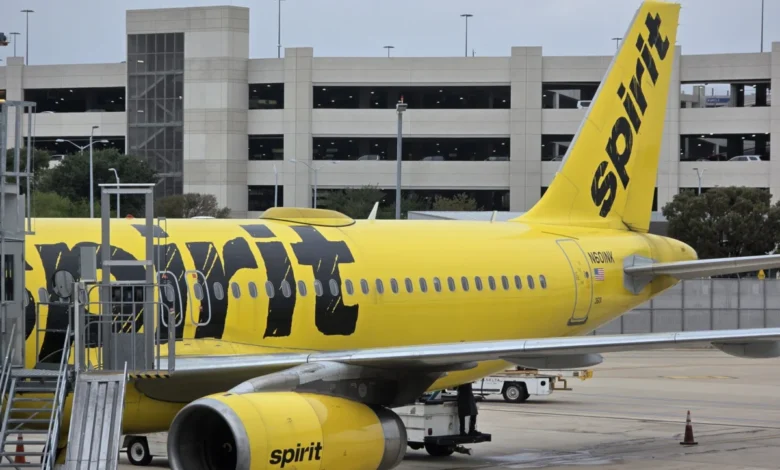
The data, however, contradicts this narrative. Spirit Airlines was not excluded from the capital markets during the pandemic; in fact, the company successfully raised $1.45 billion through the same loyalty-backed financing mechanisms that Kahan claims were reserved for the "Big Three." Like its competitors, Spirit benefited from significant government intervention, receiving over $750 million in direct cash grants and subsidized loans under the CARES Act and subsequent pandemic relief measures. By claiming that Spirit lacked the "importance" to secure such backstops, the analysis ignores the actual financial instruments the airline deployed during its period of liquidity distress.
Operational Decline: The True Driver of Bankruptcy
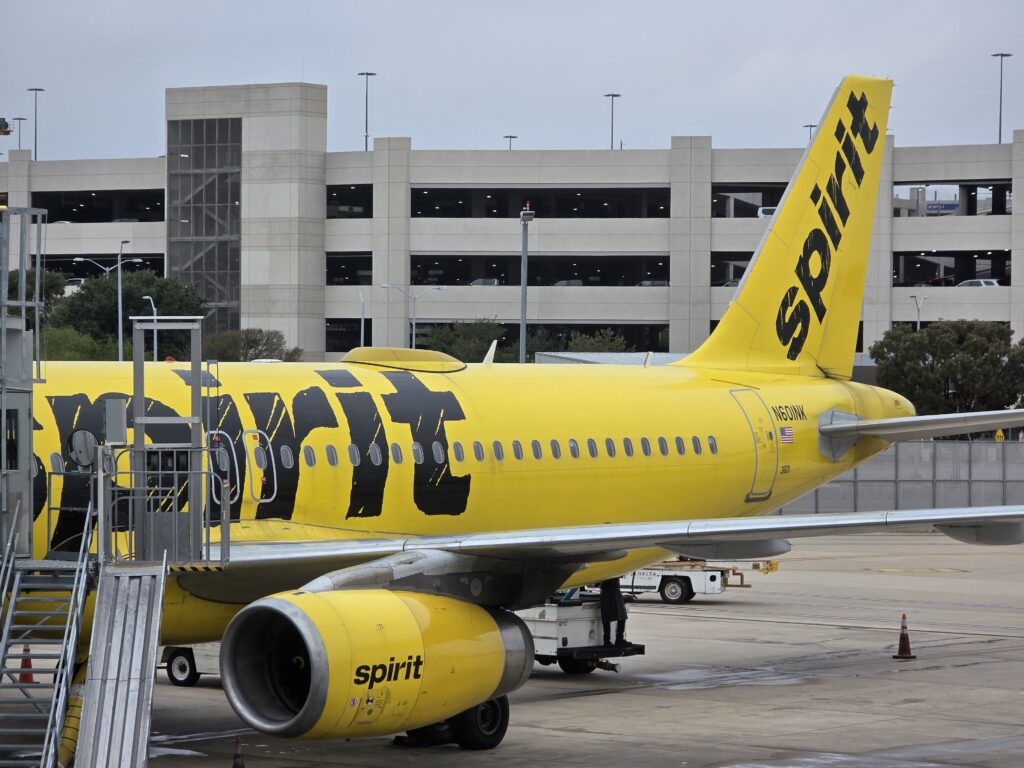
To attribute Spirit’s failure to external financing advantages or a singular spike in fuel prices is to overlook the company’s internal fiscal deterioration. The airline’s collapse was not a sudden event triggered by the geopolitical shocks of 2025; it was the culmination of years of rising costs and a shrinking competitive moat.
By November 2025, long before the recent volatility in jet fuel prices, Spirit was already deep into its second bankruptcy restructuring. Financial filings from that period reveal a staggering $72.7 million operating loss, representing a negative 30.4% operating margin. Even if the airline had been gifted its fuel supply at zero cost, it still would have failed to achieve an operating profit. The company’s unit costs, measured by operating cost per available seat mile (CASM), surged from 7.97 cents in 2019 to 11.28 cents by the third quarter of 2025—an increase of over 41%.
This trajectory demonstrates that Spirit had lost its primary competitive advantage: its status as the lowest-cost operator in the industry. As labor costs rose and engine groundings forced a reduction in flight capacity, the airline found itself burdened by fixed costs spread across a smaller, less efficient operation. The decision to invest in an expansive 11-acre headquarters campus while the company was hemorrhaging cash serves as a poignant example of the disconnect between the company’s leadership and its underlying fiscal health.
The Evolving Consumer Landscape
Beyond the balance sheet, Spirit struggled with a fundamental branding crisis. In the modern aviation market, passengers increasingly demand more than just the lowest fare. When faced with similar price points, consumers are gravitating toward legacy airlines that offer broader route networks, superior reliability, and better digital experiences.
Spirit’s attempt to pivot toward premium service offerings late in its lifespan failed to gain traction, as it could not reconcile its reputation as a "no-frills" carrier with its new, higher-cost product. Without a substantial price discount to offset the lack of amenities, the airline’s value proposition simply vanished.
Debunking the Credit Card "Free Money" Myth
The contention that frequent flyer revenue represents "free money" for legacy airlines is an economic oversimplification. These programs are complex, multi-billion-dollar ecosystems that involve significant costs, including the delivery of travel benefits and the management of massive data operations. Revenue from these cards is inextricably linked to the broader network of an airline. For instance, Southwest Airlines’ expansion into Hawaii was explicitly designed to enhance the value of its credit card offerings by providing a desirable, high-demand destination for reward redemption. This, in turn, allowed the airline to maintain competitive pricing.
When analysts call for the banning of these programs, they ignore the reality that such measures would likely increase the cost of capital for all airlines, forcing them to rely on more expensive, non-collateralized debt. This would inevitably lead to higher airfares and reduced service, the exact opposite of the pro-consumer outcome the critics ostensibly seek.
Historical Context and the Regulatory Fallacy
The argument for regulating airlines like public utilities—or banning loyalty programs entirely—is not new. Mark Kahan, the author of the New York Times piece, has been advocating for the dismantling of these programs since at least 1992. His historical position, which includes a stint as a regulator at the Civil Aeronautics Board during the pre-deregulation era, appears rooted in a desire to return to a framework that has been proven obsolete by four decades of market-driven growth.
Critics of the current system often cite the rise in airfares following Spirit’s exit from the market as proof that the industry is too consolidated. However, this relies on the post hoc ergo propter hoc fallacy—assuming that because one event followed another, it must have been caused by it. Airfares were already trending upward due to rising fuel costs and capacity constraints before Spirit ceased operations. Furthermore, when adjusted for inflation, real airfares today remain significantly lower than they were in 2016.
The Role of Credit Card Processors
The narrative surrounding the role of credit card processors also warrants clarification. Kahan suggests that processors acted in a way that directly triggered the liquidation by withholding funds. While it is true that processors impose holdbacks to manage the risk of unfulfilled travel—a standard practice for airlines in distress—these actions are a response to financial instability rather than a primary cause of it.
When an airline’s liquidity drops below critical thresholds, credit card processors are contractually obligated to protect themselves against the risk of massive refund claims should the airline collapse. As demonstrated by the history of US Airways, such pressures are symptoms of an impending insolvency, not the root cause.
Conclusion: Lessons for the Future
The collapse of Spirit Airlines is a case study in the dangers of cost creep and the loss of a clear market identity in a highly competitive industry. It is not, as some have argued, an indictment of the airline credit card model or a failure of market regulation.
The industry’s move toward consolidation and loyalty-based financing is a rational response to the capital-intensive nature of aviation. Attempting to artificially constrain these mechanisms would likely stifle innovation and reduce the availability of low-fare travel, rather than fostering a new generation of low-cost carriers. The demise of Spirit was not a result of a rigged system, but a reflection of a business that could no longer justify its existence in an evolving marketplace. As the industry moves forward, the focus should remain on infrastructure, operational efficiency, and the continued delivery of diverse travel options for the consumer, rather than the pursuit of regulatory solutions to problems that were, in reality, self-inflicted.